
International scholars highlighted the need to integrate sustainability and innovation into agricultural curricula during the education-focused session of the International Conference on Tropical Agriculture.
San José, 4 August 2025 (IICA)- Technological innovation and sustainability are essential to addressing the challenges posed by rapid technological, climate, and social changes to education and research in tropical agriculture, affirmed prominent specialists from the Americas and Europe during a high-level conference in Costa Rica.
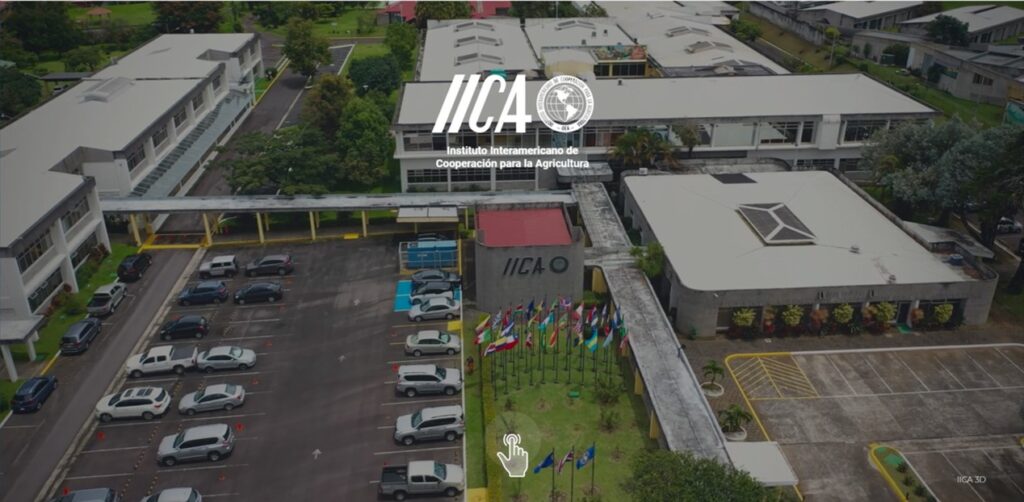
The Intercontinental Conference on Tropical Agriculture took place over three days at the headquarters of the Inter-American Institute for Cooperation on Agriculture (IICA) in San José and at the Tropical Agricultural Research and Higher Education Center (CATIE) in Turrialba.
During the session dedicated to education, experts emphasized that education, research, and training in tropical agriculture must be innovative, AI-driven, and capable of serving as a bridge to ensure food security for the people of the Americas.
They agreed on the need to rethink current education models, integrating advanced digital tools, active methodologies, and transdisciplinary approaches that allow students to understand and respond to the complex challenges of tropical agriculture.
The specialists also stressed that training must go beyond the transfer of technical knowledge to become a process that fosters critical thinking, purposeful innovation, and commitment to the economic, environmental, and social sustainability of agriculture.
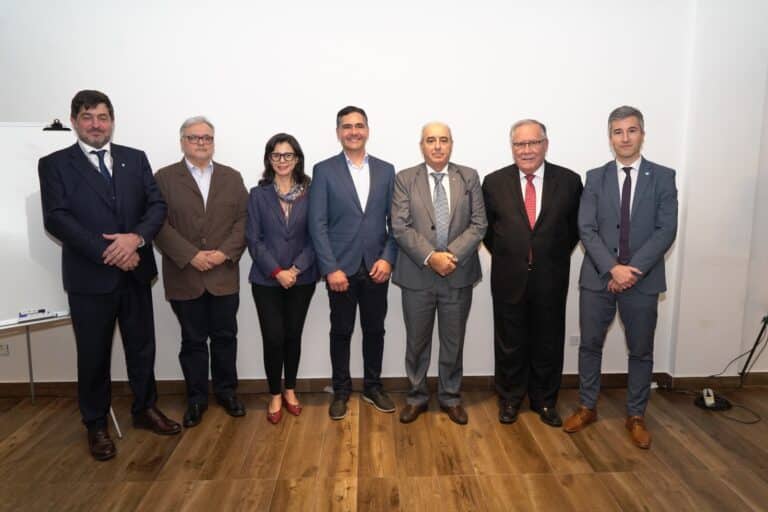
Costa Rica’s Minister of Agriculture and Livestock, Víctor Carvajal; former Mexican senator, renowned expert in sustainable rural development and IICA Goodwill Ambassador, Beatriz Paredes; CATIE’s Director General, Luis Pocasangre; and IICA’s Director General, Manuel Otero, spoke at the opening of the conference.
The meeting, titled “Linking education, science, innovation, and finance ecosystems to scale up sustainable and resilient tropical agri-food systems”, brought together representatives from the Biodiversity-CIAT Alliance, the World Bank, FONTAGRO, the International Food Policy Research Institute (IFPRI), and other international institutions involved in financing and developing technologies for food security, as well as officials from agriculture ministries and private sector representatives.
Competitive value
Rubén Guevara, scientist and professor at the Pontifical Catholic University of Peru, stated that agricultural innovation and sustainability are essential for developing products, processes, services, and educational models that generate competitive value.
“It is urgent to realign research priorities, reform graduate education, and integrate interdisciplinary approaches to prepare new generations to face the complex challenges of agriculture”, Guevara warned.
Luis Pocasangre, Director General of CATIE, said that education in tropical agriculture must be a driver of transformation: “Investing in innovation means integrating agricultural sustainability and technology into the training of professionals capable of responding to 21st-century challenges”.
“At CATIE, we promote an education that not only transfers knowledge but also shapes leaders with ethical, scientific, and environmental vision. Innovation without sustainability is not enough for the future of the tropics”, said Pocasangre.
Global leadership to transform tropical agricultural education
IICA’s Director General participated in the education-focused day of the conference and stated that tropical agriculture needs to train leaders capable of innovating with environmental awareness. He emphasized that agricultural sustainability is not an add-on—it is the core of the transformation needed today.
“Innovating in tropical agricultural education means preparing new generations for a world that demands integrated, ethical, and resilient solutions. At IICA, we are committed to science with purpose and education with impact”, said Otero.
Jim French, Secretary General of the Global Confederation of Higher Education Associations for Agricultural and Life Sciences (GCHERA), emphasized that transforming higher education in tropical agriculture requires innovative, student-centered pedagogical models, ethical leadership, and critical thinking.
He added that only in this way will it be possible to train changemakers capable of addressing the challenges of agri-food systems.
“Sustainability and innovation in agriculture cannot be separate concepts in education. They must be integrated into participatory curricula and transdisciplinary approaches that respond to the social, environmental, and technological complexities of today’s world”, French concluded.
More information:
Institutional Communication Division.
comunicacion.institucional@iica.int