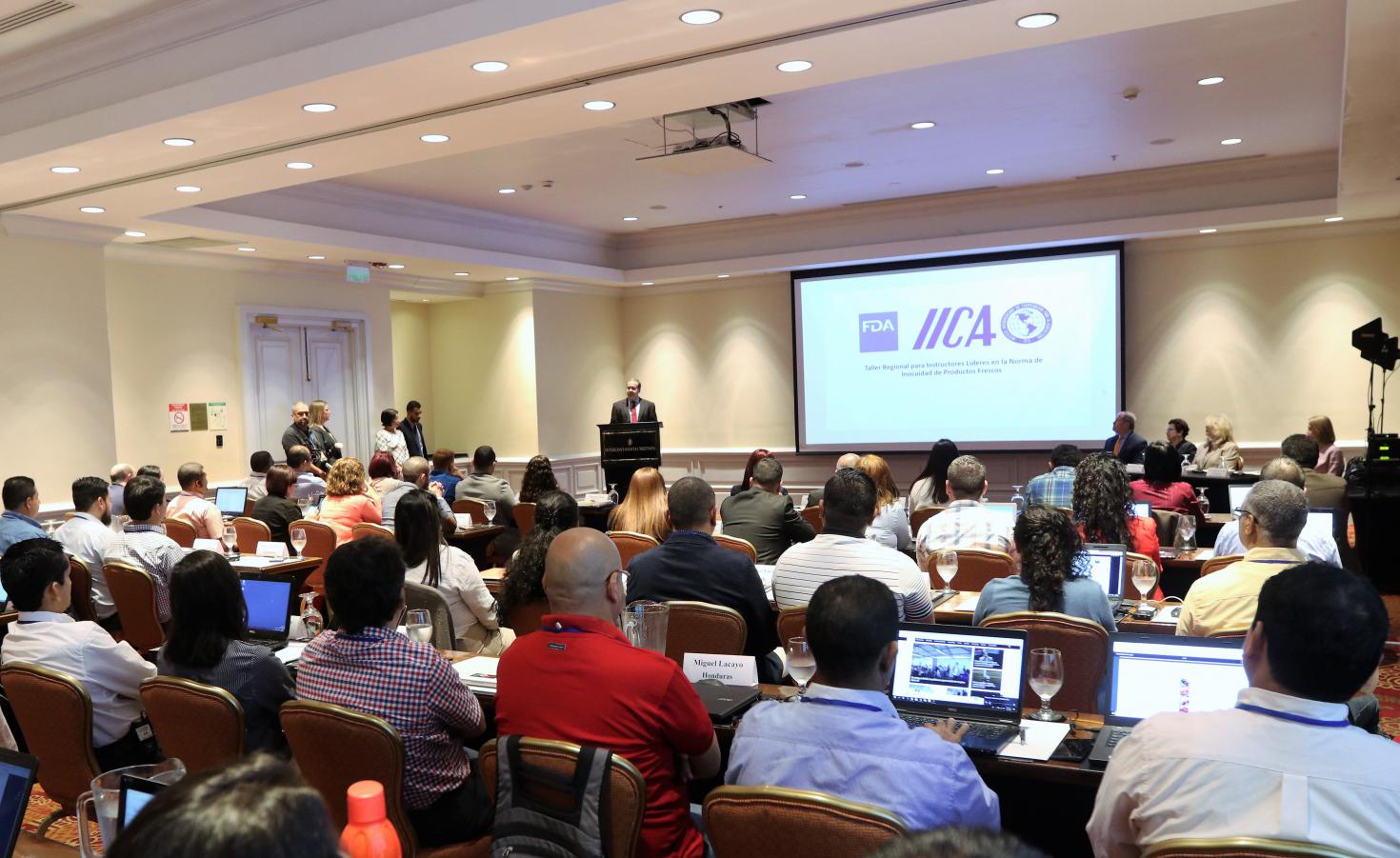
A course carried out in Costa Rica will equip 56 delegates from eight Latin American countries to provide training on this regulation to producers, academics and officers involved in the production and commercialization of fresh fruits and vegetables for the U.S. market.
San Jose, 15 July 2019 (IICA). As of this week, Costa Rica, Chile, the Dominican Republic, Ecuador, Guatemala, Honduras, Mexico and Peru will be more capable of complying with the requirements for exporting fresh agricultural produce to the United States.
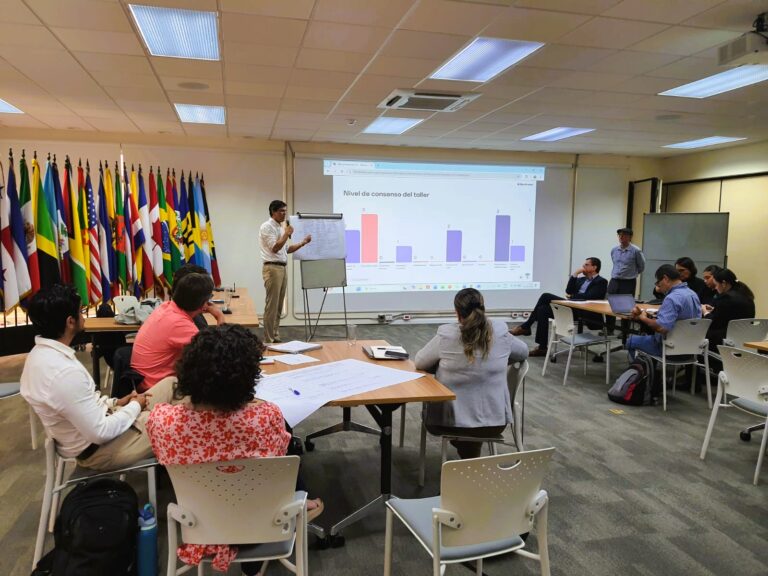
A total of 56 food safety professionals from these eight countries are currently participating in an in-person course in Costa Rica to be recognized as lead trainers, who will be authorized to provide training in their respective countries to producers, academics, and businesspeople whose companies are already exporting fruits and vegetables to the U.S. market, or are about to embark on the process.
The objective is to enable exporters to comply with the provisions of the Food Safety Modernization Act (FSMA) of the United States.
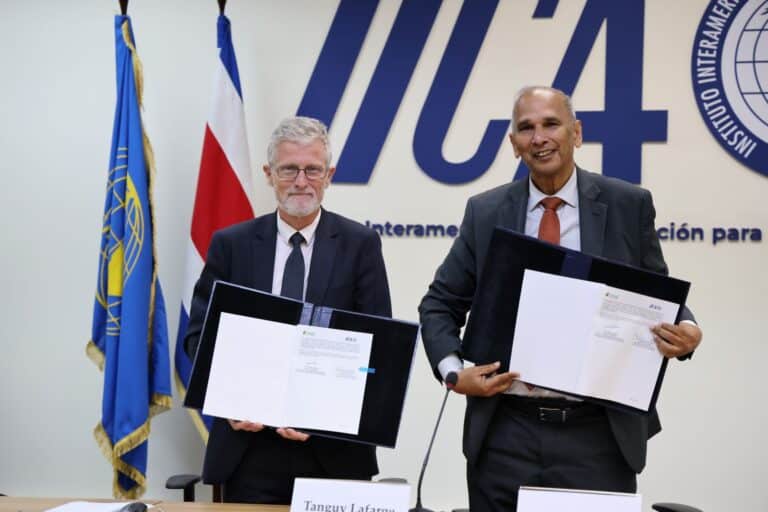
The week-long training course is being offered by the Inter-American Institute for Cooperation on Agriculture (IICA) and the United States Food and Drug Administration (FDA).
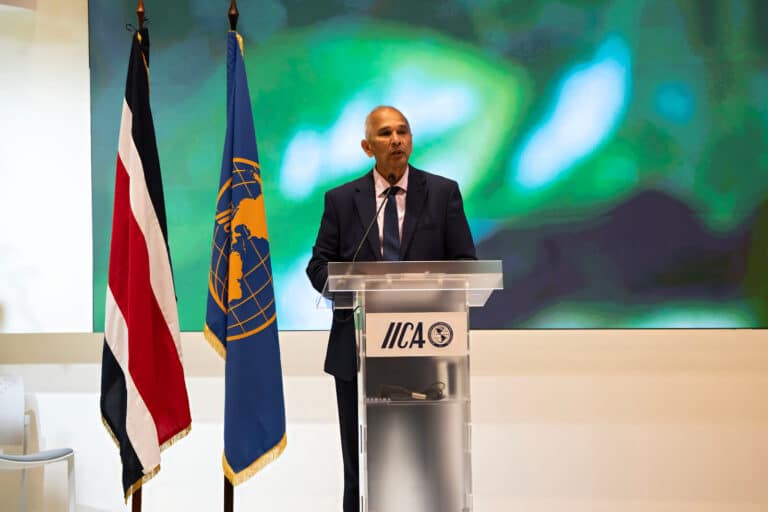
Sharon Day, U.S. Ambassador to Costa Rica, and Lloyd Day, Deputy Director General of IICA, participated in the opening ceremony, during which they underscored the fact that this type of training enables countries to become more competitive, maintain a key export market in operation, and, most importantly, contribute to agricultural development and the well-being of producers, as well as guarantee agrifood safety and consumers’ health.
According to Ambassador Day, the FSMA was designed to change the manner in which the United States channels efforts towards ensuring the security of the food supply, from farm to table. “The FSMA enables the FDA to prevent problems before they occur, rather than respond to them after the fact,” she stated.
“Historically, the United States has been one of Latin America and the Caribbean’s main food export markets, and today accounts for close to 22% of total food exports from the region. The objective of this course is to boost compliance with these regulations, guarantee product safety, and protect public health,” remarked the Deputy Director General of IICA.
The FSMA establishes that exporters of fresh agricultural produce must have a supervisor or designated person on their property, who has completed FDA-approved training in food safety. This will ensure that foods that reach the tables of consumers will be safe.
Key components
This intensive course for lead trainers is divided into seven modules that cover a number of issues: introduction to fresh produce safety; health, hygiene and the training of workers; soil improvers; wildlife, domestic animals and land use; water for agricultural and post-harvest use; post-harvest handling and sanitation; and how to develop food safety plans for farms.
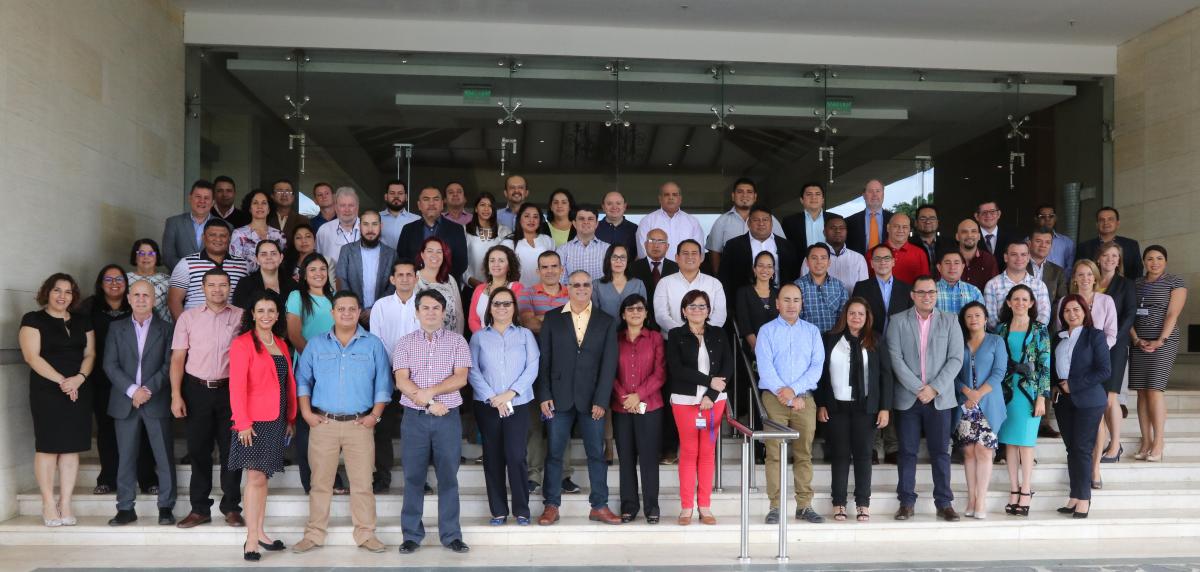
The training course, which is being offered for the second consecutive year in Costa Rica, is taught by experts from the Joint Institute of Food Safety and Applied Nutrition (JIFSAN) and the Produce Safety Alliance (PSA).
“During the event, representatives from Brazil, Costa Rica and Chile will also inform delegates of other countries about the opportunities and challenges they have identified when providing training to producers in matters related to the implementation of the FSMA in their respective countries,” noted Ana Marisa Cordero, Agricultural Health Specialist at IICA.
The specialist added that another objective of this learning process will be to foster the establishment of a network of experts in this topic in Latin America and the Caribbean.
More information:
Ana Marisa Cordero, Agricultural Health Specialist at IICA.