Countries are making headway in developing a regional strategy and national surveillance plans to prevent and control this problem in animal-based products.
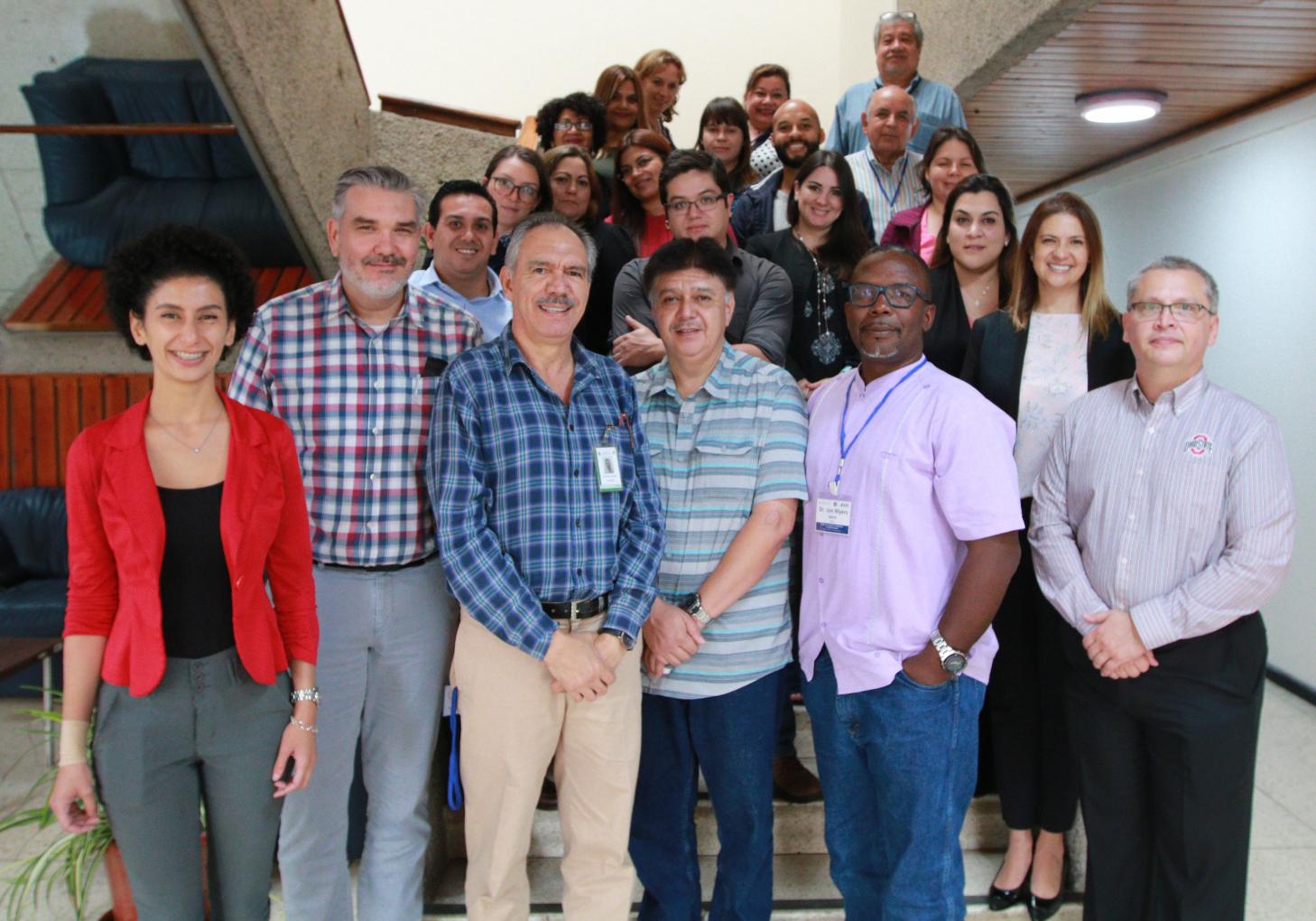
San José, 16 May, 2019 (IICA). Central America will develop a regional strategy to reduce the impact of antimicrobial resistance (AMR) in the agrifood chain, particularly on products of animal origin.
The process began with a meeting in Costa Rica between members of the official services for veterinary drugs and animal feed of the Ministries of Agriculture, as well as representatives from the pharmaceutical industry of countries in region.
In the meeting, which was presided over by the Inter-American Institute for Cooperation on Agriculture (IICA), the International Regional Organization for Plant and Animal Health (OIRSA), and Ohio State University, an assessment was made to determine each country’s current capacity to establish a national AMR surveillance plan, which is the focal point in devising a regional strategy.
Antimicrobial resistance occurs when genetic changes cause microorganisms (bacteria, fungus, and viruses) to develop resistance to drugs that were previously effective in eliminating them, such as antibiotics, fungicides and antiviral drugs.
It is also a worldwide problem that affects human and animal health, as well as the environment, and therefore requires a comprehensive and multisectoral approach, in which the agriculture sector plays a key role.
IICA Agricultural Health Specialist, Éricka Calderón, explained that, “We want to sensitize countries and to demonstrate to them the capacity that they have to develop surveillance plans. The only way to implement them is to integrate the expertise of the Ministries of Agriculture and Health, producers, academia, and research institutions, throughout the agrifood chain”.
“If we achieve this”, she said, “our region will have a harmonized system, which is equipped for safe international trade in products of animal origin, while also guaranteeing adequate public health”.
When AMR increases, health care for people and animals also increases, as does the amount and cost of treatment, which in turn impacts the economic and agricultural development of countries. Calderón explained that, “That is why prevention and control are a priority”.
The Director of Costa Rica’s National Animal Health Service (SENASA), Bernardo Jaén, emphasized that according to the World Health Organization, in 2012 alone approximately 700 thousand deaths in the world could be attributed to AMR, a figure that could climb to 10 million over the next 35 years. By 2050 this would result in losses of USD 100 million, particularly in developing countries.
“Thus, in the last decade a worldwide strategy has been developed to address the problem, mitigate its risks, and protect public and animal health. Central America has joined this initiative and has committed to adopting an integrated and transparent approach to dealing with the matter, combining the efforts of all sectors”, confirmed Jaén.
Scientist and professor at Ohio State University, Armando Hoet, explained that Central American countries’ efforts to develop individual surveillance plans and a regional strategy are of vital importance for citizens, who are generally unaware of the benefits of these initiatives.
Hoet revealed that, “One in every 5 cases of infectious diseases that are resistant to antibiotics are foodborne, whether as a result of contamination from improper handling, utensils, dirty hands, the environment, or the agrifood chain”.
“If there is no monitoring at critical points, such as the farm, slaughterhouse, packing and distribution facilities, as well as the point of sale, we will be unable to detect the source of the risk. Monitoring will allow us to determine the causes, and to ensure timely prevention and control”, he added.
IICA and the other organizations will follow up this initial assessment by assisting the countries to overcome any limitations that hinder the development of national surveillance plans, by systematizing the control mechanisms that are being implemented.
In 2017, the Institute undertook a similar initiative with the countries in the Southern Cone Standing Veterinary Committee (Argentina, Bolivia, Brazil, Chile, Paraguay y Uruguay), whose Technical Secretariat it oversees.
More information:
Éricka Calderón, Food Safety Specialist, IICA.