Over the last three years, the Institute was engaged in a project to assist in developing policies and institutional processes to support the design, implementation and participatory management of inclusive development projects in rural areas.
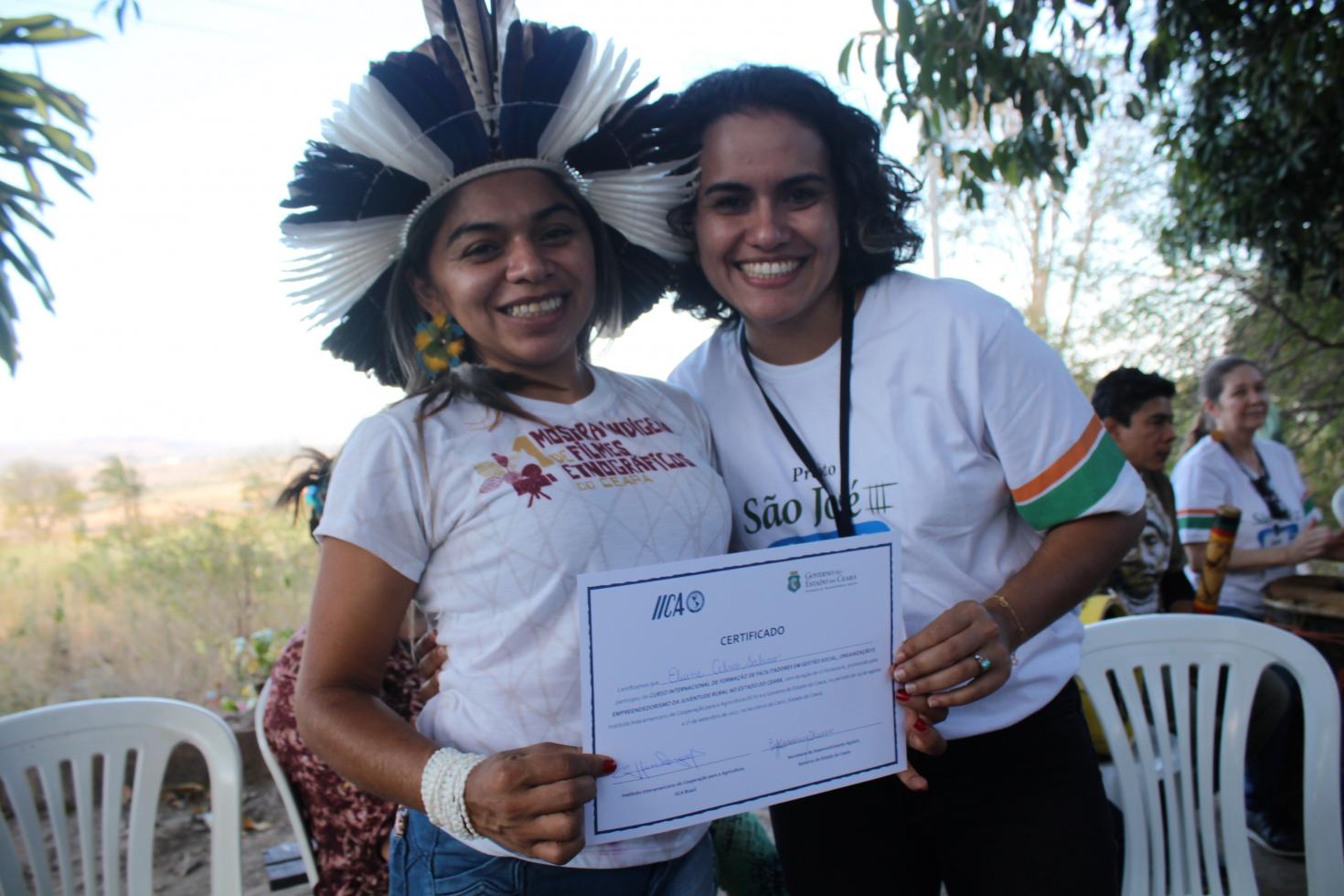
San José, 31 August 2018 (IICA). The “SERFUENTE” Network of Women’s Savings and Loan Schemes in Mexico is an initiative involving 56 indigenous and mestizo women from five communities in the Maravilla Tenejapa district of Chiapas. It provides family farmers in this region with access to cheap credit for sustainable production development.
The Inter-American Institute for Cooperation on Agriculture (IICA), in conjunction with other partners, adopted a strategy to strengthen this network, with a view to boosting the economic fortunes and empowerment of women in that region. The initiative is just one of the contributions of the international organization’s Flagship Project on Inclusion in Agriculture and Rural Territories, which has now come to an end, three years after it was implemented.
The project sought to contribute to the development of policies and institutional processes to support the design, implementation and participatory management of integrated policies for inclusive development in rural areas in thirteen Latin American and Caribbean countries: Barbados, Brazil, Colombia, Costa Rica, Dominican Republic, Ecuador, Guatemala, Guyana, Haiti, Honduras, Mexico, Suriname and Uruguay.
Project Leader, Joao Torrens, explained that, “Some of the key elements of the project were the strengthening of institutional frameworks and public policies related to social, economic and citizenship inclusion; the implementation of economic revitalization processes that focused on the inclusion of women, young people and people of indigenous and African descent; and the empowerment of marginalized individuals or groups, allowing them the freedom to participate in organizational, decision-making, knowledge-management and capacity-building processes”.
The specialist maintained that one of the more outstanding achievements of the project was the strengthened institutional capacity of 150 national and sub-national government entities involved in rural development and family farming, a process that also benefitted more than 2,000 individuals working in technical areas.
Torrens went on to add that, “By way of this initiative, IICA provided technical assistance for the preparation of eight official public policy documents on territorial development and inclusion in countries such as Costa Rica, Colombia, Ecuador and Guatemala, and for the development of nine draft policies and laws that are now under discussion in the aforementioned countries, as well as in Guyana, Honduras, Mexico and Suriname”.
Moreover, IICA drafted one hundred business plans in eight countries, focusing on the business ventures and production needs of more than 1,400 family famers, in areas such as production diversification and food security, cocoa production, coffee, vegetables, root crops, coconut, medicinal plants, livestock, ecotourism, to name a few. This was aimed at improving the availability of food, access to markets and income generation for the families involved.
The project also allowed more than 760 managers and leaders of 100 economic organizations, such as cooperatives, associations, informal groups, youth and women’s networks, federations and savings and loan schemes, to strengthen their capacities in key areas. Furthermore, it assisted 1,500 families to play a greater role in the decision-making process of coordination and consensus-building bodies for inclusive rural development in their countries.
The Flagship program also addressed knowledge management, through the creation of the System of Strategic Management for Area-based Development and Family Agriculture (SiGET), which is a virtual platform providing access to systematized knowledge on territorial development and social inclusion. It has been made available to institutions in 34 IICA member countries.
The project leader concluded by stating that, “The program also organized and strengthened nine platforms for coordination, dialogue and consensus-building among territorial actors such as Councils, Territorial Action Groups and Territorial Management Hubs, bringing together 79 governmental institutions, 33 non-governmental organizations and 124 family farming organizations.”
Under the leadership of its Argentinian Director General, Manuel Otero, IICA will continue to provide support in this area for the 2018 – 2022 period. This will be done through the Territorial Development and Family Farming Program, which is part of the new Medium Term Plan: a roadmap for the hemispheric organization, approved by almost 20 countries in mid-July.
More information:
Joao Torrens, Project Leader: Inclusion in Agriculture and Rural Territories.