IICA and the Government of Canada strengthened the capacities of the Codex Focal Points from thirteen Caribbean countries with a view to enhancing their participation in the international standard setting process.
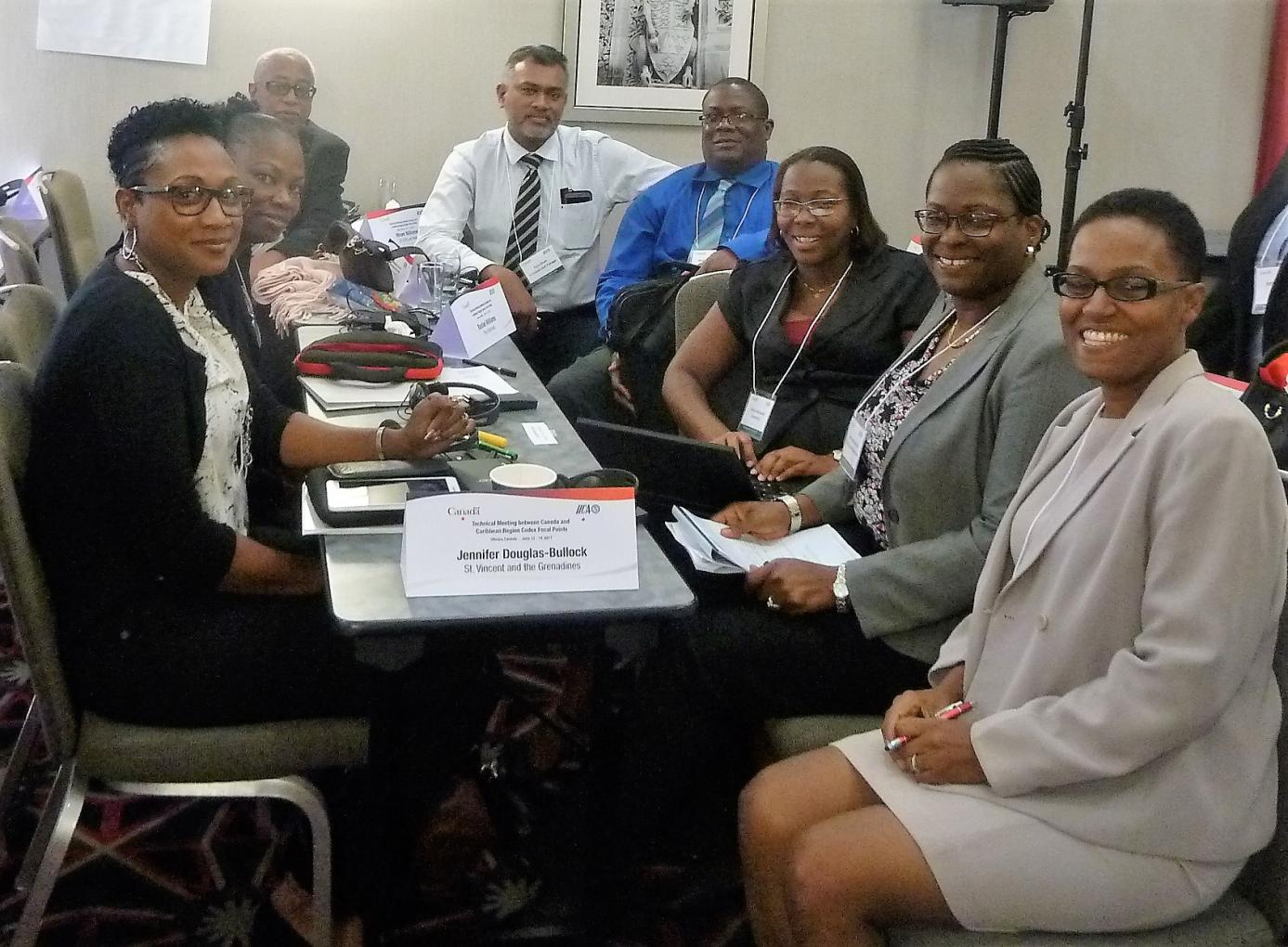
Canada. Representatives of thirteen Caribbean countries, all members of the Codex Alimentarius, recently attended an event in Canada aimed at improving their capabilities and sharing tools that will enable them to participate more effectively in meetings to discuss international food safety standards.
The Inter-American Institute for Cooperation on Agriculture (IICA) and the Government of Canada (through Health Canada) organized the meeting, which took place prior to the Codex Alimentarius Colloquium, also held in Canada in June.
In addition to creating and consolidating informal networks of contacts, the participants discussed a range of topics, including the current status of the Codex Alimentarius in the Caribbean region and the experiences of Caribbean countries with respect to international participation, institutional management and regional coordination.
Representatives of the Canadian Food Inspection Agency (CFIA) presented their country’s experiences in the management and administration of the Codex Alimentarius. In addition, the participants exchanged their own experiences in managing technical sub-committees and international participation, and discussed the Codex Trust Fund and its implementation.
The event, held in mid-June, was attended by the Focal Points of the Caribbean countries. Eric Bolaños, IICA Specialist in Agricultural Health and Food Safety, explained that these are the individuals responsible for managing the Codex Alimentarius in their respective countries. These individuals are also responsible for conducting technical negotiations and participating in meetings of the Codex Alimentarius committees, where international food safety standards are discussed, developed, and adopted.
According to the Focal Points, these types of events serve to improve their performance by providing an opportunity to learn from the experiences of other countries.
The event was sponsored by the government of Canada, with the cooperation of IICA and support from the governments of United States and Chile. A total of 32 representatives from 16 countries attended the meeting, 13 of whom were from the Caribbean region.
More information:
Eric Bolaños, IICA Specialist in Agricultural Health and Food Safety erick.bolanos@iica.int