The 175 tanks that are to be built will benefit one of the countries’ poorest communities. The project is being undertaken with support from IICA, Australia, and Brazil.

Haiti, February 1, 2013 (IICA). The inhabitants of Ganthier, in southeast Haiti, will no longer have to walk for four or five hours to obtain drinking water. The construction of 175 tanks to collect and store rainwater will make it possible for them to obtain the water they need for human consumption and to maintain their family vegetable gardens.
The tanks will be built by the Inter-American Institute for Cooperation on Agriculture (IICA), in coordination with the Ministry of Agriculture of Haiti and with financing from the Australian Agency for International Development (AusAID). The effort is the second phase of an existing project; 70 tanks were constructed under the first stage with technical and financial assistance from the Brazilian Cooperation Agency (ABC).
The IICA Representative in Haiti, Alfredo Mena, explained that the beneficiaries would be contributing actively to the project. Family members will be trained to support the digging operations, the preparation of house roofs, and the construction and installation of water catchment systems.
The initiative, involving an investment of AUD 750,000 (roughly USD 747,300) also calls for the training of 40 builders and 600 members of the community in the management and good use of water.
The aim of the project is to construct 160 family and 15 school cement water tanks, each with a capacity of 16 m3.
The Ministry of Agriculture, Natural Resources and Rural Development (MARNDR) of Haiti will work with the local authorities to select the families that will benefit from the tanks, with priority being given to households headed by women and including children, the elderly, and disabled members.
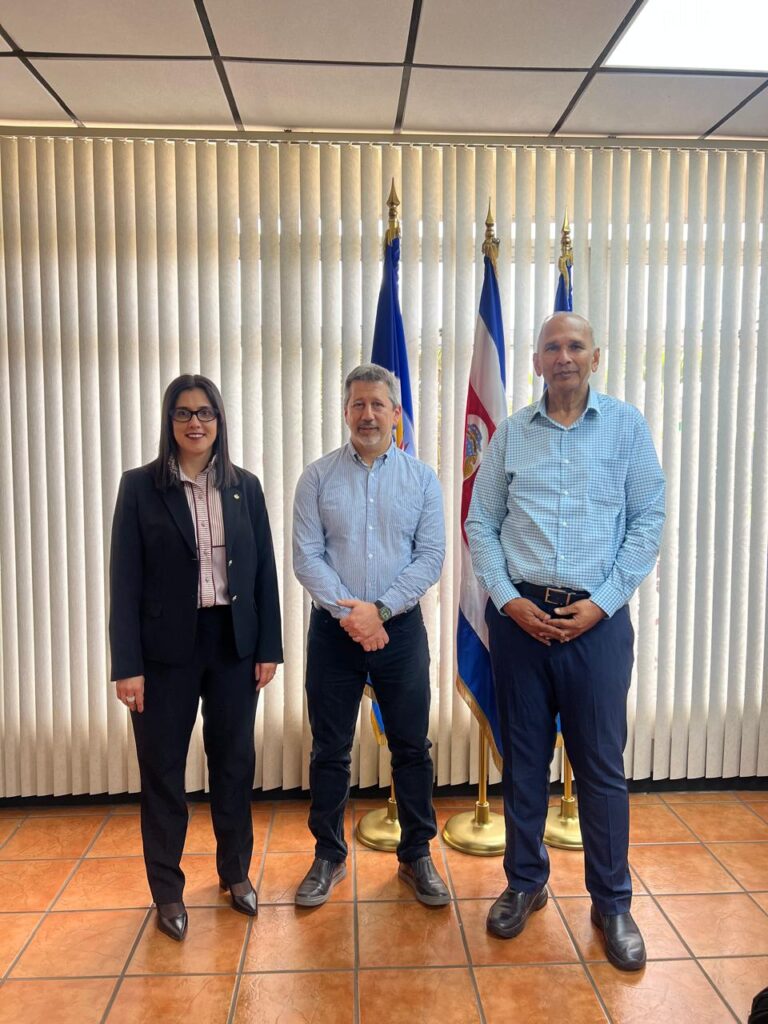
During the recent inauguration of the second stage, the Director General of the MARNDR, Lyonel Vabrun, emphasized the need for the authorities and the local population to play an active part in the initiative, stimulating interest in future actions aimed at good water management.
The IICA Representative remarked that good water use could encourage other international donors to expand the project and benefit a larger number of families.
For more information, contact:
alfredo.mena@iica.int