The Director General of the Institute presented a report on IICA’s contribution to the Family Agriculture Plan of that Central American nation.

San Salvador, El Salvador, July 2nd, 2013 (IICA). A bean producer from western El Salvador spoke on behalf of the country’s rural areas at the accountability activity held on June 27 by the Office of the Inter-American Institute for Cooperation on Agriculture (IICA) in El Salvador.
IICA/El Salvador demonstrated that it had fulfilled the Institute’s hemispheric mandate geared toward efficiency, transparency and the achievement of results.
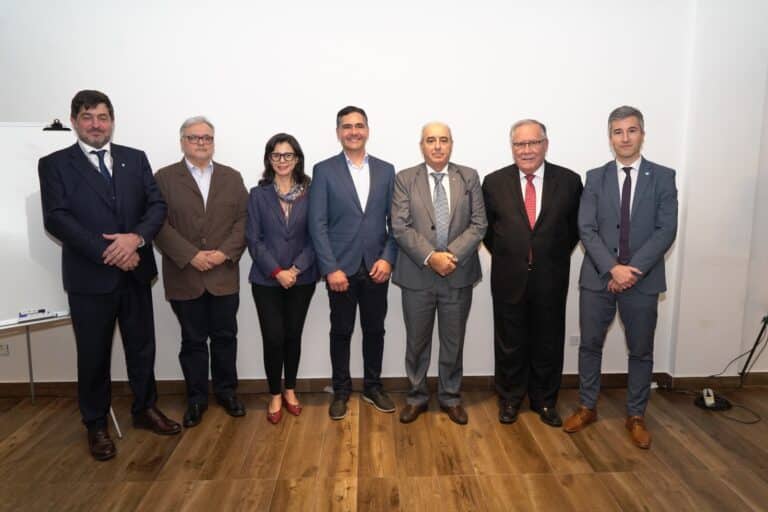
The activity was attended by the Deputy Minister of Agriculture and Livestock of El Salvador, Hugo Flores, and the Director General of IICA, Víctor M. Villalobos. The Deputy Minister of Foreign Affairs, Jaime Miranda, took part as a witness of honor.
A large audience of national agricultural stakeholders—including producers and agro-entrepreneurs, representatives of the public and private sectors, members of academia, cooperation agencies and the diplomatic corps, among others—heard Milagro Hernández describe the benefits of the work of the RedSicta. Ms. Hernández spoke as the representative of the Asociación Cooperativa El Garucho, which administers local and regional RedSicta projects.
The event provided an opportunity to publicize IICA/El Salvador’s technical cooperation work and bring to a formal conclusion its involvement in the Production Chains component of the Family Agriculture Plan (PAF), which it implemented over a 21-month period in collaboration with the Ministry of Agriculture and Livestock (MAG). The family farming subsector will continue to benefit from the technical and management capabilities transferred to the MAG for a long time to come.
Under the initiative, the Institute promoted a novel approach known as the Syncretic Innovation Model, based on a combination of participatory methodologies.
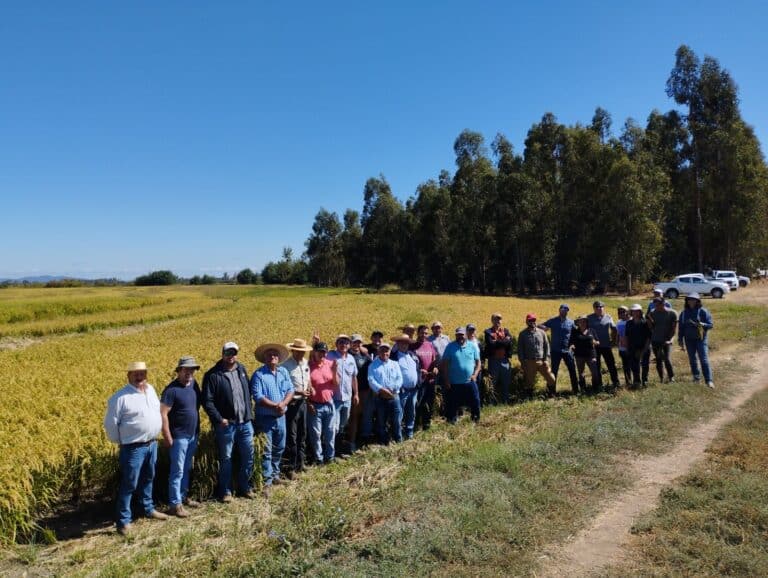
Implemented jointly with the technical personnel of the MAG and the National Center for Agricultural and Forestry Technology (CENTA), the model led to the transfer of a broad array of agricultural knowledge and technology, thereby improving extension and facilitating innovation under various initiatives in prioritized chains. It also stimulated higher productivity and commercial activity, and enhanced the technical capabilities of some 17,000 producers.
IICA/El Salvador transferred the model, which is proving to be an extremely useful technical tool for agriculture in a number of countries. The Institute regards this case as a benchmark for cooperation in family agriculture throughout the hemisphere.
The IICA Director General presented the report: “By Sowing Innovation, We Are Reaping Prosperity: Family Agriculture Program for the Production Chain (PAF PC)” Sembrando innovación se cosecha prosperidad: Programa de Agricultura Familiar para el Encadenamiento Productivo (PAF CP), based on the joint technical cooperation work of the Institute and the Government of El Salvador in implementing the Production Chains component of the Family Agriculture Plan (PAF).
The report describes the experience of implementing the model applied by IICA, successful cases and lessons learned, among other topics. A video showing part of the work involved was also shown during the activity.
For more information, contact:
gerardo.escudero@iica.int