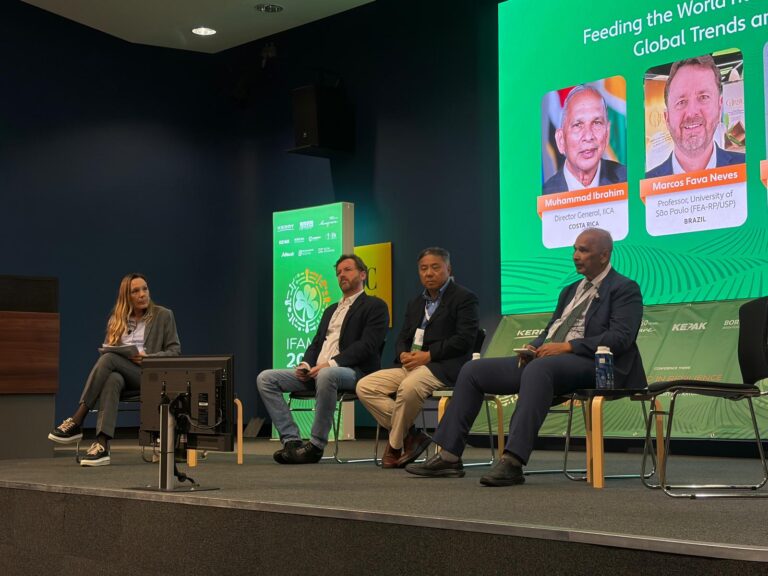
As part of efforts of ECADERT, specialists from Central America, Brazil and Spain share experiences on way to increase impact of territorial action groups on quality of life in rural areas.
San José, Costa Rica, November 10, 2011 (IICA). In January and February 2001, two earthquakes struck El Salvador, resulting in the loss of more than a thousand lives and major damage to housing and agricultural infrastructure. In the Department of Usulutan however, all was not negative. Out of the tragedy emerged groups determined to work together to rebuild what had been destroyed. Today, these same groups are focusing their efforts on improving the standard of living for a portion of the population.
Luis Calles, Coordinator of the FUNDAMUNI projects (Foundation in Support of the Municipalities of El Salvador), explained that the activities of these groups also generated an additional benefit: increased citizen participation in collective decision making, which that would have been unthinkable before the signing of the Peace Accords in 1992.
“One objective of the participatory processes is to foster leadership among the people,” said Calles, who was in Costa Rica to attend an international methodological workshop on experiences in territorial rural development, held at the Headquarters of the Inter-American Institute for Cooperation on Agriculture (IICA).

Meeting in San Jose, specialists in the field from Central America, Brazil and Spain shared their success stories and discussed the obstacles that territorial action groups (GAT) face in improving well-being in rural areas, where agricultural activities are usually both a source of food and the basis for business opportunities such as agroindustry and agrotourism.
Sona, in Panama, fits this description, according to Susana Morales, representative of the Local Management Center (CEGEL). In this district of the Province of Veraguas, the involvement of political authorities has also been key to achieving results, such as the existence of university extension services in the district so that young people can study without having to travel to the provincial capital.
However, as a result of this interaction with government bodies, community leaders sometimes become involved in political parties, according to Jose Luis Cardenas, Coordinator in Central America for the ETEA Foundation for Development and Cooperation of Spain. “Those involved in territorial rural development must put electioneering, but not necessarily politics, aside,” he said.
Systematization, the first step
How these participatory processes operate, and their impact on decision making, is unique to each rural territory. Therefore, the methods used to promote them vary, even within the same country.
This, according to Mario Samper, an IICA Rural Development Specialist , means that the processes must be systematized, which involves documenting and interpreting the experiences, actions and results of the GAT in order learn what does and does not work in territorial management, with the participation of social and institutional stakeholders in the territories.
These experiences, once systematized, can be important for other groups pursing the same objective. “They become a tool for capacity building,” he added.
According to Jose Antonio Herrera, Manager of the Medios de Vida (livelihoods) Area the Catholic Relief Services Agency, for example, in Chalatenango, El Salvador, the systematization of the actions of the Jesucristo Campesino church in the 1990s served as the basis for formulating the territorial rural development strategy, especially the identity-related component.
The participants in the methodological workshop identified three of the challenges the countries participating in the Central America Strategy for Rural-Area Based Development (ECADERT) must still meet: to ensure the more active and long-term involvement of all the pertinent state institutions; to do more to empower women and increase their leadership skills; and to mobilize resources with which to promote citizen participation.
The meeting was organized by IICA and the Regional Platform for Technical Support to Territorial Rural Development, with support from the Spain-SICA Fund and collaboration from the ETEA Foundation, the Secretariat of Rural Development of Brazil and the Executive Secretariat of the Central American Agricultural Council (CAC).
For more information, contact:
mario.samper@iica.int