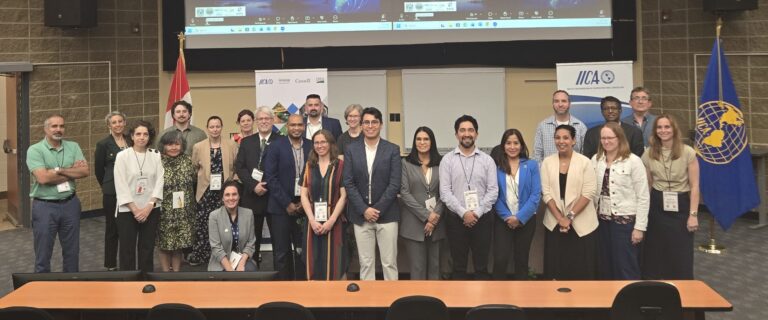
Agriculture and development professionals from across Canada and around the world came together to celebrate the successes of the CA$124.5 million Canadian International Food Security Research Fund (CIFSRF).

On October 3-4, 2018, agriculture and development professionals from across Canada and around the world came together to celebrate the successes of the CA$124.5 million Canadian International Food Security Research Fund (CIFSRF). This fund was financed by Global Affairs Canada (GAC) and the International Development Research Centre (IDRC). It was active from 2009 to 2018, and funded 39 projects focused on food security in 24 Southern countries and in Canada.
The event brought together members of Canada’s development and agriculture communities, as well as many partner organizations from around the world. The projects discussed over the two days were extremely diverse, from the development of animal disease vaccines to the development of Vitamin A-fortified cooking oils. Unique to this event, was the opportunity to hear directly from young researchers from around the globe who had worked on these projects, to learn about the impact of the projects in their communities, and on their careers. An important message shared throughout this meeting was the importance of research collaboration across nations and across disciplines to aid in the preparation of successful development projects than can truly have an impact.
IICA Canada was happy to participate in the breakout discussions across the two days, on topics ranging from gender integration into projects to best practices for “scaling-up” new innovations in development. We were also excited to receive news on the steps being taken to commercialize results of the hexanal nanotechnology project which can help to reduce post-harvest losses in tropical regions. IICA Canada sought to explore its potential in Latin America & the Caribbean, and in partnership with the lead Canadian researchers in 2016 shared this new innovation with IICA member countries.
Thank you to IDRC and GAC for putting on an incredibly informative and fruitful event!
For more information:
Dr. Audia Barnett