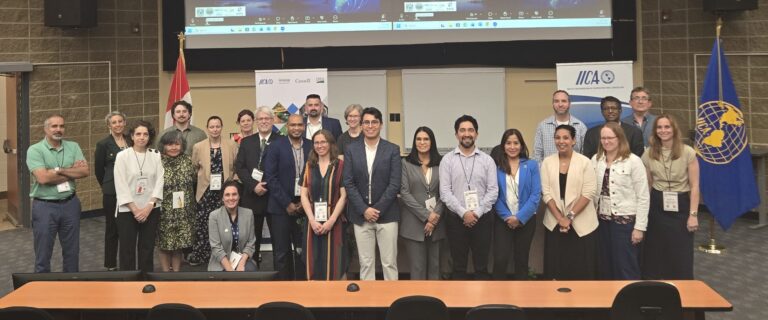
Breakout group discussions represented a new and highly favored feature at the annual partners’ meeting. Groups focussed their energies on reviewing factors pertinent to: Economic growth/ Sustainable development; Well-being in the territories; International Trade; Resilience in agri-food systems; and, Engaging people

Representatives from the Diplomatic Corps. Government, Private Sector and Not-for-Profit organizations who met mid-October to hear of the achievements of the IICA Office in Canada over the last programming period, were pleased that they were also privy to the Institute’s plan for the upcoming period. Poll results indicated that there were many “first-timers” who benefited from information shared during the country office’s annual session for stakeholders. Attending for the first time were also IICA’s new Director General, Dr. Manuel Otero who communicated his vision for the Institute and Mr. Aaron Fowler, new Director General of the Trade Agreements and Negotiations Directorade at Agriculture and Agri-Food Canada who congratulated IICA on its work in Canada.
Citing strides made in its technical cooperation priorities to include empowering countries in the hemisphere to use science for decision making for trade, knowledge mobilization and internationalizing research and innovation, the IICA Office in Canada made its value-added worth clear. Of specific interest was the innovative study conducted on Canada’s Seasonal Agricultural Workers Program. This unearthed new perspectives on its potential in both, home countries and Canada. The progress report prepare participants to provide their own views on how the Canadian office could continue to deliver impactful results within the ambit of its new Medium Term Plan (2018 – 2022).
Breakout group discussions represented a new and highly favored feature at the annual partners’ meeting. Groups focussed their energies on reviewing factors pertinent to: Economic growth/ Sustainable development; Well-being in the territories; International Trade; Resilience in agri-food systems; and, Engaging people. Ideas for addressing each of the themes in a meaningful way across the hemisphere, were debated with full of participation. Informative and lively, the consultations generated excellent suggestions for ensuring that IICA continued to be relevant and essential in Canada. Feedback was very positive, with guests indicating that the morning was time well-spent.
The team at IICA Canada expressed appreciation to partners and predicted that joint efforts would characterize upcoming work plans.
For more information:
Dr. Audia Barnett