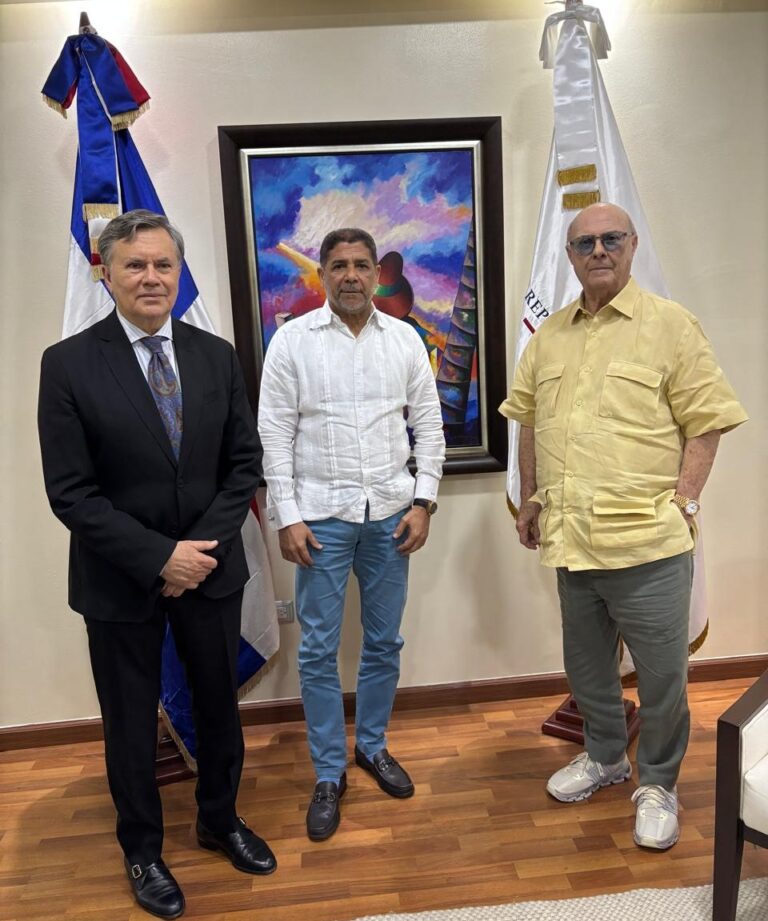
The 2018-2022 National Indicative Plan is a management tool that organizes and guides the actions of IICA-DR with its strategic partners linked to the agricultural sector

 Santo Domingo, Dominican Republic, September 2018 (IICA). As part of the strategic planning process, the IICA Delegation in the Dominican Republic of the Inter-American Institute for Cooperation on Agriculture (IICA) developed the National Indicative Plan, an instrument of excellence for the achievement of its objectives for the 2018-2022 period. This document was written based on the institutional regulations and the objectives set out in the 2018-2022 Medium Term Plan (MTP).
The aim of this 2018-2022 Plan is to support the Dominican Republic in achieving the goals established in the National Development Strategy and the Sustainable Development Goals (SDGs) that are linked to the agricultural sector and rural well-being.
Based on the SDGs and National Development Strategy, there were identified lines of action where this Plan will make its contributions through its implementation with a IICA technical cooperation agenda, supported by the five hemispheric 2018-2022 MTP programs and its transversal topics, as well as with the technical instruments developed and made available to its Member States.
The 2018 – 2022 Plan is based on the guidelines and strategic objectives established in the 2018-2022 Medium Term Plan, whose operative mandate establishes the strategic objectives, transformations, contributions and institutional functions of the representations in the countries, the National Development Strategy, the Sustainable Development Goals (SDGs); as well as other specific requests for technical cooperation from the different public and private institutions related to the agricultural sector.
The technical cooperation of the IICA Delegation in the Dominican Republic, together with the efforts of public and private institutions of the Agricultural Sector, will be contributing in the promotion of development policies that are focused on guaranteeing the food stability of the Dominican people and the growth of exports; as well as the initiatives that are carried out to promote the production and productivity of the national agriculture, credit, innovation, food safety and health, rural infrastructure, risk management, environment, associativity and institutional strengthening; among others.
More information: Hector Garibaldis Perez, Specialist in Agribusiness, hector.perez@iica.int