Inter-American Institute for Cooperation on Agriculture

Agribusiness

Beekeeping Task Force Meeting

Tiempo de lectura: 3 mins.

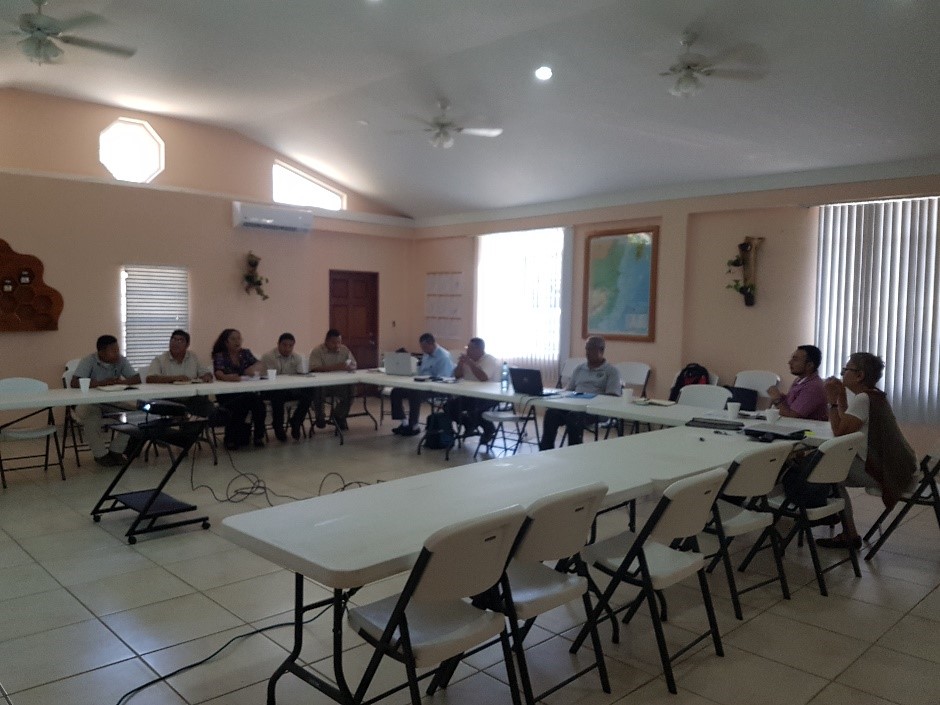
On February 18th, 2018 the Inter-American Institute for Cooperation on Agriculture participated in the beekeeping task force meeting to discuss a national beekeeping project that is being formulated to obtain funding through the Country Assistance Program from the CARICOM Development Fund.  The project’s overall objectives are to increase rural livelihood opportunities through beekeeping in farming communities especially among women and youth and to build technical and entrepreneurial capacities of beekeepers and beekeeping technicians for a sustainable beekeeping industry.


More information:
everalda.westby@iica.int

Share

Related news​

Kingston, Jamaica

May 25, 2026

Jamaica to host 2026 Caribbean Week of Agriculture, which will have a focus on innovation and IICA as one of its organizers

The twentieth edition of the Caribbean Week of Agriculture  entitled “The New Face of Caribbean Food Systems”  will be held in Kingston, Jamaica, from 27 September to 2 October. The Inter-American Institute for Cooperation on Agriculture (IICA) will be one of its organizers.

Tiempo de lectura: 3mins

San José, Costa Rica

May 22, 2026

Bioeconomy in Latin America and the Caribbean: a generation seeking to transform science into rural profitability

There is a new generation of rural entrepreneurs in Latin America and the Caribbean that no longer talks only about producing more food. They naturally think in terms of biomass, traceability, bioinputs, carbon capture, biodiversity, and circular economy.

Tiempo de lectura: 3mins

Mexico City

May 20, 2026

Central America and Mexico advance review of regional protocols to prevent and control the New World Screwworm with support from USDA and IICA

The meeting highlighted the importance of strengthening regional cooperation, underscoring the value of joint work among countries and institutions to reinforce technical and operational capacities in the region, and advancing toward harmonized mechanisms that improve epidemiological surveillance, information exchange and animal movement control against the NWS.

Tiempo de lectura: 3mins