Instituto Interamericano de Cooperación para la Agricultura

Sanidad agropecuaria

Dominican Republic declares free of MOSCAMED

Sanidad agropecuaria

Dominican Republic declares free of MOSCAMED

Tiempo de lectura: 3 mins.


Dominican Republic declares free of MOSCAMED


Dominican Republic declares free of MOSCAMED

The authorities of the agricultural sector of the Dominican Republic declared on Friday, July 7th the eradication of the Mediterranean fruit fly from the national territory, which will allow the export of 18 products from the Dominican Republic (mainly fruits and vegetables) to the United States of America and other countries which prohibit the entry of products from affected places.

By the resolution No. RES-MA-2017-11, the Ministry of Agriculture declared eradicated the outbreak of Mediterranean fruit fly (Ceratitis capitata Wiedemann) for several months that affected the provinces of La Altagracia and La Romana in the east region of the Dominican Republic.

Gregory Marte, general coordinator of the MOSCAMED-RD program, said that 18 fruits and vegetables were banned, putting at risk 30,000 jobs and economic losses of 40 million dollars in nine months.

Different leaders of the agricultural sector have expressed the importance of having declared the Dominican Republic free of the Mediterranean fruit fly because it will allow the resumption of exports of a series of products to the United States market.

This is a transcendent milestone because of more than 120 countries infested by the pest; the Dominican Republic today is among the 14 countries that have managed to eradicate the Mediterranean fruit fly thanks to the contribution of US$12 million of the Dominican government and the technical and financial support from international organizations.

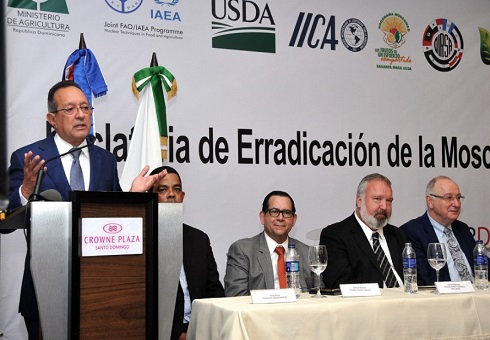
The event was led by the Minister of Agriculture, Ángel Estevez, leaders of the national agricultural sector and representatives of international organizations, including Mr. Frank Lam, Representative of IICA in the Dominican Republic.


Compartir

Noticias relacionadas

Grupo de participantes del proyecto regional PIVOT reunidos en la sede del IICA, en una iniciativa que promueve la prevención y preparación frente a riesgos sanitarios con potencial epidémico y pandémico en América Latina y el Caribe, mediante el enfoque Una Salud, que integra la salud humana, animal y ambiental.

San José, Costa Rica

mayo 12, 2026

IICA y socios internacionales activan proyecto PIVOT para reforzar la preparación ante Influenza Aviar y otras enfermedades de origen animal en la región

El Instituto Interamericano de Cooperación para la Agricultura (IICA) avanza en la planificación del proyecto regional Prevención de infecciones mediante la vigilancia en el origen de la transmisión en América Latina y el Caribe (PIVOT, por sus siglas en inglés), orientado a fortalecer la prevención frente a riesgos sanitarios con potencial epidémico y pandémico en América Latina y el Caribe, mediante el enfoque de Una Salud, que integra la salud humana, animal y ambiental.

Tiempo de lectura: 3mins

Valparaíso, Chile

mayo 11, 2026

De la erosión a la cosecha: una experiencia de recuperación de suelos y diversificación productiva en el secano costero de Chile

El IICA trabaja junto a la Cooperativa Agrícola Campesina Cuncumén en un predio de 17,3 hectáreas, con financiamiento de la Fundación para la Innovación Agraria (FIA), en el proyecto Diversificación silvoagropecuaria como metodología y estrategia productiva y optimización de riego predial, en el área de conversión secano en Cuncumén, provincia de San Antonio.

Tiempo de lectura: 3mins

Tapachula, México

mayo 8, 2026

Sin financiamiento inteligente no hay transformación: la otra cara de la agricultura tropical

Detrás de muchos de los debates actuales sobre agricultura tropical —productividad, sostenibilidad, innovación— hay una variable que empieza a ganar cada vez más peso, aunque no siempre esté en primer plano: el financiamiento. Cómo se asigna, qué incentivos genera y bajo qué condiciones llega al productor son preguntas que se vuelven centrales.

Tiempo de lectura: 3mins