October 2015: Survival and growth of agriculture in St Vincent and the Grenadines, and indeed the wider Caribbean region, depend heavily on our ability to improve the competitiveness within our food supply chains to meet or match the competition from external food suppliers. An important component of any strategy to improve competitiveness must focus heavily on improving the transparency within agricultural markets.
October 2015: Survival and growth of agriculture in St Vincent and the Grenadines, and indeed the wider Caribbean region, depend heavily on our ability to improve the competitiveness within our food supply chains to meet or match the competition from external food suppliers. An important component of any strategy to improve competitiveness must focus heavily on improving the transparency within agricultural markets. It is this truism that drives IICA’s involvement in efforts to assist countries within the region to establish or improve their agricultural marketing information systems.
In St Vincent and the Grenadines, IICA has worked assiduously with the Ministry of Agriculture, Forestry, Fisheries and Rural Transformation (MAFFRT) in its efforts to improve market transparency.
At the behest of the MAFFRT, IICA conducted a study of the National Agricultural Management Information System (NAMIS) providing a comprehensive assessment of the gaps and challenges and detailing recommendations for its improvement over the short, medium and long term.
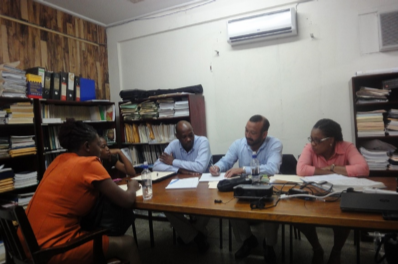
Then, with assistance from IICA-MIOA Technical Secretariat (Mr. Frank Lam), IICA supplied the MAFFRT with a cloud-based Agricultural Marketing Information System (AMIS). This system will provide information on prices and commodities to stakeholders across the agriculture sector. The Institute’s contribution included both provision of the database system and also training of four members of the Ministry’s staff for its operation. This database system is expected to aid in positioning the Ministry to greatly improve its role in ensuring transparency in the market place. IICA anticipates that this initiative will also allow users of agricultural information products to have at their disposal information to improve their productivity and economic activity in the important food chains.