All CARICOM member states will receive varieties of iron biofortified beans and zinc biofortified rice varieties, products that can provide an affordable supply of nutritious food to the whole population in the region.
San José, 23 june 2020 (IICA) – The Inter American Institute for Cooperation on Agriculture (IICA) and the Caribbean Community (CARICOM) achieved a milestone on a project to support building resilience on non-communicable diseases.
The CARICOM Council of Trade and Economic Development (COTED), held in October 2019 in Belize, approved mobilization of funding for a 5-year project for the adoption and production of biofortified crops in the region as part of an overall strategy to address hidden hunger and non-communicable diseases.
81% of deaths in CARICOM are attributable to heart disease, diabetes, cancer, obesity and chronic respiratory diseases all collectively known as non-communicable diseases (NCDs).
COVID-19 is more lethal in people with NCDs and weakened immune systems. Thus far, CARICOM has been successful in mitigating the spread of and maintaining a low mortality rate due to virus.
The project was presented by IICA who developed and now lead a collaborative network of partners called the CARICOM Biofortification Network (CBN), in response to a request from CARICOM for an actionable strategy to address NCDs in the region.
The CBN is a collaborative network of CARICOM agencies, regional and international specialists from the Caribbean Agricultural Research and Development Institute (CARDI), The International Centre for Tropical Agriculture (CIAT), Latin American Irrigation Rice Fund (FLAR), Guyana Rice Development Board (GRDB), HarvestPlus LAC, Pan American Health Organization (PAHO), Ministry of Food, Agriculture and Immigration (MFAI) from Belize and Penn State University, with IICA as lead.
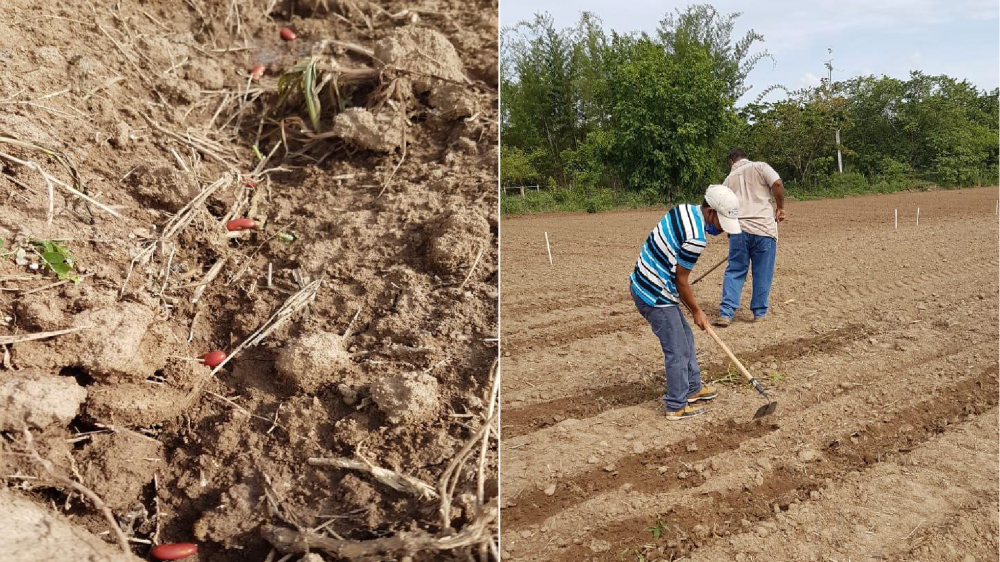
“The CBN is pleased to announce that the first biofortified crop trial for iron rich beans was established in Belize on 28 May 2020. Plans are on the way to establish the first zinc biofortified rice trial in Guyana in June 2020”, said Elizabeth Johnson, IICA Representative in Jamaica.
All CARICOM member states will benefit from the project, which will deliver varieties of iron biofortified beans and zinc biofortified rice varieties best suited to growing regions in Belize and Guyana for export to and consumption in all member states.
“The purpose of these trials is to develop and identify the best varieties for commercial production of biofortified rice and beans for consumption in CARICOM”, added Johnson.
Rice and beans form the basis of most meals and can be eaten up to 5 days per week in CARICOM. Therefore, these staple crops developed by traditional plant breeding, ie. non-genetically modified, can provide an affordable supply of nutritious food to all levels of CARICOM society.
Data published in Jan 2020 by the World Health Organization (WHO), showed that a population replacing 40% of its bean intake with iron biofortified beans reduced iron deficiency related conditions by as much as 30%
Currently, treating NCD related illnesses in CARICOM costs governments 4.2% of GDP. These chronic diseases also leads to sub-optimum productivity in CARICOM as over 80% of the workforce is afflicted with one or more pre-existing conditions due to NCDs.
Combined with the economic crisis resulting from COVID-19, treating NCDs becomes an extenuating cost to CARICOM governments which, may result in the poorest and most vulnerable in the region being unable to access adequate healthcare.
This amazing accomplishment was made possible through tremendous goodwill by CBN partners with seed funding from the Ministry of Food, Agriculture and Immigration (MFAI), IICA and the Guyana Rice Development Board (GRDB).
Funding is now required to support full implementation of this project to realize an affordable solution to address NCDs while building resilience to COVID-19 in CARICOM.
The data collected could also substantiate CARICOM’s achievement of Sustainable Development Goals.
More information:
Elizabeth Johnson, IICA Representative in Jamaica.