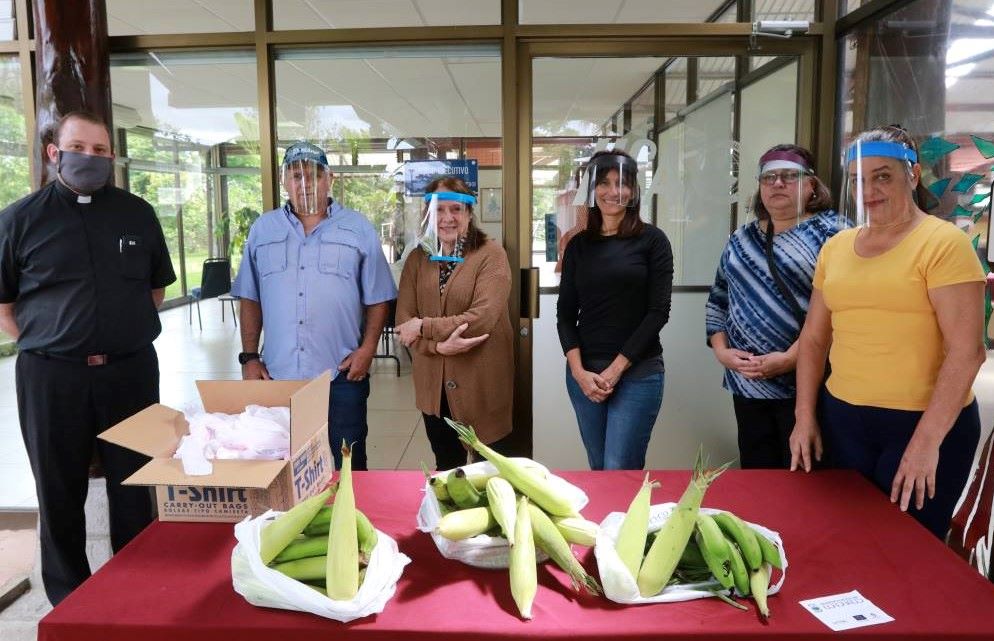
In Coronado, one of the beneficiary communities, the food is delivered to close to 150 families that are registered at the local municipality and religious centers.
San Jose, 9 July 2020 (IICA). – The food bank jointly implemented by the Inter-American Institute for Cooperation on Agriculture (IICA) and the Tropical Agricultural Research and Higher Education Center (CATIE) has made its third delivery of basic products to communities in the Turrialba and Coronado districts, in Costa Rica.
In Coronado, close to 150 families will receive green beans, bananas, plantains, corn and mangoes grown under the highest quality standards. The beneficiaries are registered at the local municipality and several religious centers.
The project seeks to deliver fresh food products to populations whose economic situation has been gravely impacted by the pandemic.
Nydia Jiménez, Deputy Mayor of Coronado, and priest Miguel Ángel Barrientos witnessed the delivery of the food boxes on 9 July.
The food, which is being grown at the IICA-CATIE experimental and commercial farm in Turrialba, is delivered every two weeks.
“This project enables us to deliver products to vulnerable populations affected by the pandemic, while transferring the technology used to small-scale farmers”, explained Erick Quirós, IICA Special Affairs Coordinator for the Central Region.
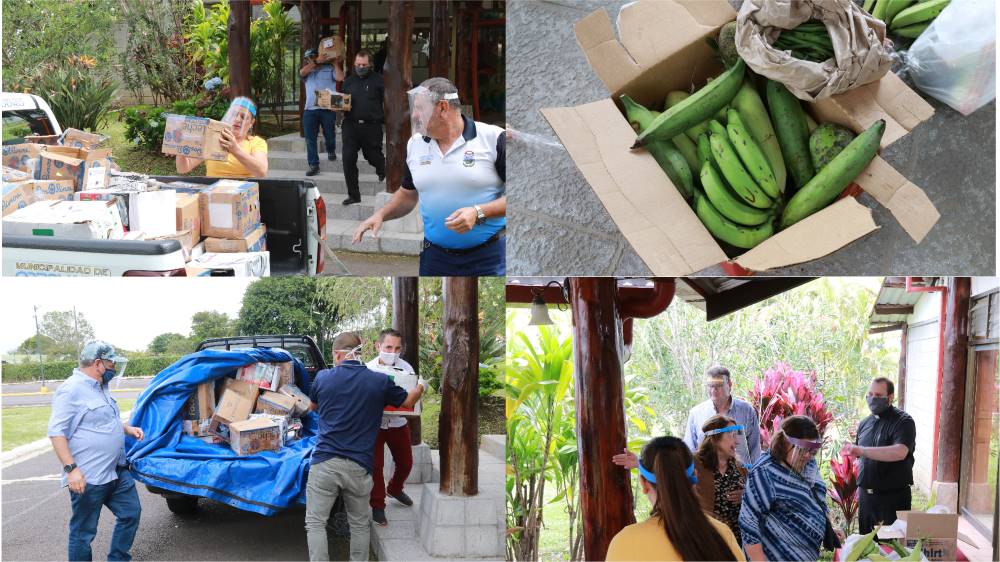
Cleaning supplies, canned goods and other products are also being donated.
The food bank initiative is supported by the cooperation activities of the PROCAGICA and AGRO-INNOVA projects, in which the European Union (EU) participates as a partner.
During a later stage, the food production model will be replicated in the other Central American countries where these initiatives are carried out.
PROCAGICA stands for Central American Program for Integrated Coffee Rust Management, while AGRO-INNOVA refers to the project Innovative Multi-Strata Agroforestry Systems in the Central American Dry Corridor. Both projects seek provide small-scale farming families with access to research findings and innovations that can assist them in overcoming issues related to food and nutritional security in their territories.
More information:
Institutional Communication Division
comunicacion.institucional@iica.int