The Director General of the Inter-American Institute for Cooperation on Agriculture (IICA), Manuel Otero, says that agriculture has made enormous progress over the last 60 years in feeding a burgeoning population with fewer natural resources, and he expects it to continue improving in the future, both in terms of productivity and its environmental impact.
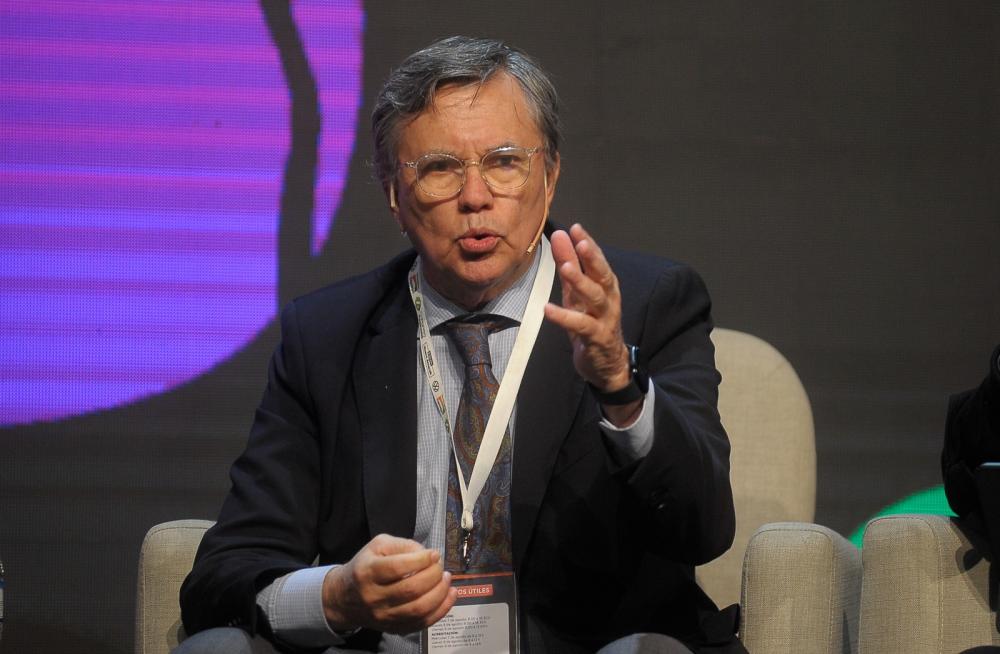
Buenos Aires, 12 August 2024 (IICA). The Director General of the Inter-American Institute for Cooperation on Agriculture (IICA), Manuel Otero, says that agriculture has made enormous progress over the last 60 years in feeding a burgeoning population with fewer natural resources, and he expects it to continue improving in the future, both in terms of productivity and its environmental impact.
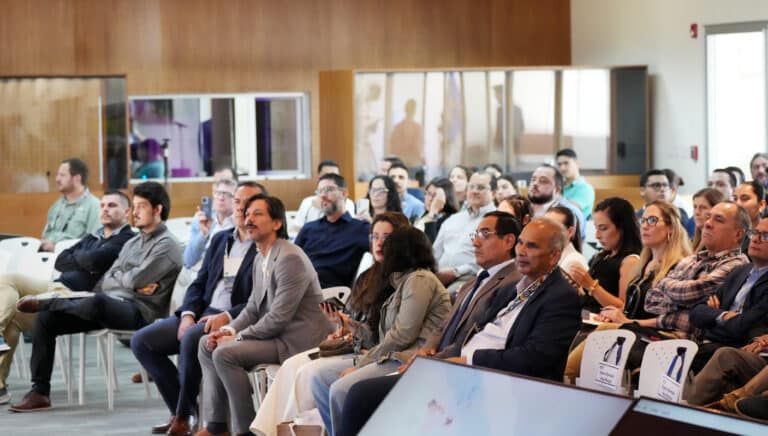
Otero spoke in Buenos Aires before a large audience of producers, representatives of agribusinesses committed to technological innovation, academics and officials, at the Congress of the Argentine No-Till Farmers Association (AAPRESID).
IICA and AAPRESID organized a special section of the Congress to allow leading international experts to discuss the future of the agrifood systems of the Americas.
The Institute and AAPRESID have a strategic partnership that enables them to work closely together. The association is a network of farmers that has been promoting sustainable food, fiber and energy production systems in the Argentine countryside for more than 30 years.
“Agriculture will have to respond to major challenges going forward. It is not just a question of ensuring food security for a growing population. Agriculture will also have to tackle the climate crisis, which poses the challenge of not only contributing to mitigation, but also of adapting to its impact. In addition, it will have to provide more nutritious food, collaborate with the energy transition, and help revitalize rural territories,” Otero remarked.
Major challenges
The IICA Director General pointed out that this is not the first time that agriculture has faced huge challenges; it did so during the Great Depression of the 1930s, the Second World War, and the recent COVID-19 pandemic.
Otero stressed that the way we speak about agriculture is important: “We can’t go around saying that all the problems are agriculture’s fault, and that we have failed agrifood systems. Agriculture today is much better than it was 60 years ago, and it will be even better in the future.”
For that reason, he had a positive message for his audience and urged people to “stop preparing for the future we expect to have and start creating the future we want to have. The next 25 years will be decisive and more important than the previous 10,000 years. The future of agriculture is in our hands. We need to design public policies that boost nature, farmers and innovation, and have a long-term vision.”
Otero referred to the strength and significance of IICA’s strategic partnership with networks of producers like AAPRESID that are committed to sustainability and innovation, explaining that: “We can’t travel this road alone. We have to join forces. At IICA we are promoting a continent-wide partnership for food security and sustainable development, an outward-looking partnership to promote initiatives and collective actions that pool the resources of governments, the private sector, academia, and cooperation organizations.”
The IICA Director General closed with a quote from scientist Norman Borlaug, regarded as the father of the Green Revolution that tripled food production in the 1960s: “You can’t build a peaceful world on empty stomachs and human misery.”
More information:
Institutional Communication Division.
comunicacion.institucional@iica.int