Santo Domingo, Dominican Republic, 9 July 2025 (IICA) – The Director General of the Inter-American Institute for Cooperation on Agriculture (IICA), Manuel Otero, spoke of the Dominican Republic’s tremendous strides in enhancing technification and productivity in the agriculture sector and its positive effects on food and nutritional security and the country’s exports.
At the start of an official visit to the country, the IICA Director General met separately in Santo Domingo with Minister of Agriculture, Limber Cruz, and Deputy Minister of Multilateral Foreign Policy at the Ministry of Foreign Affairs, Rubén Silié, with whom he discussed IICA’s main technical cooperation areas in the Dominican Republic, most notably joint work to combat and eradicate African Swine Fever (ASF) and other biosecurity issues, and contributions in various areas towards innovation, digitalization and the resilience of the local agriculture sector.
Otero noted that, “The Dominican Republic is making impressive, rapid, measurable and sustainable strides in agricultural productivity. Today, the country feeds three times its population, if you factor in tourism and the surplus production that it exports to neighboring countries. It has also incorporated agriculture into its development strategies”.
Furthermore, he pointed out “the outstanding production transformations, such as the enormous expansion of greenhouses and fruit production that have boosted the income of farmers, facilitated economic expansion and contributed to healthier diets for Dominicans and visitors to the country”.
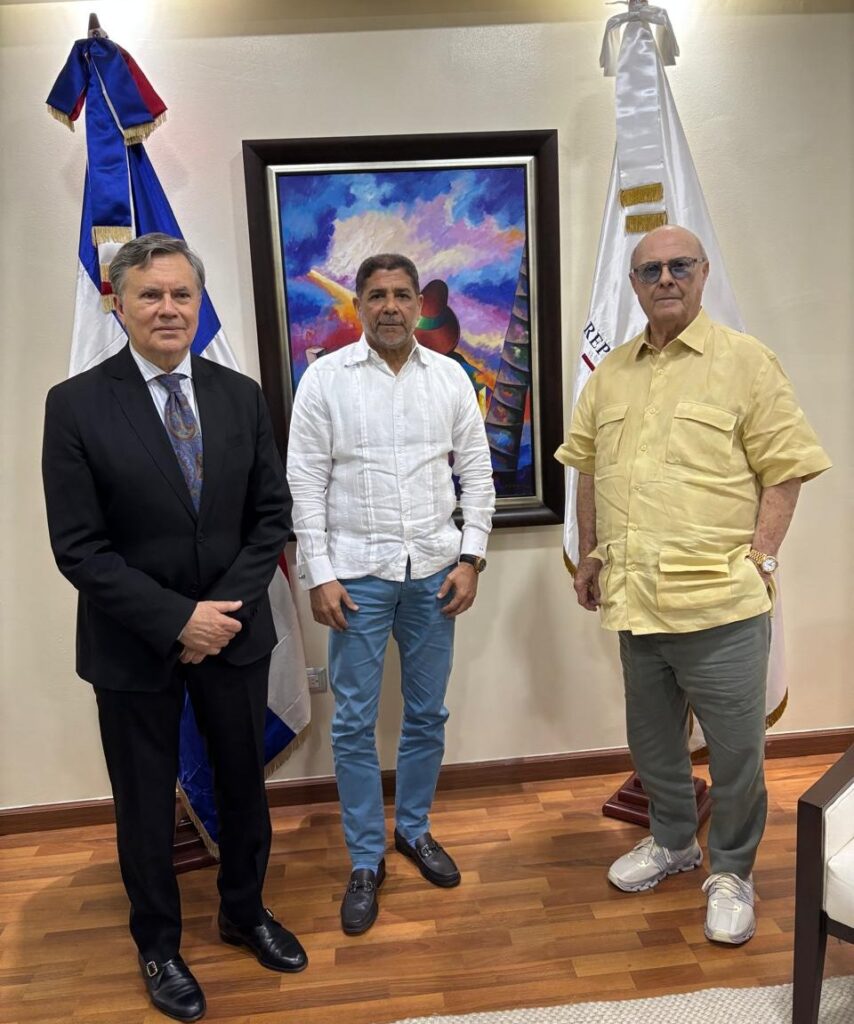
Minister Limber Cruz welcomed the IICA Director General along with much of his work team—Deputy Ministers Rafael Ortiz (Scientific and Technological Affairs), Darío Vargas (Extension Services and Agricultural Training) and Eulalio Ramírez (Agricultural Production and Marketing), along with Senior Advisor, Jesús de los Santos. Also in attendance was Hipólito Mejía, former President of the Republic (2000-2004) and former Minister of Agriculture.
Minister Cruz expounded on the Dominican agriculture sector’s increased productivity and exports, with an emphasis on avocado, mango and other fruits, tomato, flowers and eggs. Added to that are traditional crops such as coffee, cocoa, sugar and tobacco. He also discussed the situation regarding the supply and creation of surplus in foods such as chicken, plantain and rice.
The Dominican Republic’s agriculture sector experienced a 17% interannual increase in 2024 and greenhouse production doubled, covering an area of 10 million square meters. On the other hand, the sector’s growth rate continued to far outpace the average of the overall economy.
The minister also pointed out the growing connection between national science, technology and innovation systems, on the one hand, and agricultural production and institutional structures in the country; and spoke in detail about challenges in health, safety and biosecurity.
Moreover, he emphasized IICA’s role in providing assistance and guidance to support the country’s objectives to modernize and strengthen agricultural institutions; to drive agricultural exports and international agricultural trade; to bolster the National Agricultural Health Systems and the modernization of rural infrastructure; and to ensure efficient soil and water management.
During the meeting with Deputy Minister Silié, Otero touched on IICA’s cooperation in the capacity development of diplomats, particularly in trade and agriculture, among other issues, and offered support for the next Summit of the Americas in the areas of youth and food security. He also pledged to incorporate the issues of the Summit into IICA’s institutional calendar.
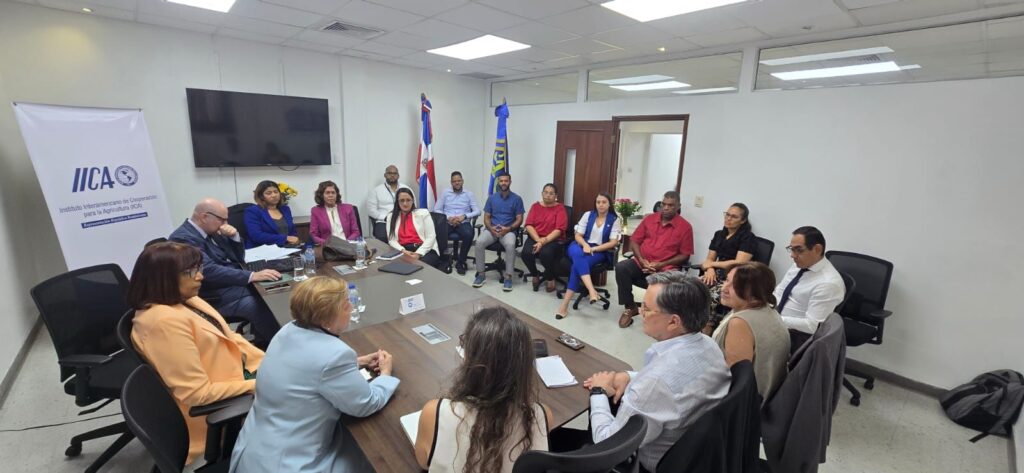
Director General Otero also met with IICA’s technical and administrative team in the Dominican Republic.
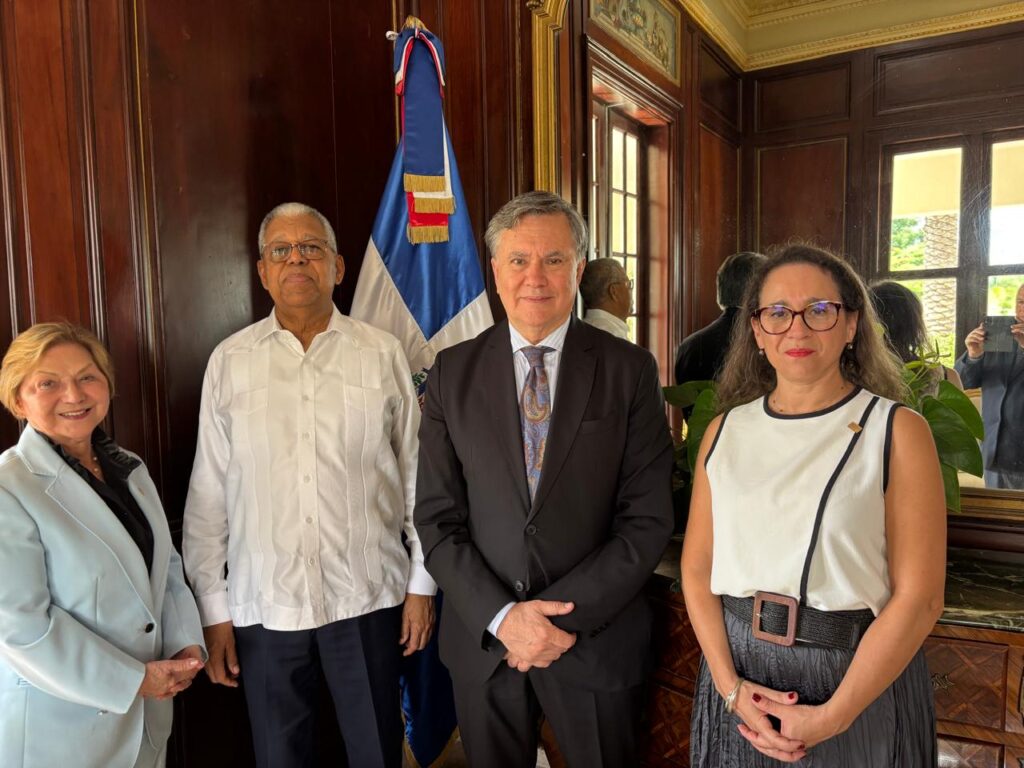
Accompanied by his Chief of Staff, Marco Vinicio Zapata; the IICA Representative in the Dominican Republic, Gabriela Quiroga; and Special Advisor, Clara Solís, Otero will remain in Santo Domingo until Thursday, when he will close off his mission in the country with a meeting with President Luis Abinader.
More information:
Institutional Communication Division.
comunicacion.institucional@iica.int