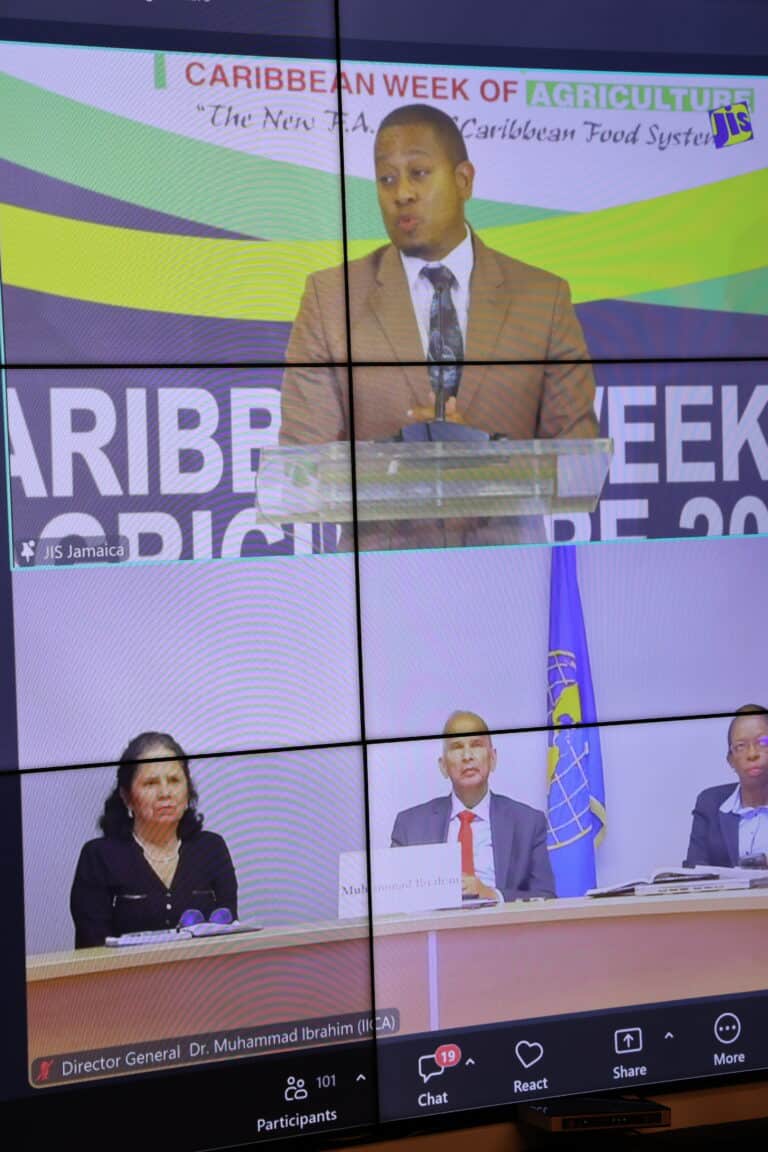
CWA is the most important event on the Caribbean agricultural calendar, with IICA as one of its organizers. This year it is being held in St. Kitts and Nevis under the theme “Sowing Change, Harvesting Resilience: Transforming our Food Systems for 2025 and Beyond”.
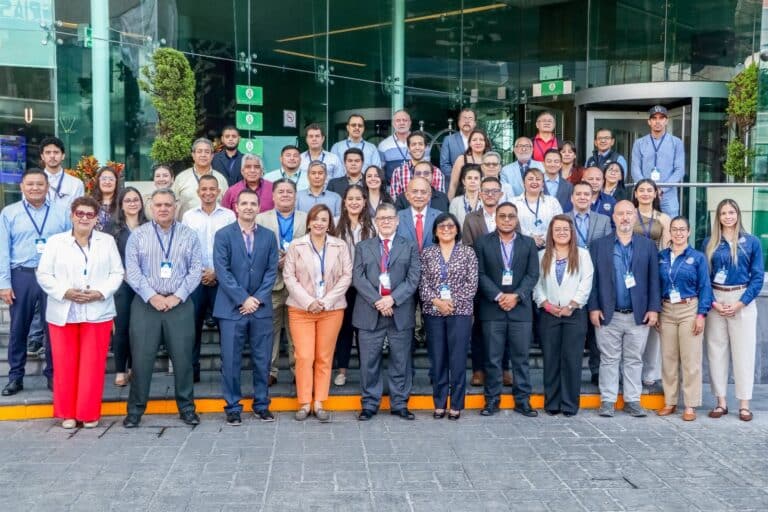
Basseterre, St. Kitts and Nevis, October 2, 2025 (IICA) – Regional solidarity and coordinated action among countries are indispensable to address the threat of African swine fever, which, if it were to spread in the Caribbean, could have devastating consequences, stated IICA Director General Manuel Otero during Caribbean Week of Agriculture (CWA).
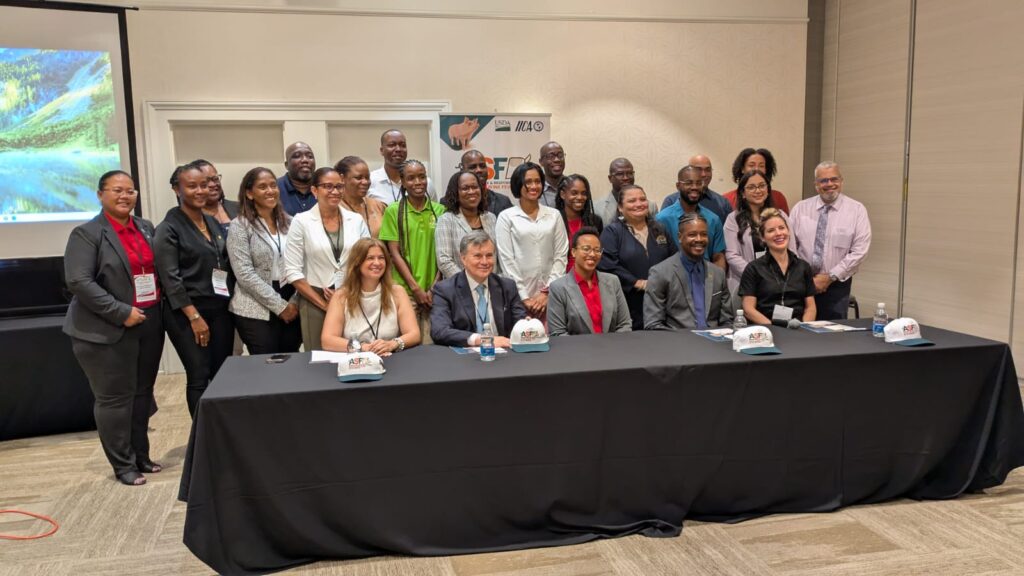
Otero participated in a workshop that explored ways to preserve the livelihoods of farmers and rural families in the face of this disease, which is a source of concern in the region.
The activity brought together officials from the Foreign Agricultural Service (FAS) and the Animal and Plant Health Inspection Service (APHIS) of the United States Department of Agriculture (USDA), as well as the Caribbean Agricultural Health and Food Safety Agency (CAHFSA) and Samal Duggins, Minister of Agriculture, Fisheries and Marine Resources of St. Kitts and Nevis.
Speakers included José Urdaz, Manager of IICA’s Agricultural Health and Food Safety Program (AHFS), and specialist Ericka Calderón. Also participating were members of veterinary services from various Caribbean countries and international organizations working in animal health emergency prevention.
CWA is the most important event on the Caribbean agricultural calendar, with IICA as one of its organizers. This year it is being held in St. Kitts and Nevis under the theme “Sowing Change, Harvesting Resilience: Transforming our Food Systems for 2025 and Beyond”.
Partnership with USDA
Otero highlighted the key role of the partnership between USDA and IICA, which are working jointly with governments and veterinary services throughout the Caribbean.
The main objectives are to strengthen surveillance systems, develop rapid response capacities that allow authorities to act quickly to contain outbreaks, and promote biosecurity measures at all levels, from large commercial producers to small farmers.
The workshop also discussed how to begin developing and implementing compensation methodologies and insurance for animal health emergencies in the region.
In this regard, Otero stressed that compensation is critical for disease control. “Without compensation, producers may be reluctant to report suspected cases and, in the case of African swine fever, delays could be catastrophic”, he explained.
“Compensation”, he added, “requires careful design: it must be financially sustainable, transparent, and adapted to the realities of Caribbean economies”.
The IICA Director General warned that swine fever is not merely a pig disease, but one that can have major economic and social impacts, affect food and nutrition security, and disrupt trade flows and markets that are already under pressure.
“No country can face this or other transboundary animal diseases alone. We encourage the principle of regional solidarity, which ensures that veterinary services throughout the Caribbean are not only stronger individually but also better coordinated as a regional network. Protecting animal health means protecting human well-being, food systems, and rural economies”, said Otero.
“We must remember”, he concluded, “that prevention is always more cost-effective than eradication, and that effective prevention depends on preparedness and cooperation”.
More information:
Institutional Communication Division.
comunicacion.institucional@iica.int