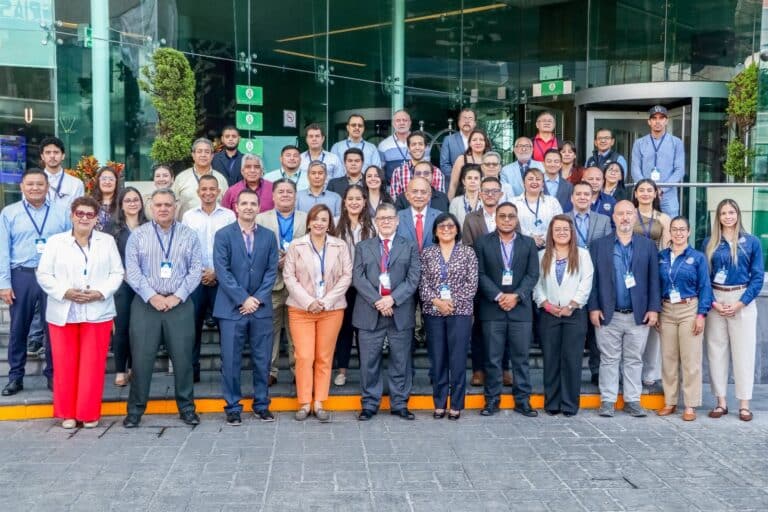

A partner of the Inter-American Institute for Cooperation on Agriculture (IICA), the entity is participating in numerous activities at the AgriZone of the conference in Belem do Pará.
Belém do Pará, Brazil, 14 November 2025 (IICA) – The Brazilian Agribusiness Association (ABAG), which brings together all stakeholders of the agribusiness value chain, including those who work in the countryside, industry, distribution and services, is taking part in COP30 to showcase the work it is undertaking to produce food, fibers and energy in an environmentally sustainable manner.
A partner of the Inter-American Institute for Cooperation on Agriculture (IICA), the entity is participating in numerous activities at the AgriZone of the conference in Belem do Pará, designed to solidify the standing of agriculture as part of the solution to climate challenges.
Brazil’s experience shows that it is possible to produce more with a lower impact, noted the ABAG. In a statement by its Vice-President, Ingo Plöger, the association explained that investments in science and technology in Brazil have fostered climate-smart agriculture, which increases resilience and reduces greenhouse gas emissions.
Potential for carbon capture
“COP30 affords an opportunity to showcase how sustainable intensification and biotechnology protect forests and increase productivity. Practices such as no-till farming, integrated crop, livestock and forestry systems, as well as the recovery of degraded areas demonstrate the country’s potential to capture carbon and preserve natural resources”, stated the ABAG.
The entity, which was founded in 1993 and now has more than 70 members, underscored the urgent need to facilitate access to climate funding in order to expand low-carbon practices. In that regard, there is a need for greater dissemination of measurement and verification systems for environmental services, which provide security to investors while rewarding producers.
Another key issue that the ABAG is raising at COP 30 is biofuels, which combine clean energy and food security, and in which Brazil is a world leader. “Ethanol and biodiesel, when produced efficiently and in established areas, allow for reducing emissions without competing with food production. The expansion of mandatory blends strengthens the country’s commitment to decarbonization”, noted the Association.
More information:
Institutional Communication Division.
comunicacion.institucional@iica.int