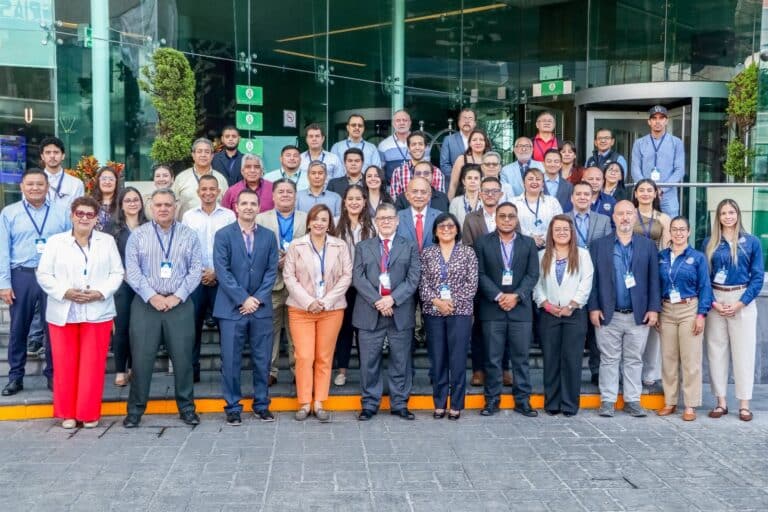

San Salvador de Jujuy, Argentina, 3 December 2025 (IICA). The Argentine province of Jujuy presented the plan for its productive development for the next ten years, which was drafted in collaboration with farmers, communities, the private sector and the Inter-American Institute for Cooperation on Agriculture (IICA).
The “Jujuy Agrodiversa 2025–2035” Strategic Productive Plan¾a roadmap that will guide the rural and agro-industrial growth of the province over the next decade¾was presented in the capital of Jujuy by Governor Carlos Sadir, together with IICA’s Representative in Argentina, Fernando Camargo.
Jujuy, in northwestern Argentina, is a province located within the South American Andean system, with diverse biomes due to its climate and relief, and whose main economic activities include the sugarcane and tobacco value chains.
The plan reflects Jujuy’s vision, which IICA shares, that rural and agro-industrial development require planning, cooperation and a long-term perspective.
More than 60 key actors from different parts of the province—la Puna, la Quebrada, los Valles and las Yungas—provided input regarding the challenges and opportunities facing the sector, thereby strengthening a plan that reflects the province’s diversity and wealth of productive resources. The technical process benefited from evidence-based assessments, prospective scenarios and broad territorial participation.
Jujuy Agrodiversa is a commitment to generating more employment opportunities.
Diversification of the productive matrix
Jujuy Agrodiversa is a concrete commitment to diversifying the productive matrix and generating more employment opportunities, based on innovation and the development of technologies adapted to local conditions, such as new cultivation techniques that maximize productivity and sustainable management practices that improve yields and soil care.
It is the result of a cooperation agreement aimed at strengthening and boosting the province’s agriculture sector, signed by the Ministry of Economic Development and Production of Jujuy, the Secretariat of Productive Development and IICA in October 2024. The strategic plan was drawn up with financing from the Inter-American Development Bank (IDB), one of the multilateral credit institutions with which IICA partners.
Governor Sadir thanked IICA for its commitment and said the main objective is to diversify the province’s economy and take advantage of its territory’s biological, productive and cultural diversity.
“This plan aims to spur productive growth through 2035 with innovation, environmental sustainability and territorial equity. We have drafted this plan through a participatory process, listening to the needs of farmers, communities and businesses”, he explained.
The Minister of Economic Development and Production of Jujuy, Juan Carlos Abud, observed that:“Jujuy is a diverse province, which, due to its geography and climate, cannot compete in the production of commodities, but has competitive advantages that set it apart where certain products are concerned. Furthermore, its small and medium-sized farmers have a reputation for hard work and dedication”.
Fernando Camargo described Jujuy Agrodiversa as a modern instrument, aligned with international standards, “which establishes water, innovation, the adding of value and territorial integration as pillars for growth”.
“Jujuy”, he said, “has unique natural resources, a diverse production matrix and enormous potential to move towards more sustainable and competitive systems. This plan offers a concrete roadmap to transform these strengths into real opportunities for rural families, for young people, for traditional value chains and for others that are emerging strongly”.
Camargo¾who took part in the launch along with IICA’s Technical Coordinator in Argentina, Carolina Pivetta and Project Management Specialist, Mario Anastasio¾emphasized that the decision to opt for in-depth planning, with technical rigor and following the State policy model,is a clear sign of a strategic commitment to the province’s development.
“This commitment”, he concluded, “is key to ensuring continuity, attracting investment and expanding the frontier of innovation. IICA reaffirms that it stands ready to support the province in the next stage: transforming this strategy into results, projects and investments that generate more jobs, greater resilience and more opportunities in every region”.
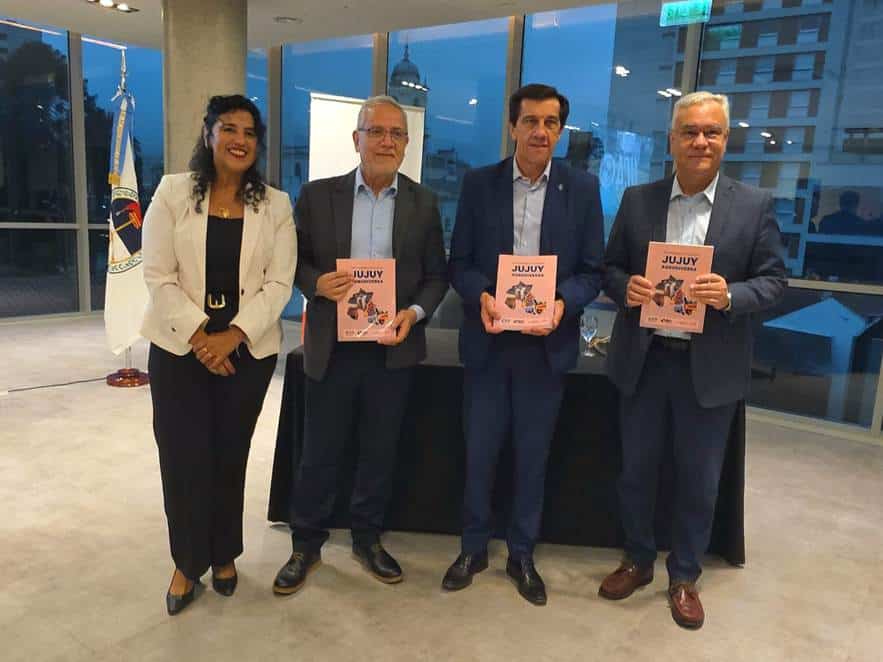
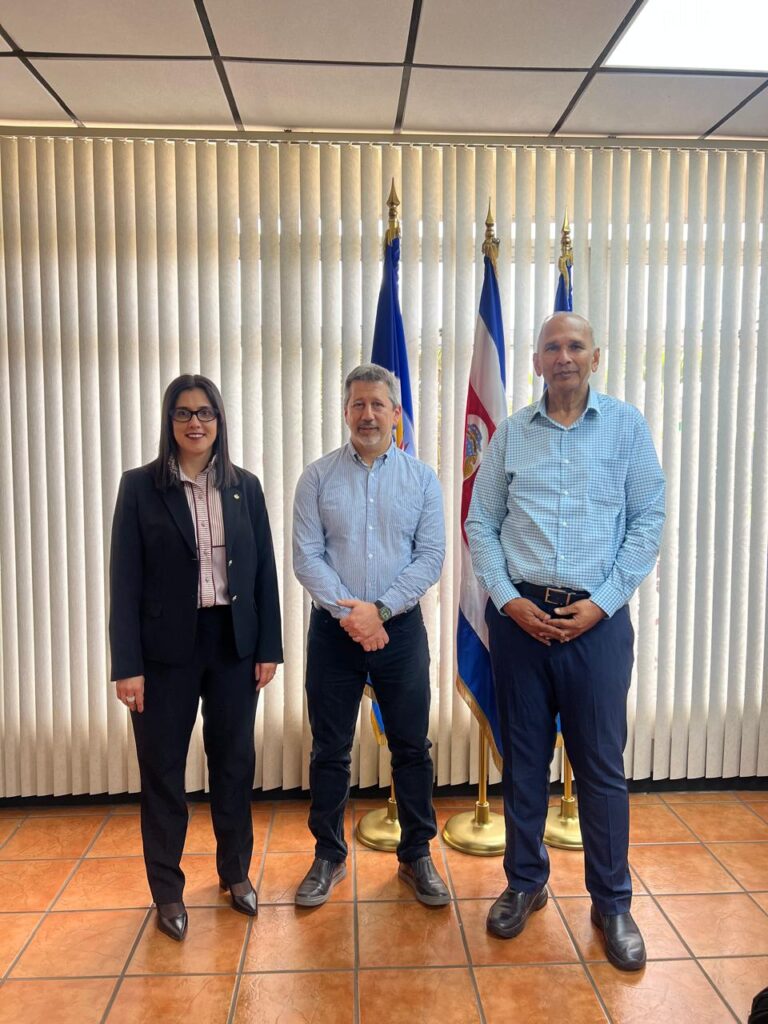
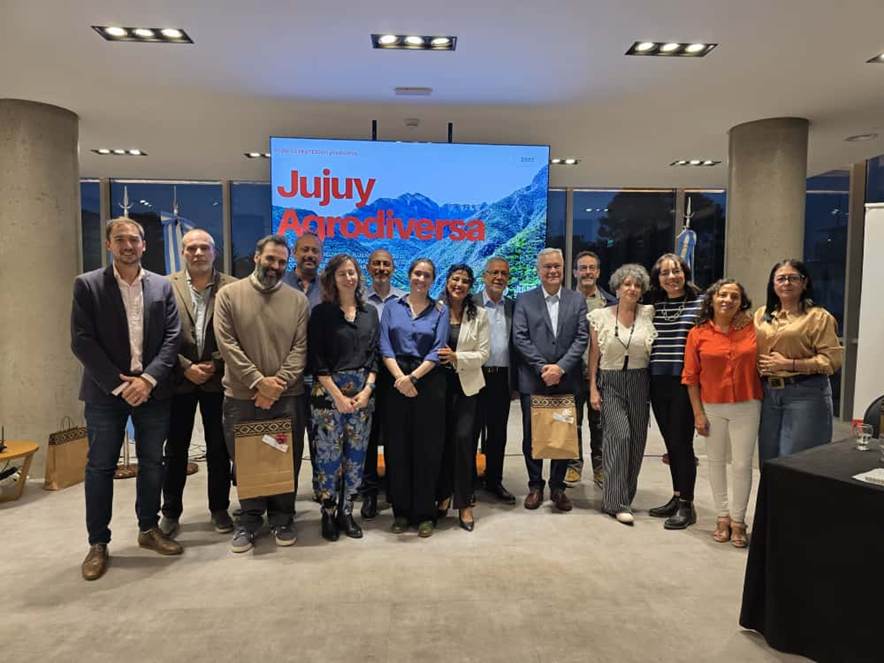
Patricia Ríos, Secretary of Productive Development; Juan Carlos Abud, Minister of Economic Development and Production; Carlos Sadir, Governor of Jujuy; and Fernando Camargo, IICA Representative in Argentina.
More information:
Institutional Communication Division.
comunicacion.institucional@iica.int