
Georgetown, Guyana, 5 December 2025 (IICA). Abbigale Loncke-Watson represents a new generation of Caribbean women entrepreneurs who bridge two worlds: community development and business innovation. From her native Guyana, and with a trajectory that spans health, training and the energy sector, she drives the economic independence of rural women and promotes an inclusive model of growth. “Nothing happens by accident”, says Abbigale. “You have to be intentional, have a clear purpose and move forward with it”.
Although she now leads companies in the competitive energy sector, her roots lie in rural Guyana, in the Essequibo region. “My family is deeply connected to farming. My grandparents and parents were born in rural communities, and I spent much of my childhood there”, she recalls. From that life among fields and rivers, she learned values she now considers essential: solidarity, shared effort and the ability to find solutions with limited resources. It was precisely that experience that led her, years later, to found her first company, the first step in her remarkable career.
For her work to empower women farmers in her country and for her efforts to show that the energy sector can coexist with environmental protection, Abbigale was recognized as a Leader of Rurality of the Americas by the Inter-American Institute for Cooperation on Agriculture (IICA) and will receive the Soul of Rurality award. The distinction is part of an IICA initiative to recognize women and men who leave their mark and make a difference on the continent by advancing sustainability and food and nutrition security.
Back to the countryside
“It all started when my grandfather got sick”, begins the young Guyanese entrepreneur. “We had no one who could take care of him, so I looked for women in the area with nursing experience and created a small home-care agency”. What began as a family service soon became an opportunity for other women. “I realized that many had the necessary skills, but lacked confidence, support or the tools to start a business. That’s when I understood I had to help them find their own path”. Thus began her commitment to the development of rural women, an effort she has never abandoned.
That first experience became the seed for WeLead Caribbean, the organization she founded in 2017 to promote training, access to networks and economic autonomy for women in Guyana. Through training programs, mentoring and trade fairs, WeLead supports women entrepreneurs from different regions of the country, from Essequibo to Berbice. “We want women to have the tools and also know how to use them”, she explains. “Training is just the first step; what matters is practical application—being able to return to their community and transform their reality”.
In recent years, WeLead has developed dozens of courses on small-business management, marketing, digital literacy and finance. It also organizes the Academy for Women Entrepreneurs, an initiative that combines online training with in-person practice. In rural areas, programs are adapted to family circumstances: they offer childcare, flexible schedules and blended modalities to facilitate participation. “It’s not just about teaching, but understanding the responsibilities women have in their homes. If we want them to grow, we must create the conditions for them to do so”, says Loncke-Watson.
Abbigale speaks proudly of the projects she has been supporting. In Essequibo, women dedicated to agro-processing learned to improve the presentation and labeling of their sauces and preserves. In Linden, groups of honey producers succeeded in regularizing their brands and opening new markets. In Berbice, others learned to produce natural oils and cosmetics. “Seeing them sell their products, feeling proud of their work, is what gives me the energy to continue”, she confesses.
The pandemic put this network of entrepreneurs to the test. With fairs suspended and sales channels closed, many rural women were left with products they could not sell. “At that moment we realized we had to reinvent ourselves”, Abbigale recounts. WeLead organized local markets in Essequibo, promoted the products on social media and encouraged the use of Facebook for direct sales. “Social media was an incredible tool. We did live streams, interviews, photos… and the community responded. It was a rebirth for many of them”.
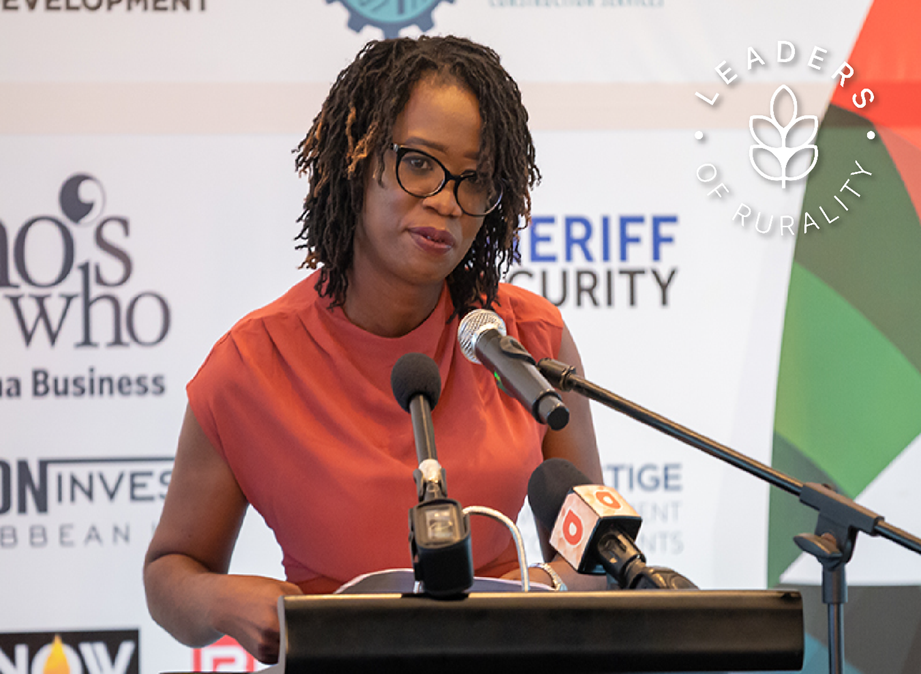
Abbigale is an active voice in debates on local content, inclusion and sustainability in Guyana.
Wealth should translate into well-being for the communities
Her work with rural communities coexists with a solid business career. Loncke-Watson is the CEO of the Loncke Group, which includes MBW Energy Support Services, and the co-founder of Sispro Inc, a company that recently secured two oil blocks in the Guyanese government’s bidding process. In a country experiencing an unprecedented energy boom, her presence symbolizes a new era: that of women leading a historically male-dominated sector. “When I entered the energy world, I understood that a female perspective was needed. Women lead with empathy and a holistic vision. We need to be in those spaces where decisions are made that affect our future”, she states.
From that conviction came Women in Energy Guyana, the organization she chairs and which seeks to increase women’s participation in the energy industry. Its goal is to ensure that the opportunities of the sector reach rural regions and young people as well. “Energy development can be a positive force, but only if it includes everyone. We must connect investment with local training, with education and with respect for the environment”, In her view, economic progress cannot be separated from sustainability. “Growth must come with responsibility. We must protect our ecosystems and, at the same time, create jobs and opportunities for our people”, she says.
Abbigale is an active voice in debates on local content, inclusion and sustainability in Guyana. Drawing on her business experience, she promotes the idea that energy can and should be a driver of territorial development. “The wealth that is generated has to translate into well-being for communities. My goal is to see women from the interior participating in this new economy, not watching it from afar”.
Her leadership style combines pragmatism and purpose. “I’m a risk-taker”, she says with a smile, “but I don’t like to act without direction. Every step I take has meaning”. This philosophy—taking risks, but with intention—appears repeatedly in her public speeches and her daily life. In one of her most quoted phrases, she says: “Do it even if you’re afraid, but do it anyway”.
Looking ahead, her agenda features training and expansion. She is planning new business-simulation programs for rural women and the organization of the upcoming Women Empowerment Conference, which will bring together women entrepreneurs from across the country. She is also working on partnerships with educational institutions and private companies to create more employment opportunities in energy and technology. “Real development happens when communities take part in the change process. If rural women thrive, Guyana thrives with them”, Abbigale emphasizes, closing a circle that began in the fields of Essequibo.
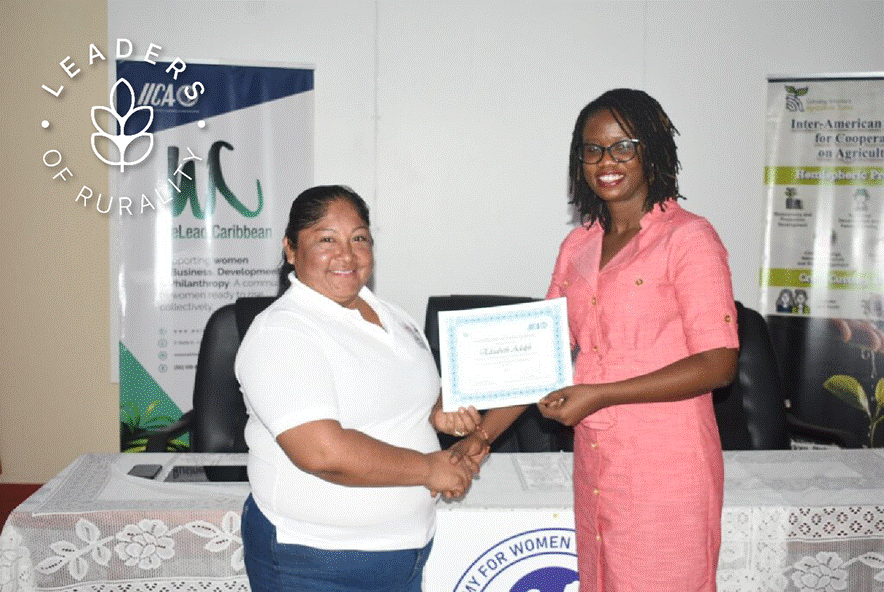
WeLead developed courses on small business management, marketing, digital literacy and finance.
More information:
Institutional Communication Division.
comunicacion.institucional@iica.int