
Burma, Guyana, March 26, 2026 (IICA) – In the heart of Guyana’s rice belt at the Guyana Rice Development Board (GRDB) Research Centre in Burma, regional and international partners gathered to launch a new initiative aimed at transforming how the Caribbean manages one of its most critical resources – soil.
Initiated on March 02, 2026, the ADOPT Caribbean – Soil Health for Climate-Resilient Agriculture Project, officially began its journey to strengthen soil health, reduce agricultural emissions, and accelerate the adoption of climate-smart farming practices in Guyana, Jamaica, and Saint Vincent and the Grenadines.
Valued at approximately US$330,000, the project is being funded through the New Zealand Government’s Climate Smart Agriculture Initiative, and implemented through a partnership between the Inter-American Institute for Cooperation on Agriculture (IICA) and New Zealand’s Ag Emissions Centre, alongside national Ministries of Agriculture, the GRDB, AgroSavia (Colombia), and the Partnership Initiative for Sustainable Land Management (PISLM). The event brought together Linda Te Puni, New Zealand Ambassador to CARICOM; representatives of the Government of Guyana; regional technical experts; research institutions; farmers; and development partners – both in person and online.
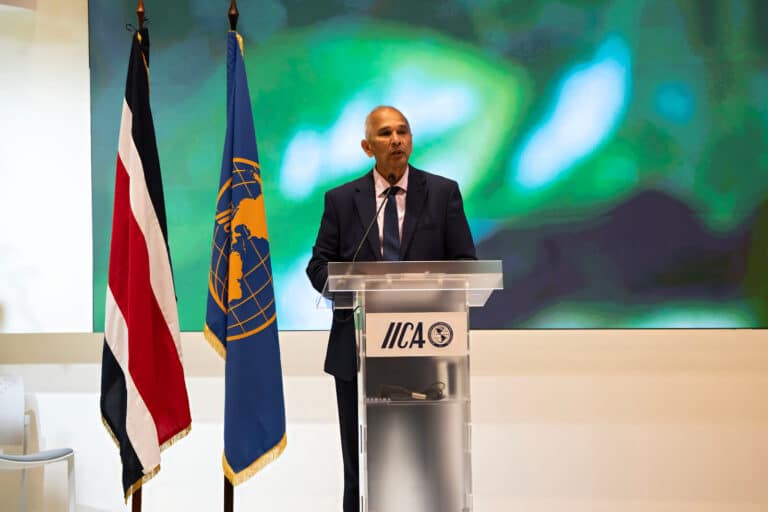
New Zealand Ambassador to CARICOM, Linda Te Puni, said the initiative reflects a shared commitment to strengthening resilient agricultural systems across the region.

New Zealand Ambassador to CARICOM, Linda Te Puni
She said, “Through ADOPT Caribbean we are affirming a collective commitment to managing and looking after our land in ways that strengthen our communities and ensure that the next generation inherits a region with more resilient soils and agricultural systems, more opportunities, and that is better connected.”
Meanwhile, Richard Blair, Advisor on CARICOM Agri-Food Systems, who represented the Minister for Agriculture, highlighted the project’s alignment with the region’s food security agenda.
“Under this 25 by 2025 initiative plus five, we are working assiduously to reduce our food import bill. At the core, what we want is greater food self-sufficiency,” he said. “Healthy soil is not a sideshow because it is the foundation for food security and it has implications for climate resilience and long-term sustainability.”
IICA Representative in Guyana, Wilmot Garnett, described the project as an example of meaningful horizontal cooperation. He emphasized that Guyana, Jamaica, and Saint Vincent and the Grenadines will not only implement activities nationally but will actively share lessons and best practices with one another – strengthening regional capacity as a whole.

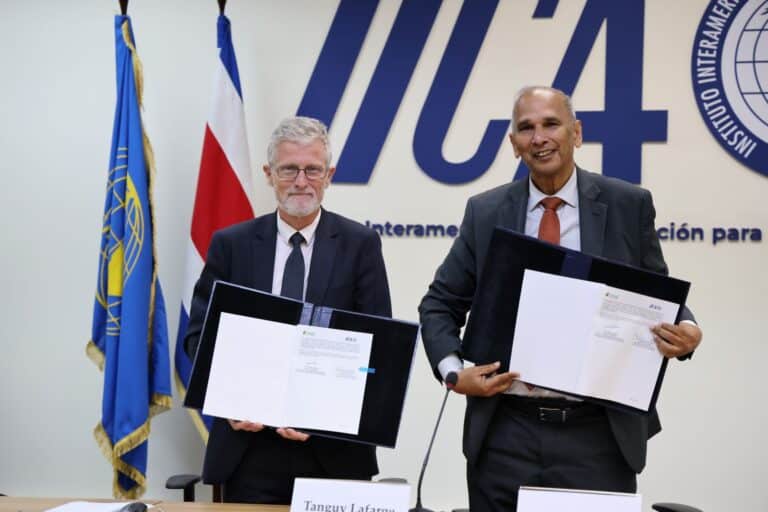
Project Technical Lead, Chaney St. Martin; IICA Representative in Guyana, Wilmot Garnett; IICA Representative in Jamaica, Kent Coipel
“This is about learning together and scaling what works,” he noted, highlighting that successful approaches developed under the project could extend to the wider Caribbean.
Technical Lead, Chaney St. Martin, who is also an International Specialist in Water and Soil Management at IICA, explained that the project addresses a pressing regional reality in that of declining soil health, low adoption of improved agricultural technologies, and increasing extreme events that directly affects farmers’ productivity and livelihoods.
“The problem that we’re presenting is not just unique to Guyana. It is a problem where we have low production and productivity… and the issue of the adoption rate for technology and practices is also low,” he said.
St. Martin explained that the project seeks to establish a strong foundation for long-term transformation by improving knowledge, building capacity, and encouraging the adoption of climate-smart practices.
“This project is looking at the readiness. How can we use the science from what New Zealand has learned, from what Guyana and the other countries have learned, and establish something that will fast track the adoption,” he stated.

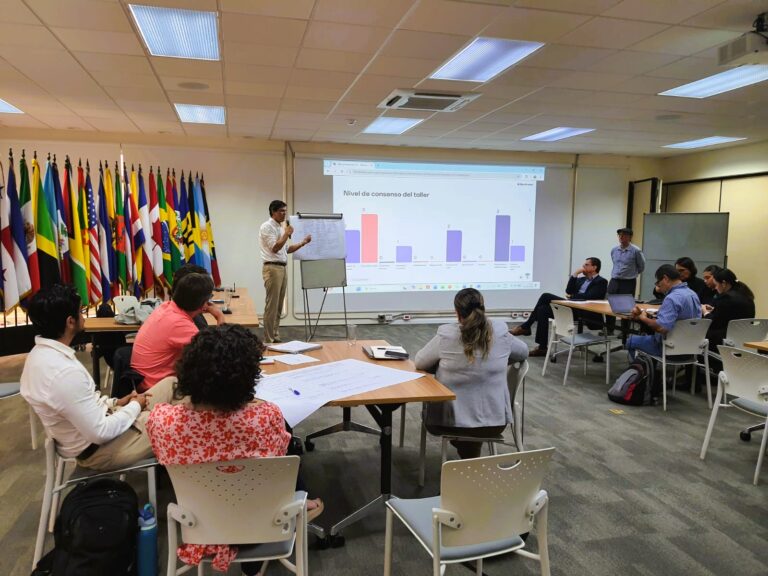
The new initiative aimed at transforming how the Caribbean manages one of its most critical resources, the soil.
The initiative will establish demonstration plots in each participating country, generate baseline soil data for key agricultural systems, and build the capacity of farmers, technicians, and institutions to monitor and manage agricultural emissions more effectively. Guyana’s participation is particularly significant given its scale of agricultural production and its alignment with the country’s Low Carbon Development Strategy.
The diversity of participating countries – from Guyana’s expansive agricultural systems to Jamaica’s mixed production models and Saint Vincent and the Grenadines’ volcanic soils – is expected to generate practical, adaptable solutions across varying contexts. Over the next four months, the project aims not only to increase farmer awareness and adoption of climate-smart practices but to create a sustainable framework that extends beyond June 2026.

The ADOPT Caribbean began its journey to strengthen soil health, reduce agricultural emissions, and accelerate the adoption of climate-smart farming practices in Guyana, Jamaica, and Saint Vincent and the Grenadines.
More information:
Institutional Communication Division.
comunicacion.institucional@iica.int