With funds from the European Union, IICA is spearheading an initiative that seeks to bring prosperity to a Belizean community through the promotion of this productive activity.
Belmopan, Belize. 23 March, 2018 (IICA). The Inter-American Institute for Cooperation on Agriculture (IICA), the European Union (EU), the Banana Growers’ Association (BGA) and the University of Belize (UB) launched a new project that will promote and foster social and economic development in the banana belt area of Belize, leading to the reduction of poverty by focusing on workers, their families and communities.
The Banana Belt, which generates a significant number of jobs in the region, comprises 10 growers and 23 farms of relatively large holdings of plantation farms that are located in the southern Stann Creek and northern Toledo Districts. The BGA is the statutory body representing these growers.
The project entitled “Productivity enhancement of banana farms through integrated soil fertility management in the banana belt area of Belize” is a joint action of the Banana Accompanying Measures (BAM) 2013 program, to provide financial assistance to this country’s banana sector. To execute this initiative, IICA will provide technical cooperation support through the participation of technical specialists; funds are provided by the European Union and some operational costs are covered by the BGA.
The specific objective is to increase the efficiency of production; the project therefore aims to increase resources efficiency, improve the knowledge capacities of farmers and the BGA in Integrated Soil Fertility Management (ISFM) and enhance the capacities of the UB in micro-propagation laboratory and nursery facilities for production of improved planting material.
ISFM techniques promote efficient and effective use of mineral fertilizer, organic inputs and improved germplasm combined with good agronomic practices such as fallowing and the use of cover crops. This project is designed to address specific issues of soil fertility management identified as important by farmers and validated as priority by technical experts and data.
This approach has been used successfully to enhance banana productivity in several African countries including Sub-Saharan Africa, Uganda, Democratic Republic of Congo, Côte d’Ivoire and Nigeria.
This project, which will be implemented over a two-year period, will also contribute to increasing the capacity to address the technological, production and quality requirements for banana producers, and the establishment of demonstration plots will contribute to instilling the best agronomic practices to increase soil fertility for improved productivity.
“A major issue affecting banana productivity in Belize is declining soil fertility and health. Several factors contribute to this, including inherent soil characteristics, poor soil management practices and years under cultivation. Farmers can help improve soil fertility by adopting improved agricultural practices, but they often lack the necessary information, knowledge and resources”, mentioned Gabriel Rodríguez, IICA Representative in Belize.
“The productivity of banana is strongly dependent on and constrained by soil fertility levels”, he added. In this country, banana production is done on highly weathered and generally compacted and infertile soils that negatively affect banana productivity.
The use of non-systematic, “quick fix” and “one-size fit” approaches by farmers to mitigate the poor soil fertility complex is not an effective and sustainable strategy. Instead, a holistic and integrated approach that builds the capacity of farmers and technicians to diagnose general and site-specific problems and monitor and evaluate the impact of interventions and practices on a more real-time basis are needed.
Some of the actions that will be carried out under this project are technical capacity building, field demonstration plots for ISFM practices, land preparation, soil conditioning, knowledge management, monitoring of the soil fertility management program, strengthening of the UB’s laboratory capacities in banana variety diversification and procedures for developing elite banana lines, plant disease diagnosis and development of tissue culture of other commodities.
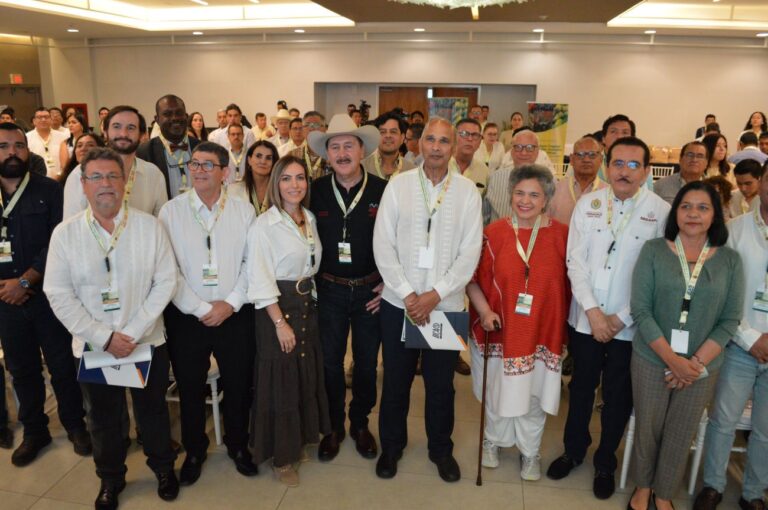
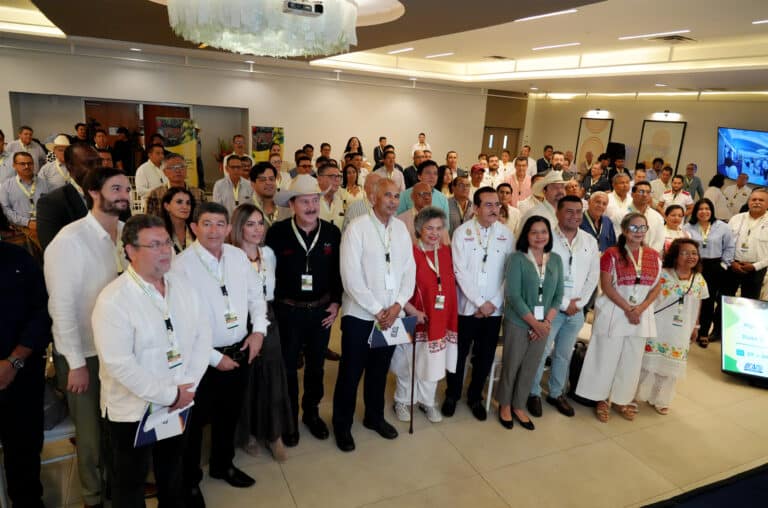
The official launch ceremony was held at the Banana Growers’ Association headquarters in the presence of 74 persons representing IICA, the private and public sectors, academia, national and international NGOs, farmers and the media.
More information:
Gabriel Rodríguez, IICA Representative in Belize.
Website: www.iica.int
Press release written by: Andrea Morales.
+506 2216 0267 – andrea.morales@iica.int
Video: Derek Charles, IICA’s specialist talks during the launch of the project