Inter-American Institute for Cooperation on Agriculture

Food safety

International Forum WUSC and CECI

Tiempo de lectura: 3 mins.

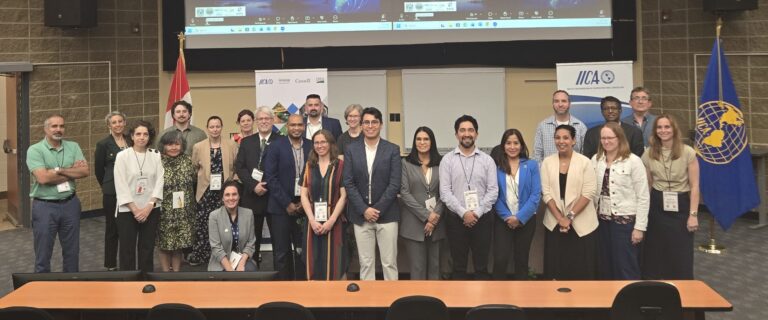
Members of IICA’s delegation to Canada participated in the 2016 International Forum, jointly organized by CECI and WUSC, in Ottawa on January 22 and 23, 2016. 

Ottawa, ON. The forum is an annual event to share the best practices in international development.  Representatives from governments, international cooperation organizations, civil society organizations, private sector, and international development researchers and specialists/practitioners attended the event. 

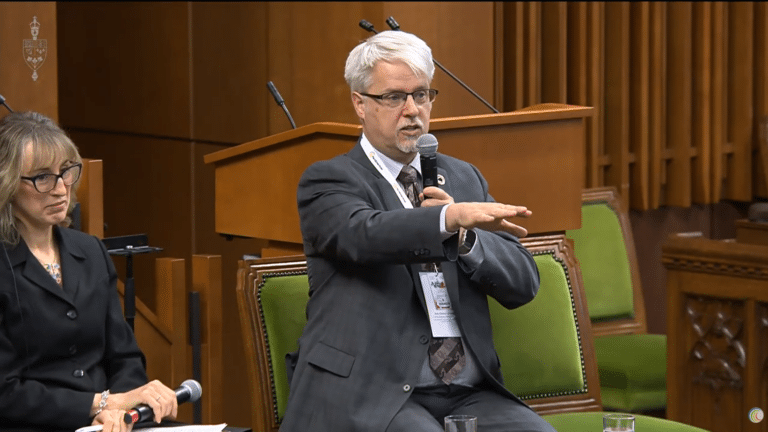
Trudy Werry, Technical and Performance Coordinator as guest speaker 
at the International Forum held in January 22-23, 2016 in Ottawa. 

The 2016 forum provided the opportunity to explore current approaches and practices to overcome the barriers that exclude youth and women from much needed economic growth.  Conference participants discussed how markets are being reinvented at the local and global levels to better respond to the needs, potential and aspirations of youth and women. Presenters made the case that building economies that include, rather than exclude, will create more sustainable societies in the future.

One of the highlights of the event was the presentation by the keynote speaker Nina Junk, a prize-winning Canadian-American journalist whose work has appeared in prestigious magazines such as the New York Times, The New Yorker, and Fortune. Nina spoke about her most recent book – The Idealist and tactfully described the hopes and downsides of foreign aid and development.

Trudy Werry, IICA Canada, provided a presentation on “Improving capacity of small enterprises in Colombia and Peru to meet Canadian requirements” in the themed session related to “Enabling Inclusive Markets”.  The presentation contributed to a panel discussion on the changing role of the private sector in international development.  The session examined case studies involving collaboration among partners, highlighting best practices and challenges in past interventions.  It was clear that the role of the private sector in development is important and that aligning the goals of development with that of private interests is in fact achievable. 
 

Share

Related news​

San José, Costa Rica

May 29, 2026

IICA Director General receives overwhelming support in presenting the key pillars of the Institute’s work for the next four years, with a focus on strengthening the agriculture sector of the Americas

Member countries of the Inter-American Institute for Cooperation on Agriculture (IICA) expressed support for a presentation by Director General Muhammad Ibrahim during a meeting of the Special Advisory Commission on Management Issues (SACMI), where he outlined the key areas of focus of the organization’s work from now until 2030.

Tiempo de lectura: 3mins

San José, Costa Rica

May 28, 2026

Latin America and the Caribbean develop shared agenda for sustainable dairy farming with support from IICA, CAF, and regional partners

Producers, technical specialists, and institutions in different areas of Latin America and the Caribbean are taking part in a coordinated effort to develop a regional agenda for sustainable dairy farming. The initiative is spearheaded by the Inter-American Institute for Cooperation on Agriculture (IICA), CAF-Development Bank of Latin America and the Caribbean, the Pan-American Dairy Farming Federation (FEPALE) and Chile’s Dairy Consortium.

Tiempo de lectura: 3mins

San José

May 27, 2026

IICA and CIRAD renew strategic partnership to promote agroecological innovation and more sustainable agrifood systems in Latin America and the Caribbean

The work will prioritize initiatives that form part of a comprehensive approach to agroecological transition and agricultural health in areas such as agroforestry and forest management, resilient and competitive tropical agriculture, science, technology and innovation, bioinputs that reduce dependence on agrochemicals, integrated crop management and regenerative agriculture, precision agriculture, animal and plant health, soils and ecosystems, public policies for sustainable agrifood systems, governance, and institutional coordination.

Tiempo de lectura: 3mins