
Inter-American Institute for Cooperation on Agriculture

Agriculture

Joint IICA/CFIA Safe Food Canada Training for the Eastern Caribbean

Tiempo de lectura: 3 mins.
IICA CFIA


Last November, IICA Canada co-facilitated with IICA-TT (Trinidad and Tobago) and ExporTT, an introductory ‘Safe Food Canada’ webinar led by the Canadian Food Inspection Agency (the CFIA, Canada’s regulatory authority dedicated to safeguarding food, animals and plants). Pitched to exporters across the Caribbean/CARICOM who are HACCP-certified, the webinar helped clarify the import regulations for agri-food products into Canada, the role of the CFIA, and requirements of importers and exporters, a rare opportunity for exporters to hear first-hand from the CFIA, exactly what requirements need to be met to access the Canadian market. IICA Canada is looking repeat the same training with the CFIA this year in Spanish across the Americas.

Share

Related news​

Asuncion, Paraguay

March 25, 2026

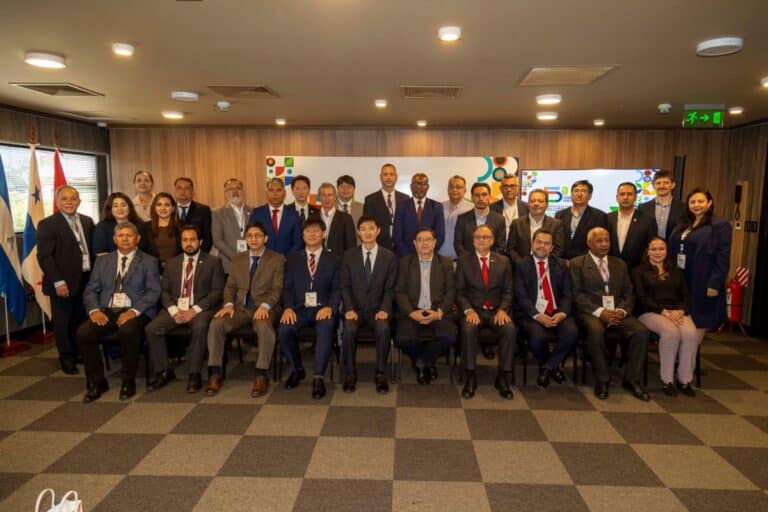
IICA and the Paraguayan Institute of Agricultural Technology jointly organized a regional meeting in Asuncion on agricultural scientific cooperation between Korea and Latin America

IICA highlighted the value of the international cooperation forum that promotes knowledge exchange and coordination between countries and scientific institutions.

Tiempo de lectura: 3mins

San José, Costa Rica

March 25, 2026

Agricultural waste could be converted into electricity in Costa Rica under a new project promoted by the Ministry of Environment and Energy and IICA

Every sugar harvest and every agroindustrial process in Costa Rica leaves behind tons of agri-food byproducts, but what hitherto has been an environmental challenge could be transformed into a new source of clean electricity that would boost the Central American country’s energy security and reduce its dependence on fossil fuels.

Tiempo de lectura: 3mins

Quito, Ecuador

March 23, 2026

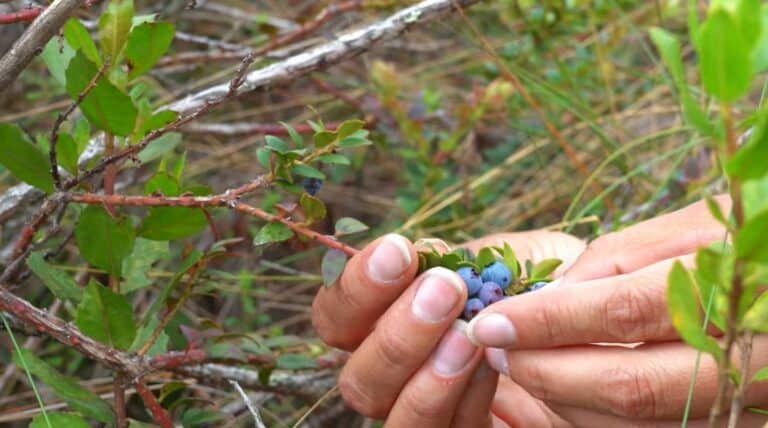
IICA promotes the conservation of the Andean blueberry and agrobiodiversity in Ecuador through the Sacha Ñawi project

The initiative aims to conserve edible wild species and their agricultural relatives, strengthen agrobiodiversity, and generate sustainable opportunities for rural communities.

Tiempo de lectura: 3mins