Initiative sought to promote backyard gardening and encourage the 4-H’ers to practise some backyard gardening at their homes.
Grenada, 26
April, 2017 (IICA). During the Easter school holidays, 4-H’ers from Primary Schools in Grenada and Carriacou utilised their school break to participate in two separate workshops on backyard gardening, conducted by the Grenada Delegation of the Inter-American Institute for Cooperation in Agriculture (IICA), in collaboration with the 4-H Division of the Ministry of Agriculture.
The 4-H Movement is a global network of youth organizations that provides experiences for young people to learn by doing. Children engage in hands-on projects in areas such health, science, agriculture and citizenship.
The workshops, which were a continuation of activities started by IICA Grenada Delegation in 2015, introduced the students to the concepts and key elements of backyard gardening.
“With much concern about food safety and having fresh and nutritious foods on the table, the young minds are the ones that are more amenable to changes in farming practices and would more likely adopt sustainable farming practices as young farmers”, stated IICA’s National Specialist, Derek Charles.
Although many of the primary schools have 4-H gardens where students practise some level of farming, the situation is much different at home. One of the objectives of the workshops was to promote backyard gardening and encourage the 4-H’ers who already have some experience from their school gardens to practise some backyard gardening at home.
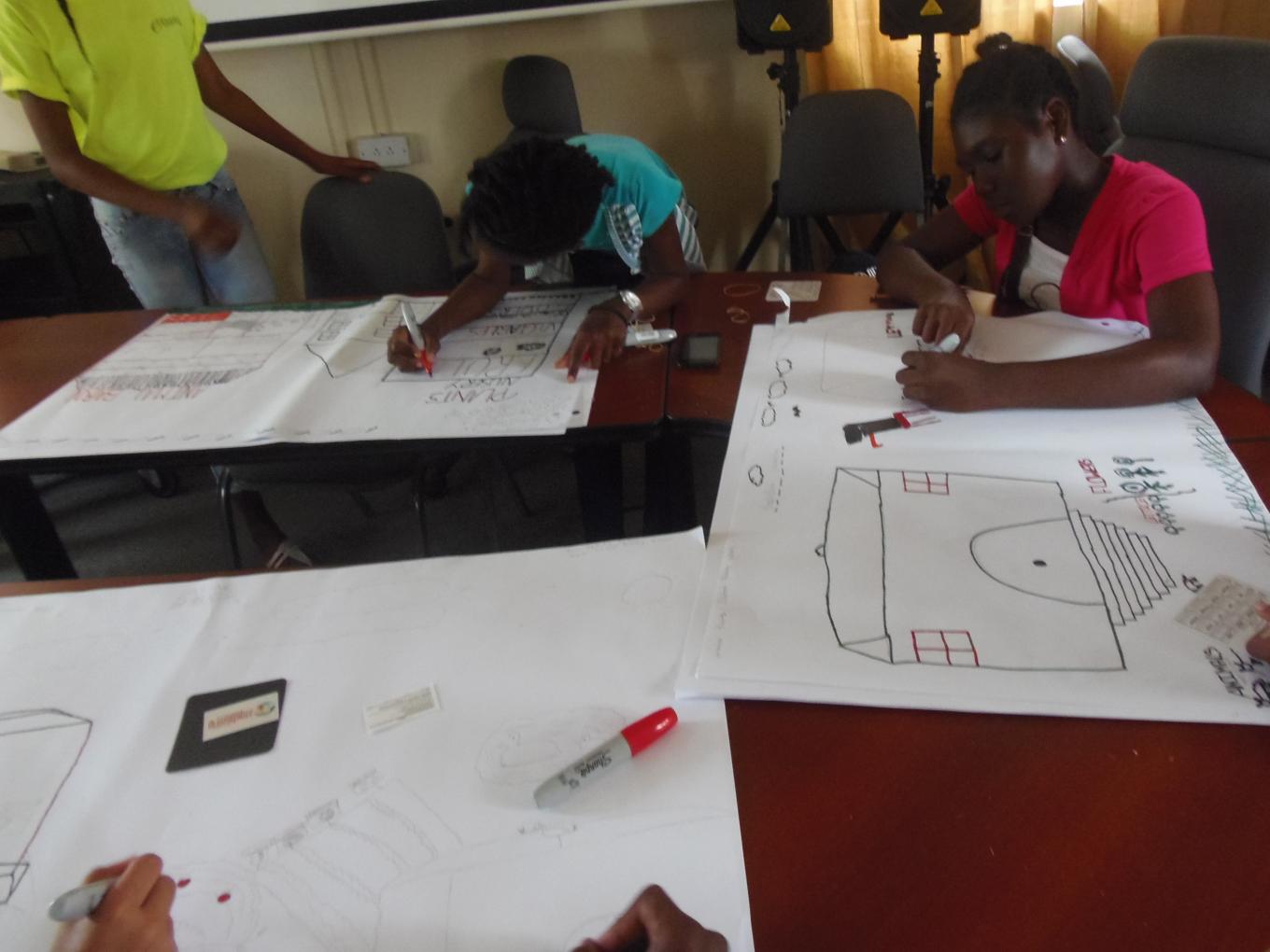
The students were taught the importance of having a backyard garden, as well as the key elements and different sub-systems that make up the backyard garden. They were also given the opportunity to conceptualize pictorially what their backyard garden would look like, and each student was given seeds and seedling trays to take home to practise growing their own crop and to commence their backyard gardening.
The first workshop was held for the 4-H’ers of the primary schools in the Parish of St. George in Grenada, and the second was held for the 4-H’ers of the primary schools in Carriacou. A total of 22 4-H’ers participated in the two workshops.
The 4-H leaders who accompanied the students to the workshops will supervise their progress in the backyard gardens. The students were eager to germinate the seeds and plant their own crops in their backyard, and have decided to use the remainder of their Easter school break to toil in their backyards.
More information:
IICA’s National Specialist in Grenada, Derek Charles