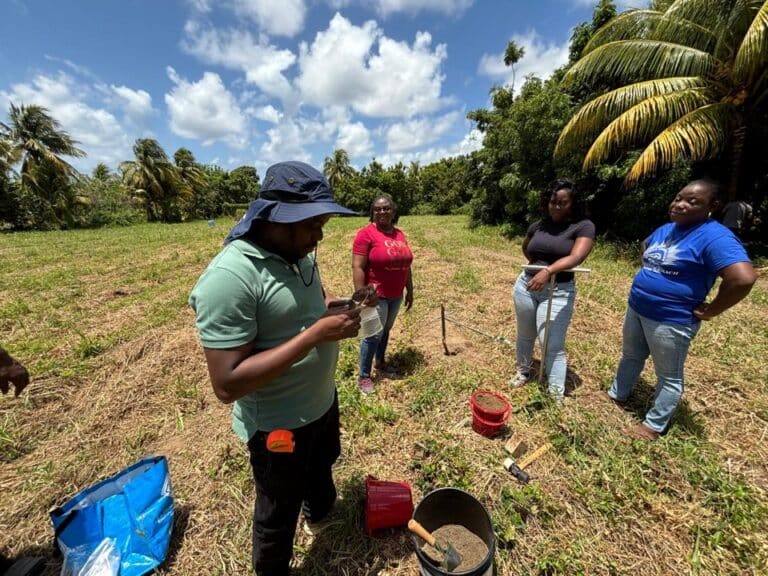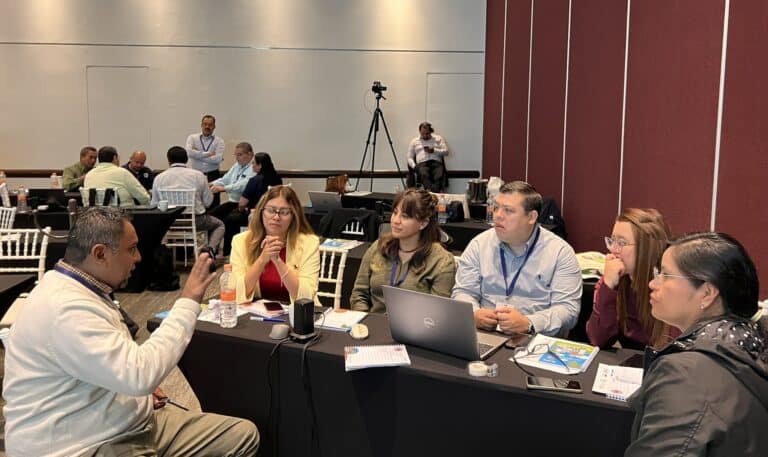
Seminar participants learned about the role and duties of the Coordinating Council for Agricultural Health and Food Safety of Antigua and Barbuda.
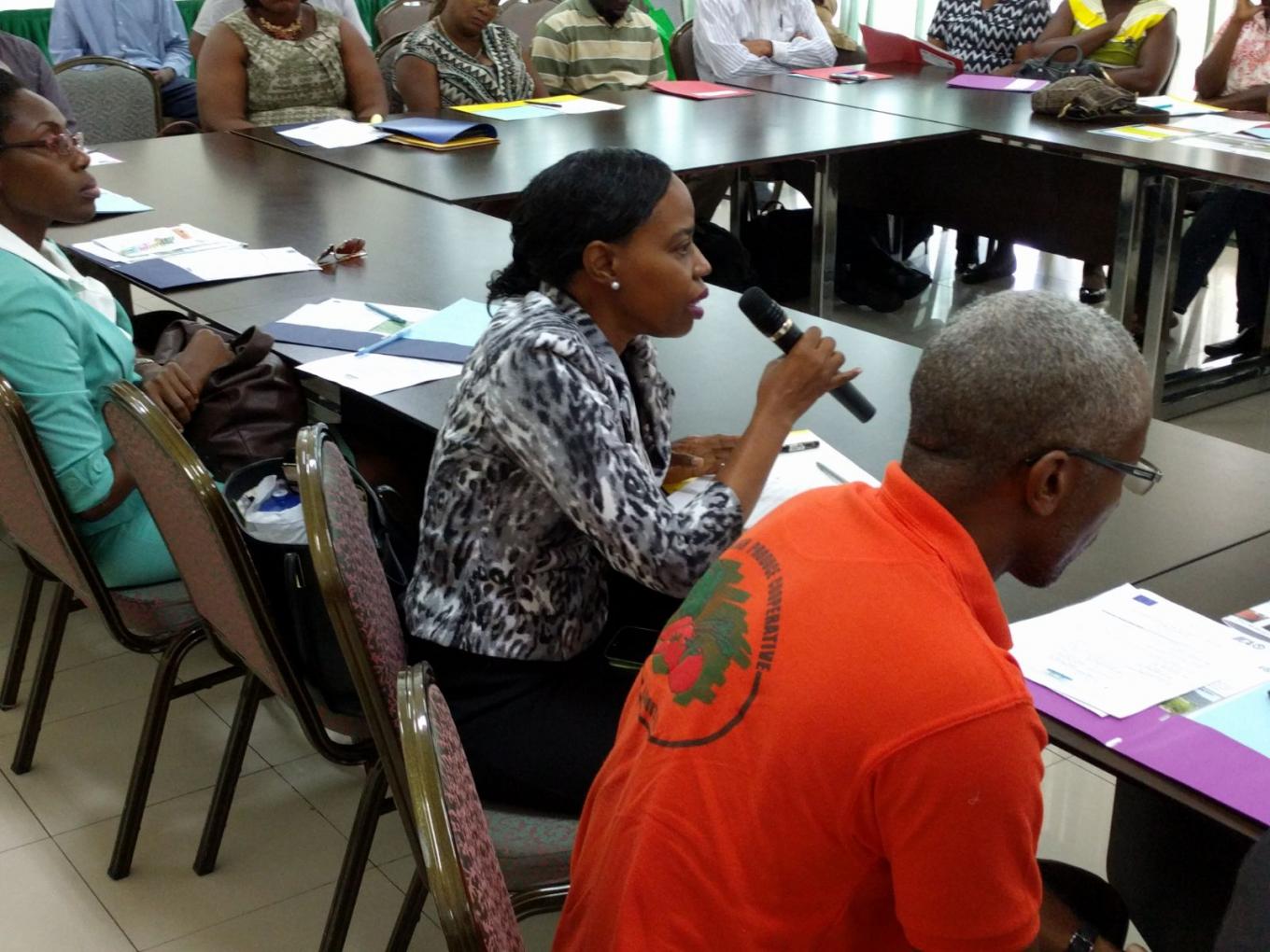
Antigua and Barbuda. Public health and agricultural professionals, as well as key stakeholders from the agricultural health and food safety sector, participated in a forum on food and animal production systems that sought to strengthen surveillance and control capacities related to Sanitary and Phytosanitary Measures (SPS) in Antigua and Barbuda.
The forum was organized by the Inter-American Institute for Cooperation on Agriculture (IICA) in collaboration with the Ministry of Agriculture, Lands, Fisheries, and Barbuda Affairs (MALFBA) and other key ministries and institutions in Antigua and Barbuda.
The main objective was to raise awareness within the public and private sectors of the relevance and importance of SPS measures, and to share information about the new Coordinating Council for Agricultural Health and Food Safety in Antigua and Barbuda (CCAHFSAB), officially endorsed by the government in 2015.
The formalization of this national committee was one of the commitments undertaken by IICA within the framework of a project funded by the European Union. As part of its role as implementing agency, the Institute must provide the EU with accountability reports on the project.
During the opening ceremony, Mr. Jedidiah Maxime, Director of the Ministry of Agriculture, Lands, Fisheries, and Barbuda Affairs, referred to the importance of legislation on agricultural health and food safety, and matters related to SPS measures in particular. He also spoke about the development and management of food standards in Antigua and Barbuda.
Technical National Implementation Network Teams (TNINT) managed by National Focal Points were established in each of the 15 CARIFORUM states. The members of the TNINT were selected from the ministries of agriculture (including the fisheries subsector), private sector agencies, and relevant national institutions in each of those countries.
The CCAHFSAB seeks to foster synergies among agencies related to agricultural health and food safety, promote private-sector involvement, and provide support to individual public and or private-sector entities that deal with this topic.
Dr. Janil Gore-Francis, Plant Protection Officer of the Ministry of Agriculture and SPS Inquiry Point in Antigua and Barbuda, reiterated the importance of formalizing the SPS Committee, establishing a legal framework, and developing a national agenda. The Committee will focus its work on those areas.
The activity was supported and funded under the 10th EDF Project “Support to the Caribbean Forum of ACP States in the Implementation of Commitments Undertaken Under the Economic Partnership Agreement (EPA): Sanitary and Phytosanitary Measures (SPS).”
The overall objective of the SPS program is to assist CARIFORUM states in improving and gaining greater market access by complying with Europe’s Sanitary and Phytosanitary (SPS) measures. Additionally, the program provides CARIFORUM states with support to better develop their own regionally-harmonized SPS measures.
More information: