With the support of IICA, Maris Llorens, a renowned Paraguayan livestock farmer and businesswoman, visited the Central American country of Belize to find out about challenges and opportunities in its livestock sector, as well as to share experiences and explore the potential for collaboration.
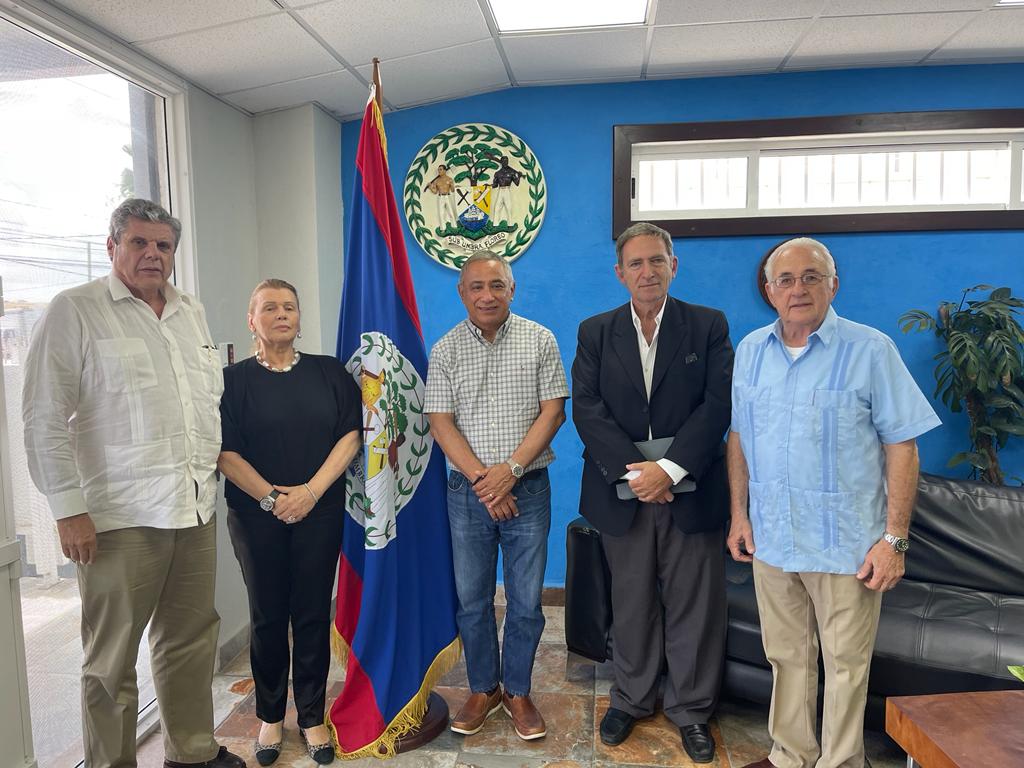
Belmopán, 13 October 2022 (IICA). Belize is aiming to achieve sustainable development through its livestock production value chain and thus it is drawing on the experience of Paraguay in this field.
Maris Llorens is a renowned Paraguayan livestock farmer, businesswoman and now Goodwill Ambassador of the Inter-American Institute for Cooperation on Agriculture (IICA) in the area of Sustainable Animal Production. She visited the Central American country to gain an in-depth understanding of challenges and opportunities in Belize’s livestock industry; to share experiences; and to assess the potential for collaboration between both countries.
Options for South-South cooperation were explored during this visit, which was facilitated by IICA. Llorens—who has played a pivotal role in advancing the livestock sector in Paraguay—confirmed that she was prepared to provide advice to Belize in various areas, in particular in relation to environmentally sustainable development.
During her stay, Llorens met with John Briceño, Belize’s Prime Minister; Narda García, Chief Executive Officer in the Office of the Prime Minister; Abelardo Mai, Minister of Agriculture, Food Security and Enterprise; Servulo Baeza; Director General of the Ministry; as well as with representatives of the Agricultural Health Authority and of the Belize Livestock Producers Association.
Llorens is a philanthropist who has dedicated her career to livestock production processes, industrialization and marketing, in both Paraguay’s domestic and export market. Accompanying her on the visit was Roberto Blumenfeld, General Manager of Frigorífico Chajha –a meat processing company in Paraguay that is owned by Llorens.
Blumenfeld provided technical advice on the development of new livestock processing industries and marketing in Belize, as well as on the potential to export to the Caribbean Community (CARICOM), Central America, the United States and Canada.
The visitors also toured two livestock farms and a processing plant in the Cayo district.
More information:
Gabriel Rodríguez, IICA Representative in Paraguay and Belize.
gabriel.rodriguez@iica.int