-Disease poses threat to incomes, jobs, and the availability of food in the Caribbean.
-IICA, FAO, and CARDI have joined efforts to combat the emergency. IICA will be holding a regional seminar on August 16 to inform producers.
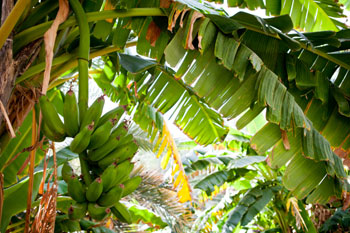
Trinidad and Tobago, August 10, 2012 (IICA). The Caribbean faces an emergency following the spread of black sigatoka disease, which is likely to affect the economic stability of countries in the region. The governments have responded by requesting support from IICA, FAO, and CARDI to tackle the situation immediately.
Black sigatoka attacks the leaves of banana and plantain plants, affecting the process of photosynthesis and reducing yields. Although it has already appeared in other parts of the world, such as Central and South America, its arrival in the Caribbean and its rapid spread took the industry by surprise, explained Humberto Gómez, Specialist in Technological Innovation for the Caribbean Region with the Inter-American Institute for Cooperation on Agriculture (IICA).
In response, countries such as Dominica, Grenada, Guyana, Saint Lucia, and Saint Vincent and the Grenadines have requested urgent assistance from IICA, the Food and Agriculture Organization (FAO) of the United Nations, and the Caribbean Research and Development Institute (CARDI).
One of the first actions to be undertaken by the Institute is to seek a joint response to the emergency. Through a virtual forum to be held on August 16, information will be provided to stakeholders about the disease and its impact, and how it can be controlled. Luis Ernesto Pocasangre, a professor with the EARTH University, and IICA Specialist Kervin Stephenson, will be providing support for the activity.
“There are no magic solutions, such as the simple use of fungicides. Black sigatoka is aggressive and has a great capacity to mutate, so it can develop resistance to fungicides if these are not properly applied. This calls for a comprehensive solution on farms, in the countries, and in the region” Gómez pointed out.
During the seminar, producers, extension workers, the senior technical officers of the ministries of agriculture and other decision-makers will learn about the importance of adopting an integrated approach to banana plantation management. Also discussed will be the regional vulnerabilities that are an obstacle to the control of sigatoka.
Finally, another aspect addressed in the seminar will be the need to work together. Failure to take appropriate action in one area may affect others; thus, a coordinated effort would also help to lower control costs.
“The mood in the region is pessimistic, as if the industry no longer has a future. Therefore, in the seminar we want to emphasize that we are still on time to take action, and that this challenge could be an opportunity to control the disease and, at the same time, raise yields and improve quality,” Gómez remarked.
An FAO consultant will be visiting the Caribbean countries most vulnerable to sigatoka, to determine the state of the emergency and proposing joint activities designed to control or reverse the damage.
IICA, FAO, and CARDI will use his report to draft a proposal for technical cooperation to combat the disease.
Multiple consequences
According to Gomez, black sigatoka has arrived at an unfortunate time for the industry. Indirectly, the declining profitability of banana cultivation could have had a negative effect on plantation management, which would have allowed the disease to spread more easily.
The situation is even worse when one considers that the banana industry generates foreign exchange and is the main source of income of many rural populations in the Caribbean. According to the IICA specialist, any negative impact would not only affect the industry, but also have repercussions on employment, the economy, and food security in the Caribbean.
Bananas form part of the diet of people in the Caribbean. The inability to meet local needs and the rising global prices of important carbohydrate foods such as cereals, would pose an additional threat to food security in the region.
“We are concerned with the socioeconomic consequences of this emergency, which go beyond the agricultural sector. But action is being taken in time. Intra-regional coordination and producers’ readiness to improve the management of their plantations are key elements in the process,” Gómez concluded.
For more information, contact:
humberto.gomez@iica.int