Intersectoral coordination and the support of organizations, such as IICA, are part of a strategy to capitalize on the global consumption of cocoa and its by-products
San Jose, December 18, 2019 (IICA). Producers, government institutions and other public and private entities in the Trinidad and Tobago cocoa chain have established a platform to tackle the challenges they face in placing their products on the international market.
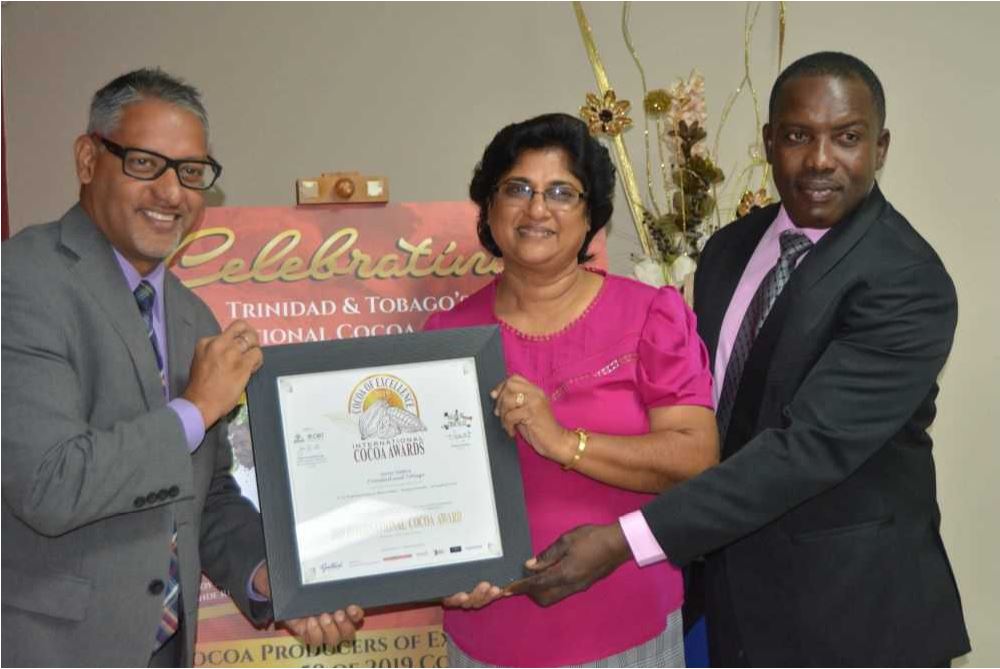
The platform brings together farmers, processors, manufacturers, chocolate makers, suppliers of inputs, commercial entities, academia, civil society and international and regional partners to spur the development of the industry—some of which already have signed letters of commitment—motivated in part by the fact that three of the country’s cocoa-producing families have received international recognition.
At the International Chocolate Awards 2019, Leroy and Geeta Peters were named among the world’s top 20 producers, due to the excellent aroma and exquisite taste of their cocoa. Minister of Agriculture of Trinidad and Tobago, Senator Clarence Rambharat pointed out that, “This was a major achievement, having operated without running water, electricity and other basic services just a few years ago”.
Guaranteeing access to an adequate labor force, maintaining the quality of the bean, developing export capacity and increasing investment in the industry, by way of the bioeconomy, are priority areas that the platform will seek to address through dialogue and inter-institutional action.
The strategy will receive support from the Inter-American Institute for Cooperation on Agriculture (IICA), an organization with vast experience in establishing mechanisms of a similar nature in various countries of the region.
Winston Rudder, President of the Cocoa Development Company of Trinidad and Tobago Ltd. (CDCTTL), remarked that, “The platform is not a perfect instrument but we appreciate the rapid response of the local IICA Delegation to our appeal for technical assistance”.
Diana Francis, IICA Representative in Trinidad and Tobago, reiterated IICA’s commitment to continue providing technical support and guidance to the CDCTTL and described the platform as an opportunity to support the shared vision and goals of the various cocoa stakeholders in the country.
More information:
Richard Rampersaud, IICA Agribusiness and Value Chain Specialist.