Over 200 people from the hemisphere analyzed innovation processes implemented by IICA in partnership with CIRAD. Their inputs will facilitate the design of effective proposals in that area.
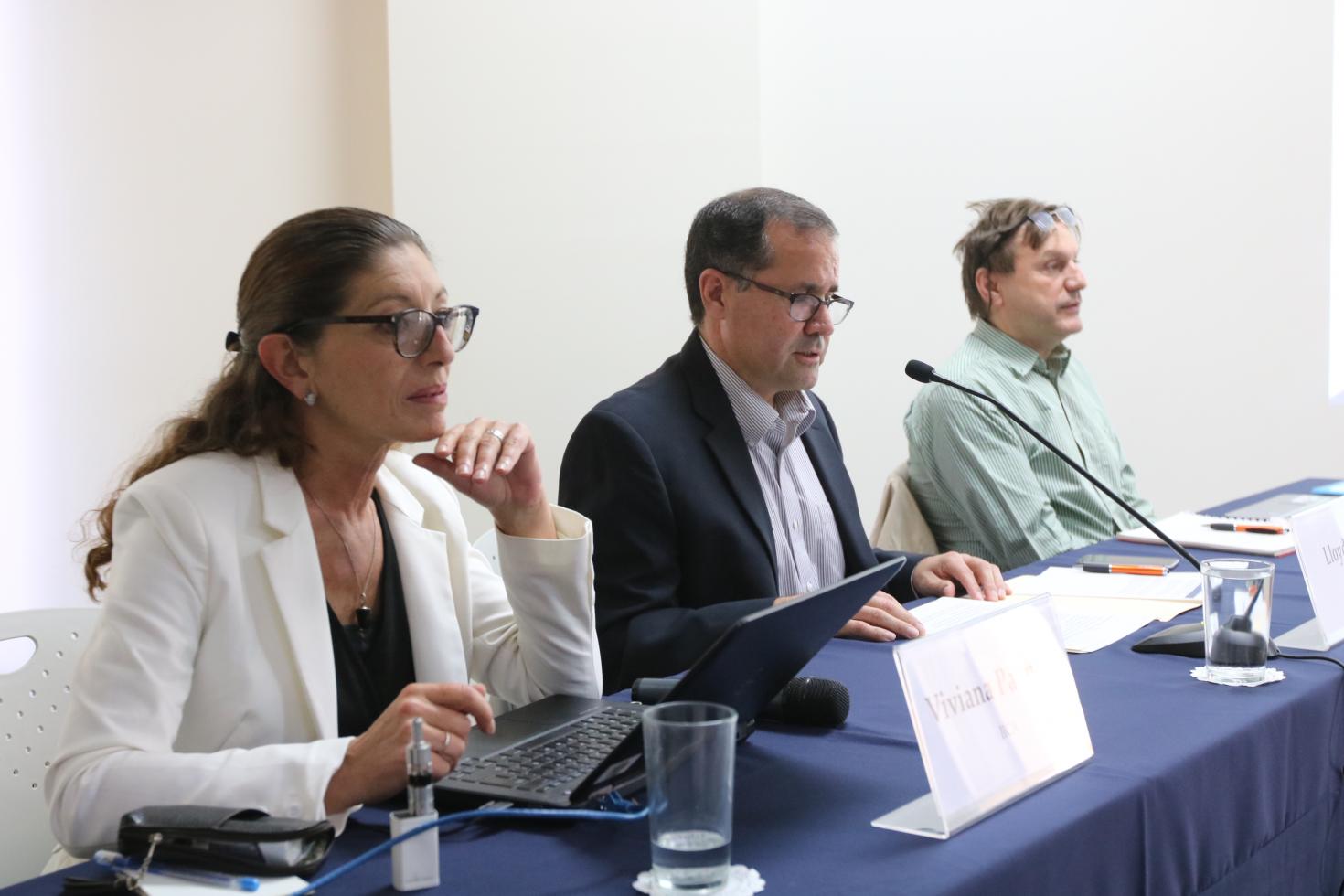
San Jose. The results of three exploratory studies conducted by the Inter-American Institute for Cooperation on Agriculture (IICA), in partnership with the French Agricultural Research Center for International Development Cooperation (CIRAD), and focusing on agricultural chains in Paraguay, Trinidad and Tobago and Jamaica, were shared at a technical forum organized by the Institute with the aim of strengthening innovation processes in other agricultural chains of the hemisphere.
The event, which was transmitted online to the 34 member countries of IICA, was organized by the Flagship Project on Competitiveness and Sustainability of Agricultural Chains. Among other efforts, this project works to improve countries’ capacity to manage technological innovation in production chains, through the exchange of experiences.
In his presentation to the forum, CIRAD’s Innovation Specialist, Bernard Triomphe, who is also an associate staff member of IICA, mentioned five functions that researchers and technicians can perform to contribute to innovation:
- Produce and disseminate appropriate knowledge
- Work jointly with local stakeholders on the design, adaptation and implementation of innovation processes (co-designing innovation)
- Strengthen technical and operational capabilities
- Efficiently manage resources and seek continued funding over extended periods of time
- Build multi-stakeholder partnerships for innovation development.
Triomphe also presented general information and basic concepts on innovation, emphasizing that this process takes place over extended periods of time, based on interactions between multiple stakeholders within a socio-economic and institutional context that strongly influences that process.
The three case studies analyzed at the forum were the flower chain of Paraguay, dairy goat chain of Trinidad and Tobago and the sweet potato chain of Jamaica. IICA’s Specialist in Technological Innovation, Viviana Palmieri, reviewed the steps followed to implement the three studies, and discussed the main results regarding the innovation processes and capacities in the analyzed chains.
According to Palmieri, “the results of the studies, together with the inputs contributed by forum participants, will be used to prepare a technical paper on the elements required to analyze the capacities for innovation and develop proposals to strengthen these.”
Finally, Triomphe summarized the main conclusions and methodological lessons derived from the three studies and proposed some topics for discussion by the participants. Based on the specialists’ presentations, the participants discussed various actions and strategies to make farmers less dependent on external initiatives and interventions, improve their capacity for innovation, coordinate more effectively with each other and with other stakeholders and improve their own organization and actions within the chains.
More information: Viviana Palmieri, IICA Specialist in Technological Innovation viviana.palmieri@iica.int
Video: