This was the motto chosen for the First Institutional Management Meeting.
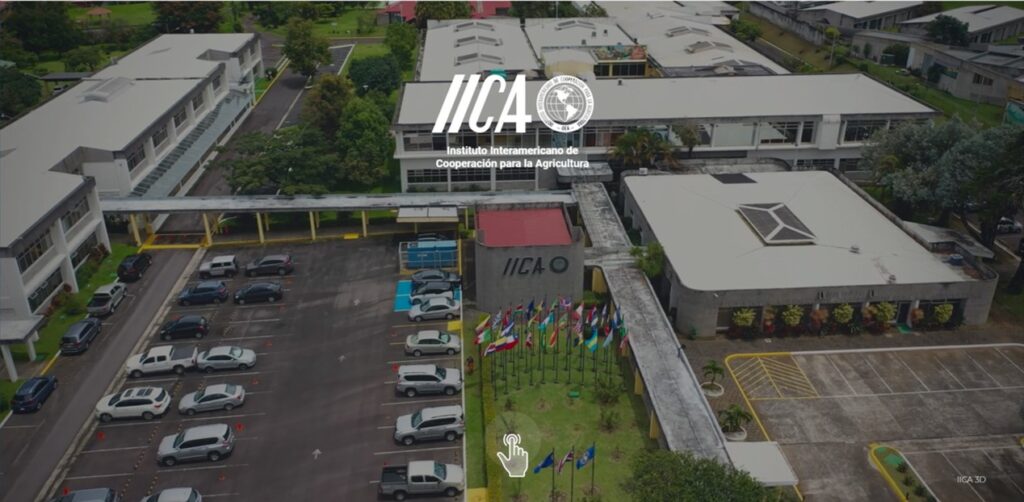
San José, Costa Rica, November 2, 2010 (IICA). The Headquarters of the Inter-American Institute for Cooperation on Agriculture (IICA) will be the site this week of the First Institutional Management Meeting, which has brought together the Representatives of the Institute in its 34 Member States, the Coordinators of its Office in the Eastern Caribbean States, its thematic specialists and personnel from Headquarters.
For five days, the participants will analyze topics of great importance for the future of the Institute, such as the implementation of the 2010-2014 Medium-term Plan and the 2010-2010 Strategic Plan, both recently approved by the IICA Executive Committee. They will also discuss the Institute’s programs in detail, with a view to sharing visions, objectives and strategies.

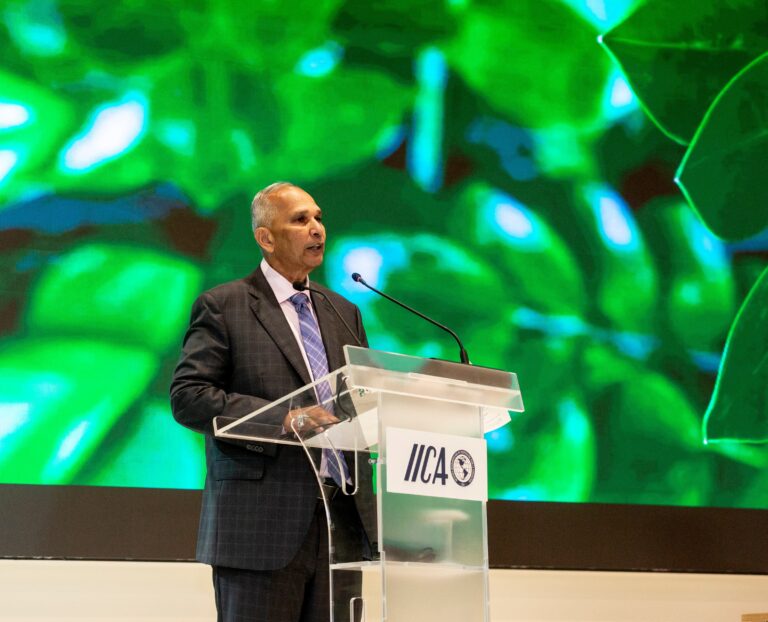
In his opening address, delivered on November 1, Director General Victor M. Villalobos called for building a single IICA. “These words are more than a name for this event. They are a call for the entire IICA community to come together, and an invitation to teamwork, which will make us stronger and better prepared to meet the challenges we face,” he said.
Villalobos noted that, to accomplish this, it will be necessary: to ensure that all share the same vision of agricultural development and rural well-being; for all personnel to agree on what the Institute should do in the future; to develop and put into practice innovative methods, procedures and instruments for the management of technical and administrative cooperation; to have management units that operate efficiently and have clearly defined responsibilities; and to bring the Institute’s regulatory framework into line with its objectives.
It is necessary, he said, to make IICA an organization that operates on the basis of the needs and priorities of its member countries, and that is more efficient at the national, regional and hemispheric levels, doing a better job of allocating resources and developing fully its technical capacity for innovating, modifying paradigms and adopting good practices.
The agenda for the meeting includes a seminar on Institutional Modernization in which IICA staff members, accompanied by a group of outstanding external experts, have been analyzing IICA’s role in building an institutional framework capable of promoting a new paradigm for agriculture in the Americas.
For more information, contact
victor.delangel@iica.int
Opening address (spanish only)