
San José, 30 October 2026 (IICA) – The countries of the hemisphere expressed support for the work that the Inter-American Institute for Cooperation on Agriculture (IICA) is doing to enhance agricultural productivity, using the tools offered by science, technology, and innovation.
During the meeting of the Executive Committee—one of IICA’s governing bodies— agricultural ministers, deputy ministers, and authorities from the Member States agreed that the major challenge facing the region is the need to accelerate technology infusion into rural areas, to benefit farmers and communities.
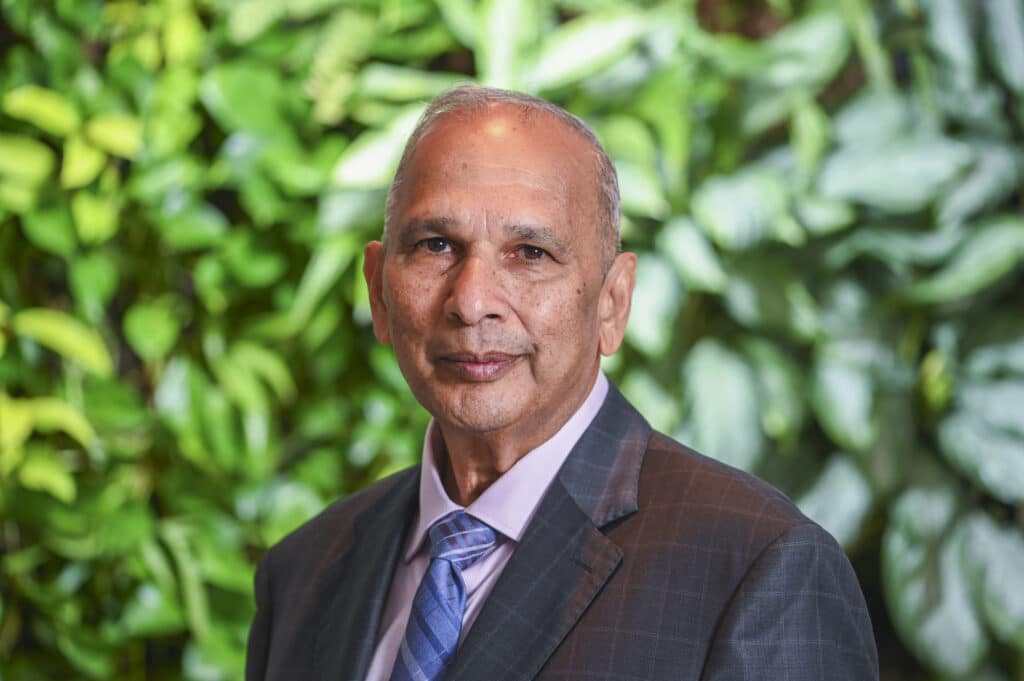
As such, the countries signed a resolution, asking Muhammad Ibrahim, the Director General of the hemispheric organization, to promote increased linkages between research, technical cooperation, and the production sector.
The meeting adopted a hybrid format (in-person and virtual) and was attended by members of the diplomatic corps, representatives of international organizations, and the IICA technical team.
It was chaired by José Aníbal Rincón, Deputy Minister of Agricultural Development of Panama, which was the country elected to preside over this year’s Committee.
During the Regular Meeting of the Executive Committee in June, the member countries had expressed wholehearted support for IICA’s 2026-2030 Medium-term Plan (MTP), which is geared towards strengthening the agrifood systems of the hemisphere, in a bid to contribute to economic prosperity, poverty reduction, food security, resilience, environmental sustainability, and decent work.
IICA Director General, Muhammad Ibrahim, thanked the countries of the Americas for the trust and support placed in the organization. He also pointed out that the need for greater agricultural productivity has arisen in a scenario of multiple challenges, including extreme weather phenomena, growing threats from transboundary pests and diseases, and volatile international markets.
“In this context, IICA is promoting initiatives and cooperation efforts in fundamental areas such as gene editing, digital agriculture, and bioinput production, while introducing new technologies and solutions to the countries,” he specified.
IICA Director of Technical Cooperation, Valeria Piñeiro reported on progress in implementing the organization’s Science, Technology, and Innovation for Production Development Program, explaining that the aim is to focus on multiple opportunities available to improve productivity, sustainability, and value addition. She argued that there is still limited use of digital technologies in most of the countries and value chains, thus leaving extensive room for improvement. She also referred to the work that the organization is doing to promote greater bioeconomy development, given the hemisphere’s immense wealth of natural resources.
Science-based solutions
Zeke Bryant, Agricultural Attaché of the United States Department of Agriculture (USDA), highlighted IICA’s leadership: “We support science-based solutions that strengthen agriculture, improve competitiveness, and help overcome shared challenges. We recognize the solid commitment of countries in the region to expanding cooperation,” he stated.
Cleber Soares, Deputy Minister of Agriculture and Livestock of Brazil, remarked that the MTP approved in July is already yielding concrete results and highlighted IICA’s role as the Home of Agriculture in the Americas. “We are particularly appreciative of work in certain areas, such as the development of bioinputs. It’s not just about generating technologies, but also about making sure they reach the field so they can add value. This depends heavily on collaboration, technical assistance, and access to credit. IICA plays a critical role in these areas,” he noted.
Juan Duarte Van Humbeck, Ambassador of Paraguay to Costa Rica, applauded IICA’s efforts to defend the value of science as the foundation for regulations governing international food trade. In this regard, he was critical of the proposed changes to European Union (EU) regulations regarding maximum residue limits (MRLs).
According to a recent study commissioned by IICA, these changes could have major consequences for agricultural exports from the Americas, which total about USD 44.2 billion annually—a figure calculated based on average trade values for the 2022–2024 period.
The countries asked IICA to support the establishment of a hemispheric cooperative program focused on developing the value chain for cocoa, a crop that relies heavily on the work of small-scale farmers and is a key source of income and livelihood for rural families.
Cocoa producers face a number of challenges, including price volatility, aging plantations, pests and diseases, extreme weather events, and new market demands regarding traceability and deforestation-free production.
The resolution notes that countries interested in joining the cocoa value chain program must guarantee the necessary funding for its development and implementation.
The participants also congratulated the governments of Guyana and Brazil on the establishment of a center of excellence specializing in innovation, technology transfer, and agricultural training, which will benefit the entire Caribbean region. The initiative was presented last June in Georgetown, with Guyanese President Mohamed Irfaan Ali in attendance. Member countries urged IICA to work alongside Guyana, Brazil, and other partners to strengthen the center and identify opportunities for cooperation.

More information:
Institutional Communication Division.
comunicacion.institucional@iica.int