With the worrying trend of increased numbers of hungry in the world, the intensity and frequency of extreme weather events and inadequate infrastructure and rural services, the global agri-food system is under intense pressure.

Director General, Trade Agreements and Negotiations,
Agriculture and Agri-Food Canada
International attention to the United Nations Sustainable Development Goals, has however stimulated a plethora of programmes and activities that are poised to provide solutions to these challenges. Results of agricultural research and development activities supported by Canada and implemented in various developing countries worldwide have led to innovations that can be adapted and scaled up and contribute to food security in many countries.
An essential component for empowering countries to both adopt and adapt innovations and technologies is knowledge. Sharing relevant knowledge on a timely basis and in an appropriate format is part of the missing link for success, according to a group comprising members of the Diplomatic Corps in Canada, government, private sector and Non-Governmental organizations, attending a recent forum of the Inter-American Institute for Cooperation on Agriculture (IICA). The role of IICA as a knowledge broker and manager is crucial in changing the paradigm and the IICA Delegation in Canada was challenged to engage the private sector, consumers, and young people in an equitable manner in delivering knowledge products to change lives.
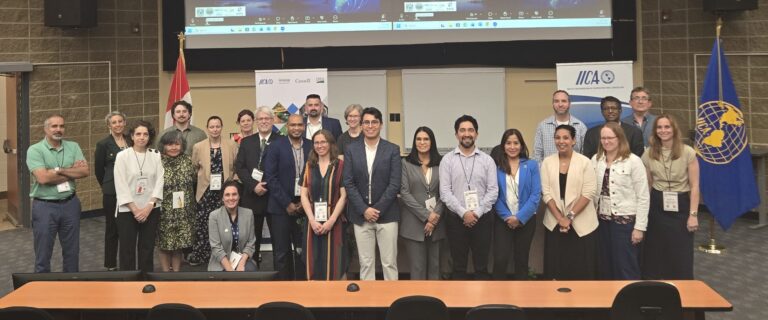
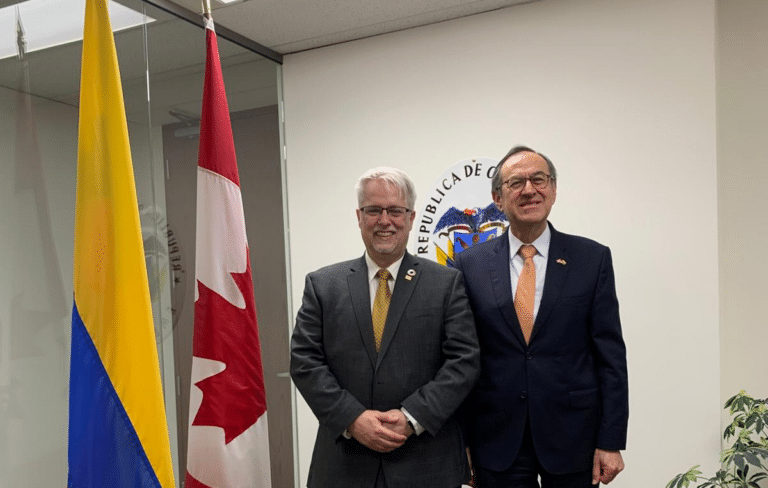
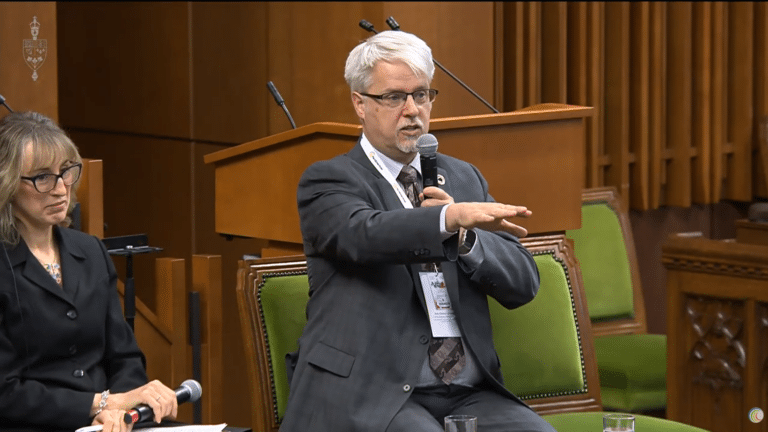
The forum : Enhancing Agri-Food Opportunities in Trade and Development was opened by Mr. Aaron Fowler, Canada’s Chief Agriculture Negotiator and Director General of Trade Agreements & Negotiations at Agriculture and Agri-Food Canada. His message was clear: collaboration with IICA can provide a multiplier impact in the Americas. The Director General of IICA, Dr. Manuel Otero, commended Canada for its leadership in the global development agenda and assured the attendees of the Institute’s commitment to Canadian priorities, as reflected in its new Medium Term Plan.
Hosted by the IICA Delegation in Canada, the session captured excellent ideas that will help to shape its future work in Canada.
For more information:
Dr. Audia Barnett
IICA Canada Representative
audia.barnett@iica.int