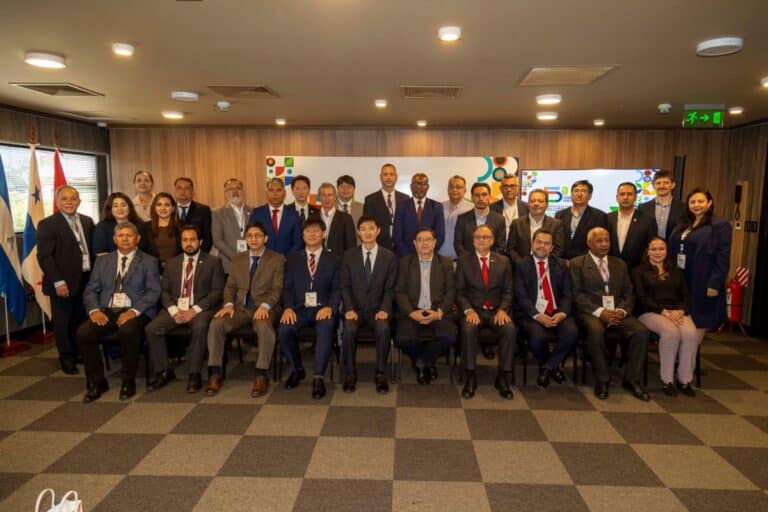
During an international seminar entitled “Safe food in global trade within the context of deepening non-tariff barriers”.
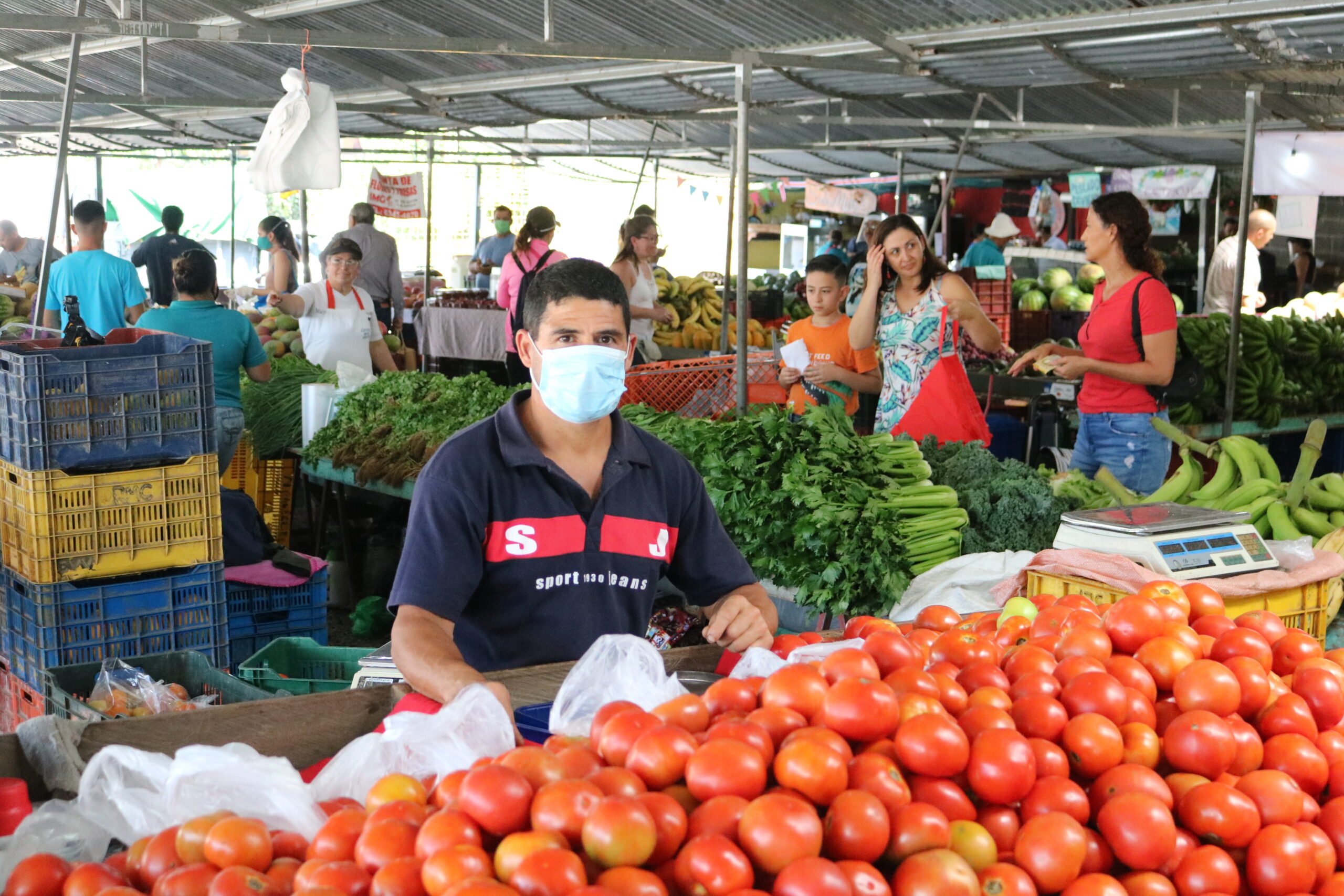
Buenos Aires, 4 July 2020 (IICA). On 6 July, with support from the Group of Producing Countries from the Southern Cone (GPS) and the Argentine Agency for Investment and International Trade (AAICI), the Inter-American Institute for Cooperation on Agriculture (IICA) held an international seminar entitled “Safe Food in Global Trade Within the Context of Deepening Non-Tariff Barriers”. The meeting was also supported by the Argentine Oil Industry Chamber (CIARA), the Grain Exporters’ Center (CEC), Corteva Agriscience and the Argentine Beef Promotion Institute (IPCVA).
The purpose of the seminar was to envision and develop regional strategies related to health requirements in food production, industry and trade at the global level, to be implemented both at present and in the immediate future, within the current context of the Covid-19 pandemic.
In attendance at the opening session were Manuel Otero, Director General of IICA, and Juan Usandivaras, Chair of the Argentine Agency for Investment and International Trade, who introduced the topic of the seminar: “The impact of the pandemic on international food trade from a health perspective in Latin America and the Caribbean”.
The first panel is focused on “Productive and logistical implications of the pandemic beyond the borders of countries in the region”. The participants were Eduardo Díaz, Chair of the Merchants’ Chamber of Country Products and CEO of Cargill Uruguay; Gustavo Idígoras, Chair of CIARA and CEC; and Francisco Turra, Chair of the Brazilian Association of Animal Protein (ABPA) and former Minister of Agriculture of Brazil.
Participants in the first panel identified post-pandemic sanitary requirements to be implemented by countries that purchase products of animal and plant origin from the region; sanitary and food safety protocols and procedures in agrifood value chains, including internal and external logistics (new requirements and certifications); as well as trade facilitation mechanisms from the point of view of health and logistics.
The second panel, “New non-tariff measures within the context of the pandemic”, included the participation of economist Denise Penello Rial of the United Nations Conference on Trade and Development (UNCTAD), who specializes in non-tariff measures.
The third panel was entitled “Consumer demands for safety and the emergence of new sanitary conditions for market access. Consumer expectations for safe food amidst the global pandemic”.
The presentation was delivered by Jorge de Saja, Director of CESFAC and AFOEX, the Spanish chambers that represent manufacturers of compound feed for animals, as well as oilseed crushers and refiners, respectively.
All three panels were moderated by Lourdes Fonalleras of IICA.
Participants also engaged in a final discussion, to identify health and safety strategies to meet the challenge of exporting safe food within the current context. The debate was moderated by Federico Villarreal, Director of Technical Cooperation at IICA.
Lastly, Federico Villarreal of IICA and Martín Piñeiro of GPS presented the main conclusions of the meeting.
The virtual seminar was broadcast live at www.revistachacra.com.ar , www.agritotal.com and https://www.facebook.com/IICAnoticias/.
More information:
Sonia Novello. IICA Information and Documentation Specialist
sonia.novello@iica.int