Quito, Ecuador, 23 February 2026 (IICA). Ecuador has taken a historic step in strengthening its rural sector with the official launch of the State Public Policy for the Agriculture Sector 2025–2034, “Manos para el Campo”, a long-term roadmap for the inclusive, sustainable and productive development of agriculture.
Ecuador’s Ministry of Agriculture, Livestock and Fisheries drafted the document with technical support from the local Delegation of the Inter-American Institute for Cooperation on Agriculture (IICA).
The new policy was presented as a strategic instrument that recognizes agriculture as a key contributor to the country’s food security, job creation, foreign exchange earnings and environmental sustainability.
The policy was developed through a participatory technical process that involved the mapping of stakeholders, spaces for dialogue with the productive sector, the use of official information, and the incorporation of international standards, thus ensuring that the instrument is aligned with Ecuador’s global commitments and that it will be possible to measure and evaluate the results.
During the launch event, Ecuador’s Minister of Agriculture, Livestock and Fisheries, Juan Carlos Vega, said that “working with IICA, we constructed this policy as a nation, not just as a government, not just as a ministry, but in conjunction with all food producers. It is a roadmap that addresses the most important issues facing the country”.
The policy document is comprised of ten sections that address productivity, quality and safety, market access, services and infrastructure, associative enterprises, environmental sustainability, risk management, financing and insurance, innovation, and education and technical assistance, with a specific focus on family farming.
It also incorporates an approach that recognizes the key role of rural women and access to water and food as essential elements for development.
IICA provided technical support throughout the process, contributing methodologies, international best practices, comparative analyses and details of other experiences in the region, always in coordination with the Ministry’s leadership.
This support made it possible to strengthen the structure of the policy, incorporate clear indicators and goals for its implementation, and establish monitoring and accountability mechanisms.
Renzo Galgani, IICA’s Representative in Ecuador, said that “today we are not just presenting a document. We are presenting a ten-year strategic roadmap. A policy that recognizes that agriculture is not simply another sector of the economy, and, because farming is so important for the country, it was constructed with the greatest possible care”.
The launching of “Manos para el Campo” marks Ecuador’s consolidation of a comprehensive vision designed to transform its rural areas, boost competitiveness, reduce gaps and build a more sustainable, inclusive and resilient agriculture sector.
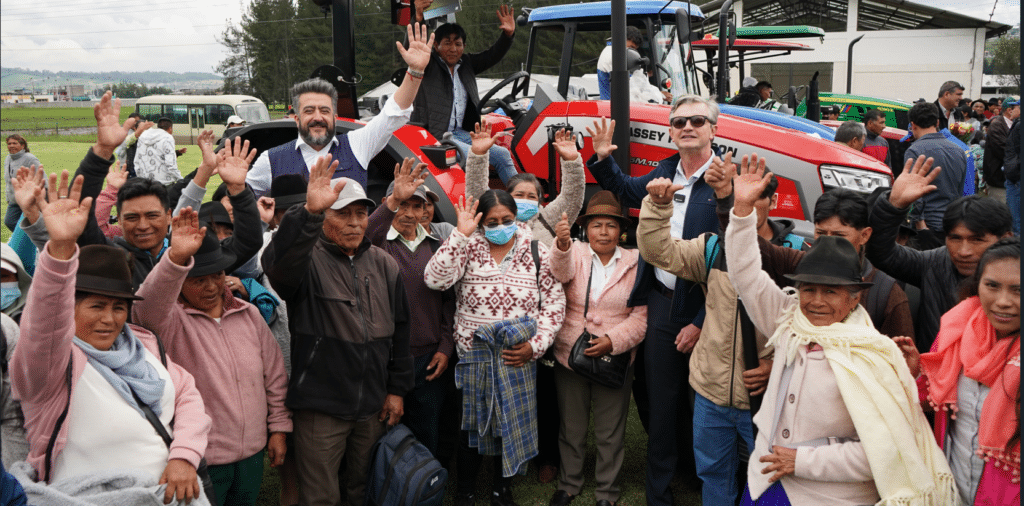
Mercedes Salazar, a farmer from the province of Pichincha, commented that “we are very happy and grateful for this new “Manos para el Campo” policy, and we want our products not only to reach domestic markets, but, hopefully, international ones as well. But the most important thing we want is for our children and grandchildren to remain in the countryside and work in agriculture (…) because it is possible to make a go of it, especially with this new policy”.
IICA reaffirmed its commitment to continue working hand in hand with the national government, producers, academia and strategic partners to turn this policy into concrete results that improve the quality of life of rural families and increase the contribution of rural areas to Ecuador’s development.
The text of the public policy is available in Spanish at the following link: https://www.agricultura.gob.ec/politica-publica-de-estado-para-el-sector-agropecuario-ecuatoriano-2025-2034/
More information:
Institutional Communication Division.
comunicacion.institucional@iica.int