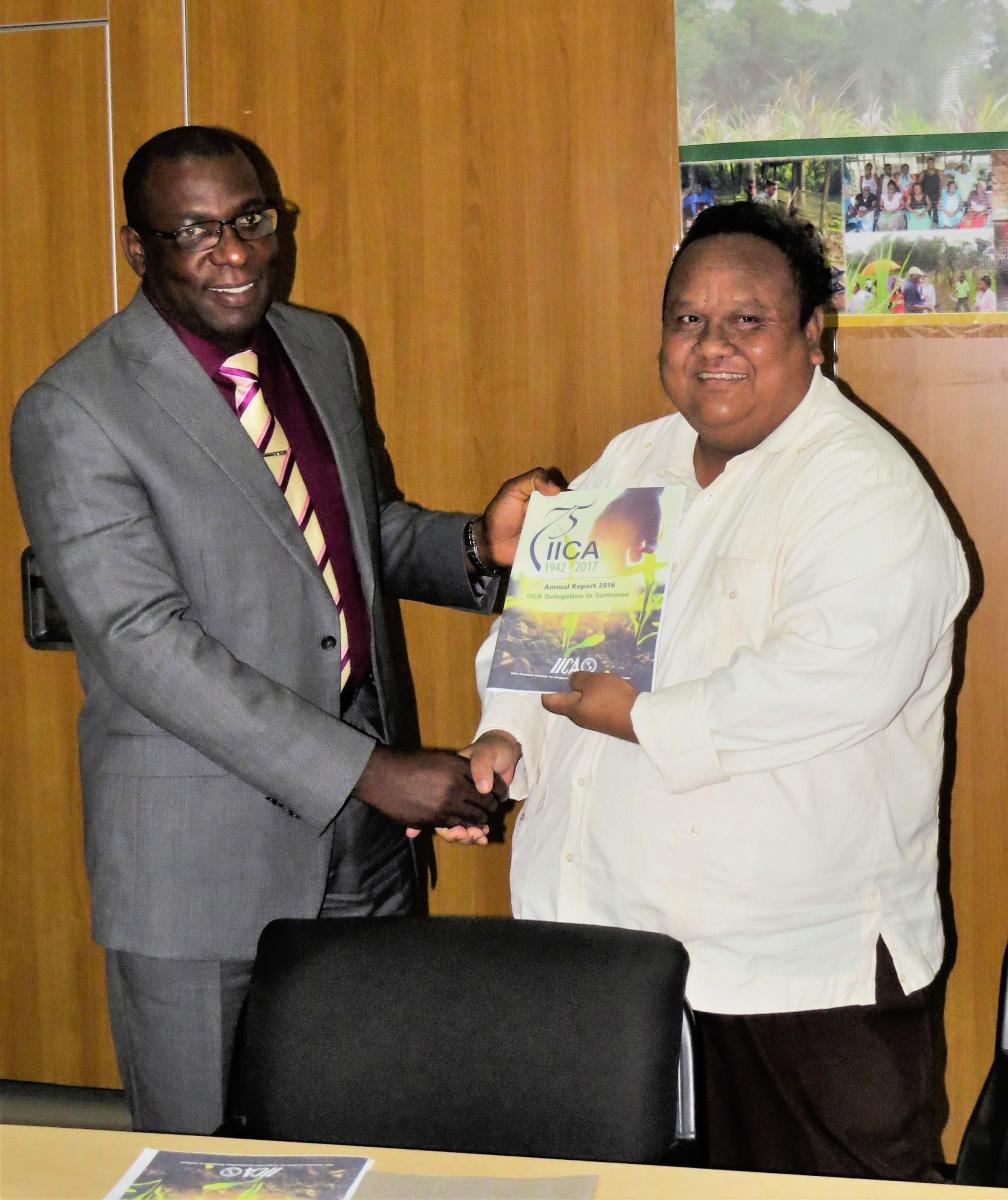
The IICA Representative in Suriname reported to the Ministry of Agriculture, Animal Husbandry and Fisheries the main achievements in 2016 and presented the main focuses for 2017.

Pamaribo, Suriname. 10 April, 2017 (IICA). Building of sustainable agriculture practices, linking agro-processing SME’s to markets, improving capacities in food safety standards and productivity, support for the establishment of agro-cooperatives, strengthening associative processes and promoting renewable energy generation, are some of the contributions made by the Inter-American Institute for Cooperation on Agriculture (IICA) to the agricultural sector of Suriname.
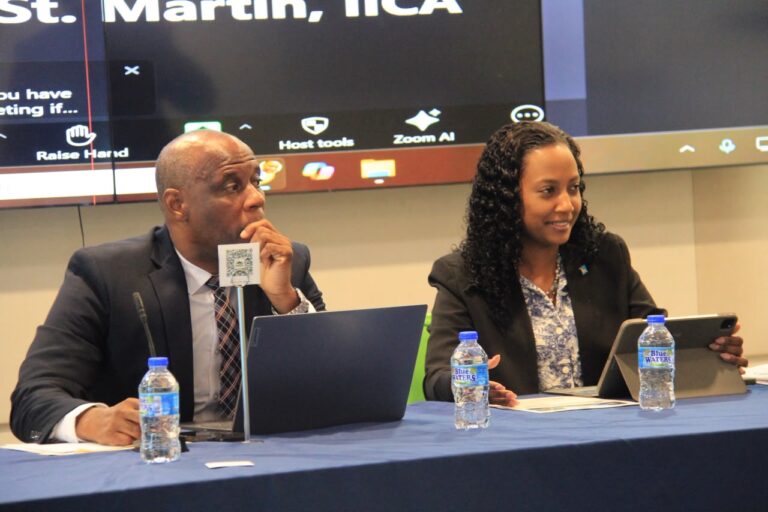
In the presence of the highest authorities of the agricultural sector of this country, the IICA Delegation in Suriname held its annual accountability seminar, where the Institute’s major achievements and interventions in the agriculture milieu were presented.
Soeresh Algoe, Minister of Agriculture, Animal Husbandry and Fisheries (LVV), was represented by his Permanent Secretary, Djoemadie Kasanmoesdiran in the session, who presented a statement from the Minister, which stressed IICA’s contribution to strengthening the business and associated capabilities of vulnerable groups, particularly women and youth, which has led to a strengthening of the dialogue among them and greater involvement in agriculture.
“In the present critical economic and financial situation, the agriculture sector needs to fulfil its role as an important player in stabilizing the economy, achieving sustainable growth, and providing employment and income to a large part of the economically active population”, he said.
According to the Minister Algoe, with the abundance of agricultural land and favorable agro-ecological conditions, Suriname scores with noticeable opportunities for increased production and export.
During his opening remarks, the IICA Representative, Dr. Curt D. Delice, reflected on some of the main challenges affecting agriculture and stated that although agriculture remains an important component of the rural communities, it no longer defines them: ecotourism, pharmaceutical prospecting and green services, among others, are all becoming important elements of a diversified rural economy.
“Our rural communities are in danger in this globalized world of losing their cultural identity, their raison d’etre as a people; we have a responsibility as development practitioners to do all within our power to prevent this from happening”, he emphasized.
Dr. Delice also listed the actions implemented by IICA in Suriname during 2016, some of which are:
- Development of a National Contingency Plan for Aquatic Animal Disease Outbreak
- Revitalization of the Suriname Network of Rural Women Producers (SUNRWP), the local chapter of the regional body Caribbean Network for Rural Women producers (CANROP).
- Support for human capacity development to help indigenous groups to transition from shifting cultivation to permanent agriculture
- Strengthening outreach models for youth agricultural organizations in Suriname
- Support to women and youth groups in obtaining certification for their products
- Promotion of perm-apiculture technologies for bee keepers
The event was attended by Djoemadie Kasanmoesdiran, Permanent Secretary in the Ministry of LVV, representatives of the Inter-American System and United Nations agencies, NGOs, international organizations, line ministries, educational and research entities and youth, women, producer and community based organizations.
75 years of innovation for more productive, sustainable and inclusive work in the Americas
IICA emerged out of a recognition that there was a need to establish education and research systems to address the region’s needs for food, and the main goal of the Institute was to seek to solve the region’s problems and foster mutual understanding among agriculture leaders to promote agricultural development, 75 years later, this need remains as urgent as it was then.
“This demonstrates the permanence of agriculture: where there is man, there is need for agriculture and in a dynamic world with a growing population, feeding ourselves remains a constant task, precisely because new challenges emerge with the progress of time”, said Delice.
In October of this year, IICA celebrates the 75th Anniversary of its foundation, and coincidentally, January 2017 marked 35 years since the formal opening of the IICA Delegation in Suriname.
“We wish to express our renewed commitment to all stakeholders in the agriculture and rural sectors and pledge to continue to provide technical cooperation and leadership in developing and promoting sustainable models of agriculture and rural development for Suriname”, stated Delice.
The accountability seminar is in keeping with the Institute’s ethos of transparency and accountability to our stakeholders and partners in common pursuit of developing a sustainable agriculture and rural sector in the country.
More information:
Curt Delice, IICA Representative in Suriname