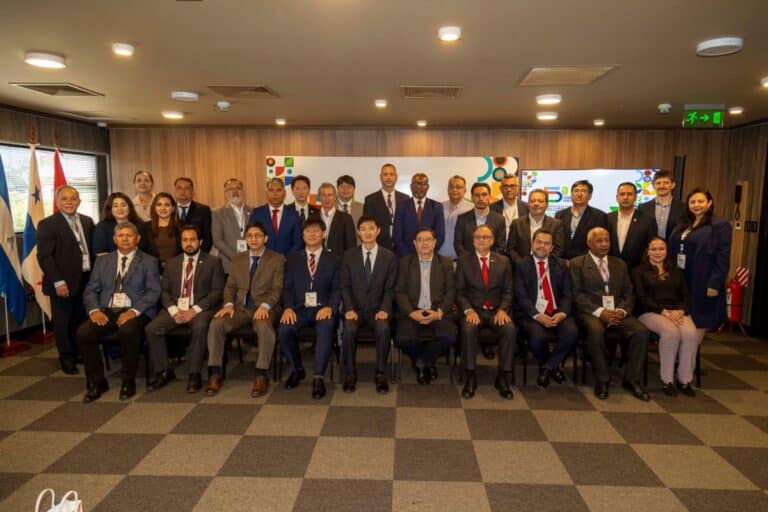
Lima, 18 August 2025 (IICA) – Ministers of Agriculture of the Americas and other senior agricultural officials will meet over the course of two days in Lima, Peru, within the framework of the Forty-fifth Regular Meeting of the Executive Committee, a governing body of the Inter-American Institute for Cooperation on Agriculture (IICA), which will foster dialogue on the future of agriculture and rural communities in our hemisphere.
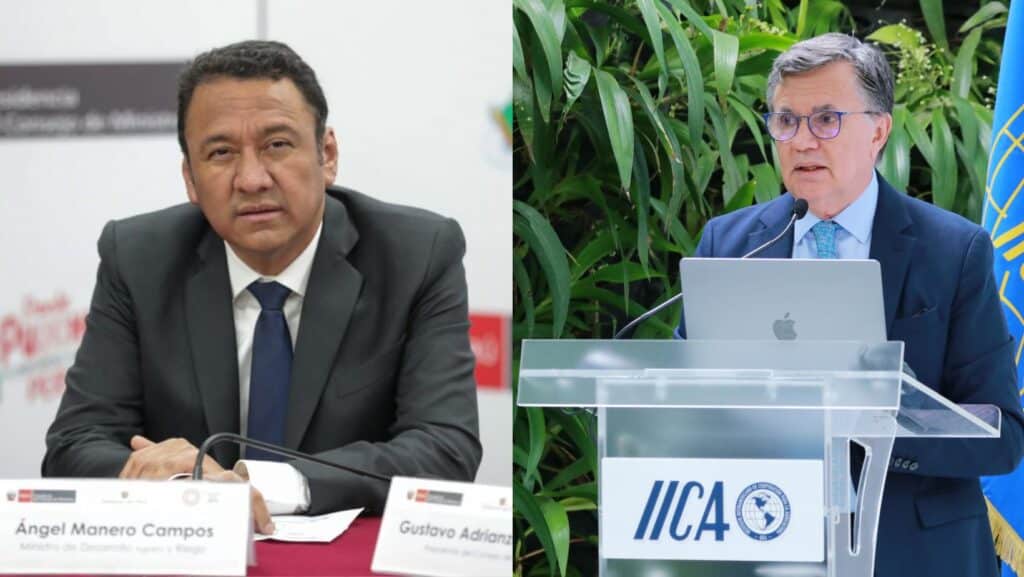
The meeting will be led by Ángel Manero Campos, Minister of Agricultural Development and Irrigation of Peru, and Manuel Otero, Director General of IICA. In attendance will be representatives of the private sector, agricultural research institutions and international agencies.
The IICA Executive Committee consists of twelve member states, elected for two-year periods, based on the principles of partial rotation and equitable geographic distribution.
The importance of animal production in the Americas will be the main topic of discussion among the officials, authorities from food companies and researchers.
The participants will engage in dialogue on the need to increase the production of safe, nutritious and traceable food of animal origin; the commitment to the continuous implementation of science-based livestock technology and practices; and methods for controlling and eradicating pests and diseases that threaten agricultural activities.
“We will analyze the technological impact of and the need to use best practices to ensure sustainable animal production with broad participation by farmers. The economic dimension and trade issues, as well as pasture management and livestock health, will also be analyzed. The discussion will result in a joint message that we want to convey to the rest of the world regarding the importance of animal production”, announced Manuel Otero.
Also taking part in the discussions with the ministers and deputy ministers of twelve IICA member countries will be officials from international agencies such as the Caribbean Community (CARICOM), the Economic Commission for Latin America and the Caribbean (ECLAC), the International Regional Organization for Plant and Animal Health (OIRSA), the Pan American Health Organization, FAO, and the Organisation of Eastern Caribbean States (OECS).
The Brazilian Roundtable for Sustainable Livestock Farming (MBPS), the Global Roundtable for Sustainable Beef (GRSB), the Global Dairy Platform, and the Brazilian Meat Exporters’ Association (ABIEC) will be among the entities participating in the workshop on the importance of animal production.
On this occasion, the three candidates for the position of Director General of IICA for the period 2026-2030 will deliver presentations: Muhammad Ibrahim, of Guyana; Laura Suazo, of Honduras, and Fernando Mattos, of Uruguay.
The Executive Committee meeting, which is held every year, will also include presentations on the status of projects carried out within the framework of the Hemispheric Partnership for Food Security and Sustainable Development, presented by IICA in 2023, and programs aimed at restoring degraded soils in various countries.
Another presentation will highlight the progress achieved by the Hemispheric Fund for Agricultural Resilience and Sustainability (FoHRSA), an initiative requested by the ministers of Agriculture of countries of the Americas, which has already secured an initial investment of two million dollars for six strategic projects.
The Tropical Agricultural Research and Higher Education Center (CATIE) and the Caribbean Agricultural Research and Development Institute (CARDI) will also deliver presentations on their joint collaboration activities with IICA.
Also in Lima, the Situation Room and Andean Public Policy Observatory for Agrifood Systems (OPSAa), key tools to strengthen agricultural activities in Bolivia, Colombia, Ecuador and Peru, will be inaugurated with the presence of Gonzalo Gutiérrez, Secretary General of the Andean Community; Manuel Otero, Director General of IICA; and Carmen Vegas Guerrero, Deputy Minister of Agricultural Development Policy and Oversight of Peru.
More information:
Institutional Communication Division.
comunicacion.institucional@iica.int