
San José, 14 September 2026 (IICA). This year’s Digital Agriculture Week (DAW) demonstrated that the frontier of innovation continues to be pushed back and technologies already exist to address many of the challenges faced by agricultural production, although farmers are not adopting them quickly enough.
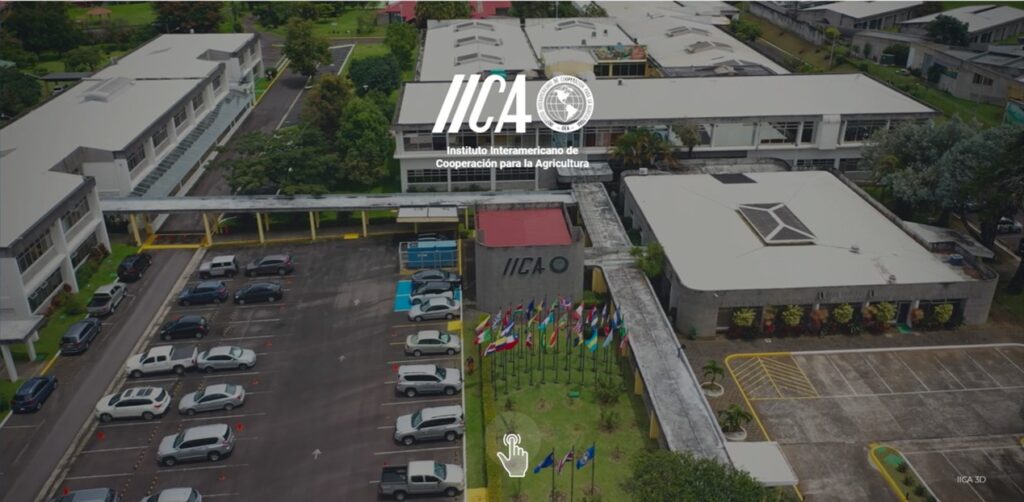
The fifth edition of DAW concluded after four days of work at the Headquarters of the Inter-American Institute for Cooperation on Agriculture (IICA). With nearly two hundred participants from more than twenty-five countries, the event consolidated its position as a key forum for the promotion of the digital transformation of agriculture.
The role of artificial intelligence (AI) and other innovative developments in the construction of more productive and sustainable agriculture was top of the agenda at a meeting that connected the new technologies with the needs of each territory, and focused on how to coordinate the use of the technologies most effectively with public policies, financing, and institutional capacities.
The program for DAW 2026 included spaces for knowledge-sharing and networking, presentations by experts, and panel discussions. The activity was organized by IICA with the support of strategic partners such as the Economic Commission for Latin America and the Caribbean (ECLAC), the World Bank (WB), the Bayer corporation, the University of Córdoba (Spain) and the CRUSA Foundation, the National Training Institute of Costa Rica (INA), and the Inter-American Development Bank (IDB), while more than thirty other entities promoted the event.
Entrepreneurs representing fourteen AgTech startups operating in thirteen countries of the Americas traveled to Costa Rica to take part in the meeting, where they had the opportunity to present their solutions to different agricultural production issues.
DAW 2026 also brought together other public and private stakeholders involved in the development and adoption of digital technologies, including incubators, accelerators, investment funds, agricultural research institutes, multilateral organizations, academia, and policymakers.
Speaking at the close of the meeting, Federico Bert, IICA Specialist in Digitalization and Artificial Intelligence, observed that DAW 2026 had shown clearly that innovation continues to push back the frontiers of knowledge. He pointed out that there are specific digital technologies that address some of the main challenges facing agriculture in the region, such as risk management, financing, and rural extension.
“During the event, participants have repeatedly pointed to the existence of a bottleneck, due to the fact that farmers are not incorporating technologies quickly enough. While there must be more innovation going forward, a greater focus on adoption is also required. We need to concentrate on stimulating the interest of producers, developing their skills, tailoring solutions to the context, and providing technical support to people who incorporate new technological solutions,” he observed.
Scientific rigor will remain the key
The President of the Brazilian Agricultural Research Corporation (EMBRAPA), Silvia Massruhá, said she did not foresee a scenario in which AI would replace researchers.
“What we see,” she said during a panel on the role of digital technologies and AI in promoting agricultural research and development, “is researchers using AI and thereby greatly increasing their capacity to produce knowledge. Our challenge, as science institutions, is to prepare people and organizations for this transformation without abandoning our scientific rigor, our ethics, or our public mission.”
EMBRAPA is a public institution that has been key in the agricultural revolution that Brazil has experienced in recent decades, as a result of which the country went from being a food importer to a global agrifood powerhouse.
“Today our productivity is five times higher than when EMBRAPA was created, a little more than fifty years ago. We have eight thousand officials working all over the country in forty-three research units. And we are very clear that developing technologies is not enough; the people who will have to apply them must be trained and develop their expertise,” Massruhá emphasized.
Miguel Sierra, President of Uruguay’s National Agricultural Research Institute (INIA), pointed out that his public scientific institution had made digital transformation and AI a strategic focus for the next five years. “AI does not question the scientific method, but affects the way we have been carrying out processes. There is a paradigm shift. We are moving from an empirical and experimental approach to one in which the data comes from different sources. The challenge is to validate this data and complement it with the participation of actors in the territories. Human input and critical thought are still necessary,” he suggested.
Liliana Chavez, Executive Director of Costa Rica’s National Institute for Agricultural Technology Innovation and Transfer (INTA), suggested that AI makes it possible to integrate more variables related to agricultural production and problem solving, but the challenges remain: “We have pests and diseases, soil degradation, and young people abandoning the countryside. One of the challenges today is to incorporate AI into our research effectively, without forgetting that we still need to be active on the ground, and not allow the gap between those who access new technologies and the rest to widen. People must always be at the center.”

More information:
Institutional Communication Division.
comunicacion.institucional@iica.int