Protecting plant health can help end hunger by reducing crop losses to pest and diseases, reduce poverty, protect the environment, and boost economic development.
Kingston, February 4, 2020 (IICA) – Jamaica took the lead in Caribbean Community (CARICOM) with the launch of a yearlong programme of activities to commemorate International Year of Plant Health 2020, with the objective to raise the awareness on the importance of plant health in the Jamaican population.
Plant Health is a main stay of Technical Cooperation for the Ministry of Industry Commerce Agriculture Fisheries and Investment of Jamaica from the Inter-American Institute of Cooperation on Agriculture (IICA).
Plant Health is the cornerstone of IICA’s work in the region, which started in 1981 with reciprocal technical transfer and knowledge sharing of best practices among its member countries and continues to the present.
Over the past four decades, the Institute has broadened the scope of its work in the field of plant health, to include capacity-building in virology, pest risk analysis, surveillance and pest reporting for agricultural specialists in CARICOM states.
IICA has published a manual entitled “Characterization of National Capabilities to Respond to Emergencies in Animal Health and Plant Protection” which gives public sector stakeholders the tools to assess their capabilities to respond to both Animal and Plant Health outbreaks. IICA has also provided support for government officials to participate in international fora and Standard Setting Bodies in Sanitary and Phytosanitary issues thereby giving the Caribbean region a voice at the table where rules on trade in plants and plant products are ratified.
Plant pests and diseases annually cause over US$220 billion in agricultural trade losses, leaving millions of people facing hunger and severely impacting crop production, which is the primary income source for poor rural communities.
Protecting plant health can help end hunger by reducing crop losses to pest and diseases, reduce poverty, protect the environment, and boost economic development. Therefore, policies and actions to promote plant health are fundamental to achieving 13 of the 17 Sustainable Development Goals.
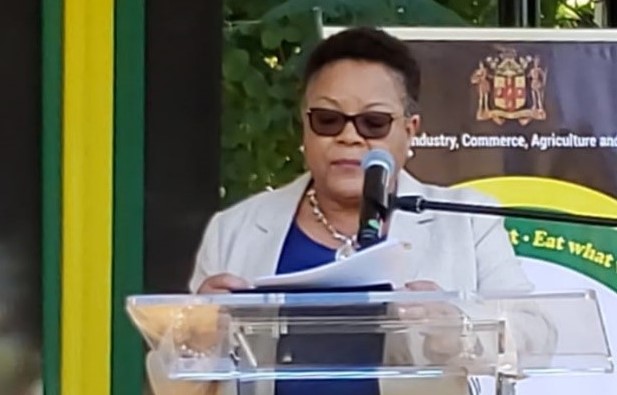
The event was launched in the settings of the Pavilion Garden of the Hope Botanic Gardens under the theme “Protecting Plants, Protecting Life” and was hosted by the Plant Quarantine Produce Inspection division of the Ministry, chaired by its Permanent Secretary, Dermon Spence, with the Minister Audley Shaw giving the keynote address.
In attendance were the Research & Development, Extension (RADA), Forestry and Communications departments of the ministry, academia and students of specialized agricultural colleges, senior grades of high schools located in Kingston, members of the public, members of the diplomatic core and invited speakers.
Representatives of national and regional organizations addressed the audience including Dionne Harris-Clarke, from the Caribbean Agricultural Research Development Institute (CARDI); Brian Crichlow, Chairman at the Caribbean Plant Health Directors Forum; Richard Blair, Deputy Programme Manager, Agricultural Development Directorate of Trade and Economic Integration CARICOM Secretariat; Crispim Moreira, FAO Representative in Jamaica, Bahamas and Belize.
Elizabeth Johnson, IICA Representative in Jamaica, was first to address the gathering highlighting the significant role of plants to life on planet Earth, economic development, rural prosperity and food security and culminated with a brief summary of IICA’s work in promoting Plant Health in the Caribbean over the last 40 years.
In her address, Elizabeth Johnson, shared IICA’s partnership with the ministry in combatting the most recent major plant pest outbreak in Jamaica, Frosty Pod Rot (FPR) disease of cocoa. IICA worked with the then Cocoa Industry Board in the verification of the presence of FPR for the first time out of Latin America in Sep 2016 and confirmation of the genetic group/country of origin of the isolate in Jamaica which allowed the Plant Quarantine Produce Inspection Division to complete a pathway analysis to implement Plant Health protection measures.
Johnson also outlined IICA’s partnership with Colombia University, the University of Arizona, UWI Mona, Coffee Industry Board and Jamaica Metservices in the development of an Early Warning System for Coffee Leaf Rust disease to help coffee farmers in Jamaica efficiently use scarce resources to manage this disease.
In 2019 under IICA’s South-South Cooperation framework, Colombia and Peru shared experiences with senior decision makers of the ministry on effective FPR management strategies in developing a thriving cocoa sector. She ended by giving the ministry the assurance of IICA’s continued support in working with partners for the Protection of Plant Health in Jamaica and the region.
More information:
Elizabeth Johnson, IICA Representative in Jamaica