New agricultural consortium will market its products under the brand name “Brunca”; beans from the southern area will be the first ones sold under this label.

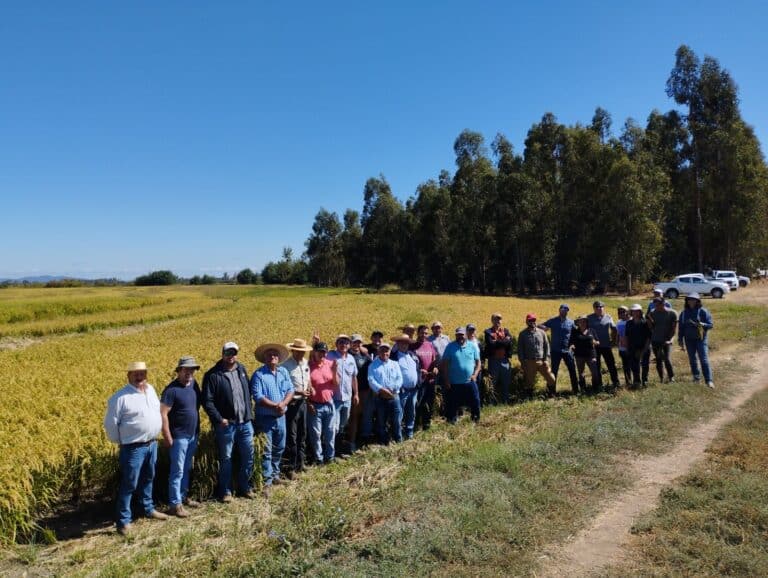
San José, Costa Rica, 30 May, 2014 (IICA). Associations of agricultural producers of Pérez Zeledón and Buenos Aires, in the southern section of Costa Rica, launched their first territorial brand, for the purpose of increasing their sales and benefitting some 750 families that devote themselves to small-scale agriculture in the region.
With the official launch of the brand name “Brunca”, family agriculture within the southern area could improve the marketing of its products on the basis of its territorial identity and new presentations, in an attempt to better position itself with its end-users, explained Miguel Ángel Arvelo, the Representative in Costa Rica of the Inter-American Institute for Cooperation on Agriculture (IICA).
The creation of the brand is the result of the SICTA Network project, managed in Central America by IICA with financing from the Swiss Agency for Development and Cooperation (COSUDE).
Bean cultivated in the southern area will be the first product marketed under the brand name “Brunca”, and will be initially available in the markets of the region. In the medium-term, with the support of new partnerships, it is expected that more products will be marketed under this brand name elsewhere in the country.
The official launch of the brand name took place in Pérez Zeledón, where the Consortium for the Supply of Agricultural Products from the Brunca Region was officially created, comprising six groups of producers from Pérez Zeledón and Buenos Aires.
According to Priscila Picado, Specialist in the IICA Office in Costa Rica, the consortium will find synergies that will allow it to work with organizations from the agricultural sector to strengthen the competitiveness of small producers in the southern area.
The groups that formed the partnership are CoopeCeproma, CoopeVeracruz, the associations of producers of Guagaral, Chánguena, and El Águila, and the Cantonal Agricultural Center of Buenos Aires.
The process of creating and legalizing the brand, as well as the establishment of the consortium, was supported by the Ministry of Agriculture and Livestock (MAG-Brunca), the Pejibaye Agricultural Services (MVV Pejibaye), IICA, the Foundation for the Promotion of Research and Transfer of Agricultural Technology (FITTACORI), the National Institute for the Promotion of Cooperatives (INFOCOOP), the Program for Research and Transfer of Agricultural Technology in Beans (PITTA Beans) and producer associations.
For further information:
miguel.arvelo@iica.int
Image gallery