
Leaders from Latin America and the United Kingdom shared experiences and reflected on how to advance the bioeconomy so that the region’s potential can translate into global leadership.
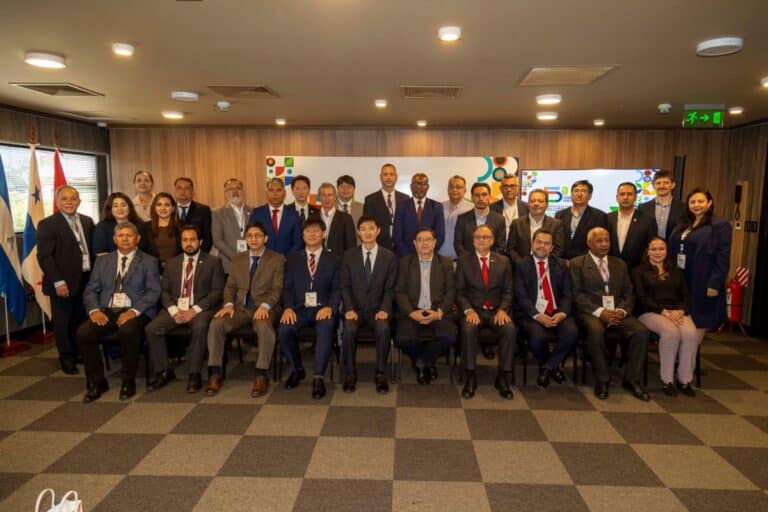
Panama City, 10 March 2026 (IICA) – Some 80 leaders from 12 Latin American countries exchanged experiences on the significant advances they are making in the bioeconomy and discussed, together with delegates from the United Kingdom, the policies, strategies and investments needed to translate the region’s comparative advantages into global leadership.
The meeting took place in Panama and marked the third edition of the Bioeconomy Community of Practice (CoP), a regional initiative for strategic cooperation between the United Kingdom and Latin America that promotes technical dialogue and mutual learning to advance the bioeconomy as a driver of green growth.
The event was organized by the British Embassy in Panama, the Inter-American Institute for Cooperation on Agriculture (IICA) and Panama’s National Secretariat of Science, Technology and Innovation (SENACYT).
The United Kingdom leads this initiative as part of its cooperation strategy in science, innovation, climate and nature in Latin America, while IICA and the Latin American Bioeconomy Network contribute their technical expertise and regional convening capacity.
The 2026 edition was supported by the Government of Panama, which is currently developing its National Bioeconomy Strategy and seeks to position the country as a space for regional and international dialogue on the subject.
The meeting included the participation of Panama’s Minister of Foreign Affairs, Javier Martínez-Acha Vásquez, as well as representatives from governments, science and technology agencies, research centers, academia, financing agencies, the private sector and international organizations such as the World Bank, BIOFIN, UNESCO and the Amazon Cooperation Treaty Organization (ACTO).
IICA was represented by the Deputy Director General, Lloyd Day; the IICA Representative in Panama, Miguel Ángel Arvelo; the Manager of the Innovation and Bioeconomy Program, Hugo Chavarría; and specialists Agustín Torroba and Harold Gamboa, who contributed the regional technical perspective on biofuels and bioinputs.
“Panama is a country that breathes green”, said the Minister of Foreign Affairs, noting that it is one of the few countries in the world that absorbs more carbon dioxide than it emits.
Martínez-Acha added that his country seeks to be recognized as a leader in sustainable transformation, leveraging its biodiversity and carbon-negative status to attract innovation and green growth.
In this regard, he highlighted the bioeconomy as the strategic engine that will enable Panama and the rest of the region to address global challenges by linking science, the private sector and environmental protection.
The Minister also noted that Panama is working closely with partners such as IICA and the United Kingdom to obtain technical cooperation and financing to implement sustainability projects with real impact on the ground.
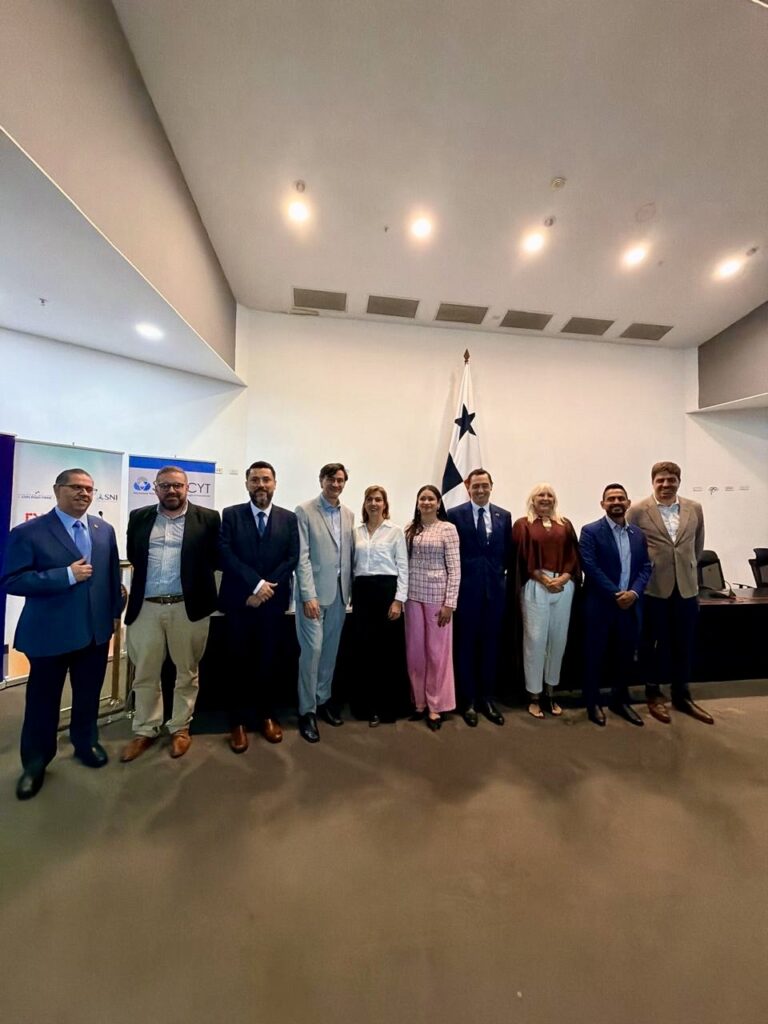
Miguel Ángel Arvelo, IICA Representative in Panama; Fernando Moretti, Pan-Amazon Bioeconomy Network and Conexsus; Hugo Chavarría, Manager of Innovation and Bioeconomy, IICA; Guillermo Anlló, Senior Programme Specialist, STI, UNESCO; Claudia Betancur, Director, Biointropic Colombia; Margaret Pimentel, Alternate Member of Parliament, Director of the Environment Commission; Greg Houston, Ambassador of the United Kingdom to Panama; Sandra Sharry, Director of the National Research System, Panama; Lenin Ulate, Member of the National Assembly of Panama y Francisco Buchara, Co-founder and Managing Partner, SF500.
Lloyd Day stated that the meeting was an opportunity to exchange experiences and identify joint projects, strengthen financial and regulatory instruments, and build a permanent regional work agenda.
“From IICA and the Latin American Bioeconomy Network, which brings together more than 100 institutions in 18 countries, we stand ready to help consolidate a regional platform to support countries in the design, implementation and scaling of their strategies, policies and investments”, said the Institute’s Deputy Director General.
Hugo Chavarría emphasized that the region has moved beyond the conceptual phase and that its bioeconomy is already showing concrete progress in national and sectoral strategies, as well as in regulatory frameworks for biotechnology, bioinputs and biofuels.
“Countries such as Costa Rica, Colombia, Brazil, Argentina, Uruguay and Mexico have made progress in building national strategies and policies and are now in implementation phases. Others, such as Ecuador, Peru and Panama, have also embraced the bioeconomy as a model for sustainable development and are currently in the process of formulating their strategic frameworks”, he said.
Chavarría also described real bioeconomy businesses already taking place in Latin American countries and highlighted the growing alignment of public and private banking with the green agenda. “There are funds and projects already underway, such as the Amazon Bioeconomy Fund, which are mobilizing hundreds of millions of dollars toward bioeconomy, restoration and low-carbon agriculture”, he said.
The manager of IICA’s Innovation and Bioeconomy Program noted that Latin America and the Caribbean has unmatched conditions—due to its biodiversity, biomass, agroindustrial base, scientific capacities and expanding markets—and has made significant progress over the past decade. However, he warned that common challenges remain in financing, technological scaling, regulatory harmonization and institutional coordination.
IICA’s mission in Panama was part of the efforts led by the organization, together with more than 100 institutions across the region, to consolidate the Latin American Bioeconomy Network as the regional space for coordination and collective construction of the bioeconomy agenda in the Americas.
The Network has increasingly positioned itself as the forum for jointly defining the guiding principles of the regional bioeconomy and fostering coordination in capacity building, the development of strategies and public policies, the strengthening of science and technology, financing, the development of metrics, the promotion of bio-entrepreneurship and the positioning of the region on the global agenda, among other strategic priorities.
More information:
Institutional Communication Division.
comunicacion.institucional@iica.int