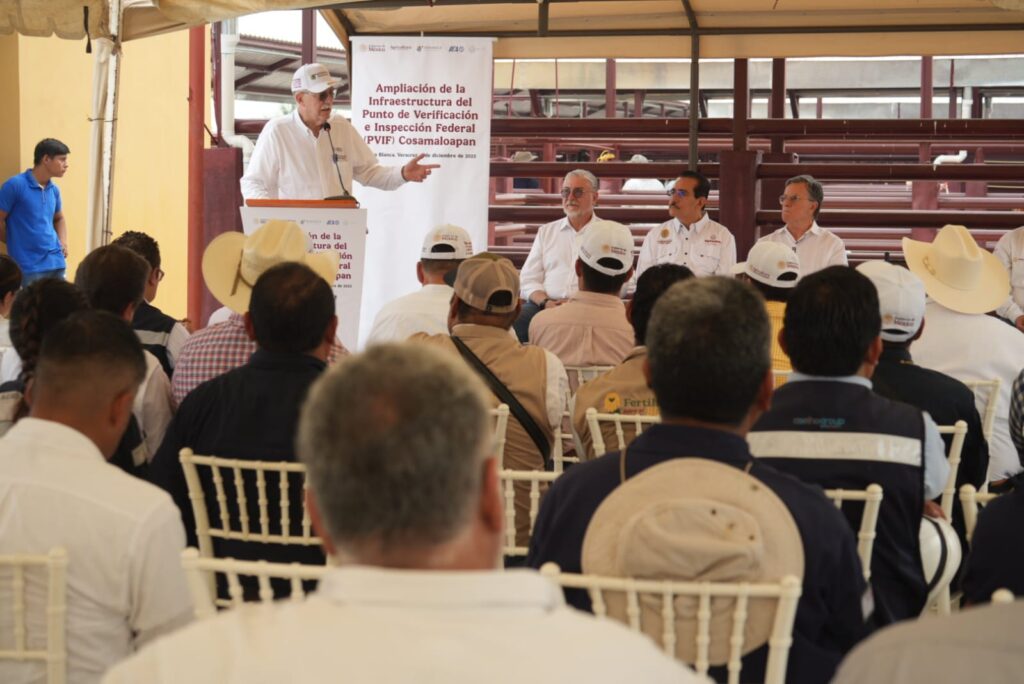
During the opening ceremony, Mexico’s Secretary of Agriculture and Rural Development, Julio Berdegué, said that SENASICA,in collaboration with cattle farmers and state governments, had managed to contain 99.9% of cases in the south-southeast since November 2024.
Cosamaloapan, Veracruz, Mexico, 8 December 2025 (SADER/IICA). With a view to expanding and streamlining livestock inspection and thereby strengthening the strategy for the prevention and control of New World screwworm (NWS), the Secretariat of Agriculture and Rural Development (AGRICULTURA) of Mexico has modernized the Federal Verification and Inspection Point (PVIF) in Cosamaloapan, Veracruz, with support from the Inter-American Institute for Cooperation on Agriculture (IICA).
The PVIF in Cosamaloapan forms part of the efforts to strengthen the second zoo-sanitary barrier established by the National Animal Health Emergency Mechanism (DINESA). In February of this year, the Secretary of AGRICULTURA, Julio Berdegué Sacristán, and the Director General of IICA,Manuel Otero, decided to step up the joint efforts to address the risk that the NWS poses to cattle farming, the rural economy and public veterinary health in Mexico.
This new infrastructure, which complements seven other verification and inspection points in the south-southeast of the country, is the product of a collaboration agreement between SENASICA and IICA involving an investment of around MX$ 50 million (roughly USD 3 million).
During the ceremony held to inaugurate the modernized facilities, Secretary Berdegué explained that this PVIF “will expedite the daily inspection of 1680 head of cattle”, and stressed that Mexican livestock is safe, since “in over a year, only 0.002%, or two out of every 100,000 head of Mexican cattle, have been infected. Therefore, Mexico’s livestock sector is in a position to resume trade with the United States”.
Secretary Berdegué also said that SENASICA, in collaboration with cattle farmers and state governments, has managed to contain 99.9% of cases in the south-southeast since November 2024. “There were scientists and others who said that by April 2024 the screwworm would be in Texas. Well, they were wrong, because here it came up against Mexican cattle farmers, SENASICA, thegovernments of states like Veracruz, and the Government of Mexico.That’s the effort we’ve made. Those are the results”.
He then pointed out that in 2025 around MX$ 1.2 billion had been invested to combat the pest, and the results had been satisfactory. The insect had been confined to the south-southeast region for nearly 13 months, and any detected in the central and northern parts of the country had been eradicated immediately, with no secondary cases: “We continue to innovate to combat the screwworm, introducing the use of canine detection teams to identify screwworm wounds and infestations, and the use of monitoring traps; and we have made more than 35% progress with the new NWS fly breeding and sterilization plant in Metapa de Domínguez, Chiapas”.
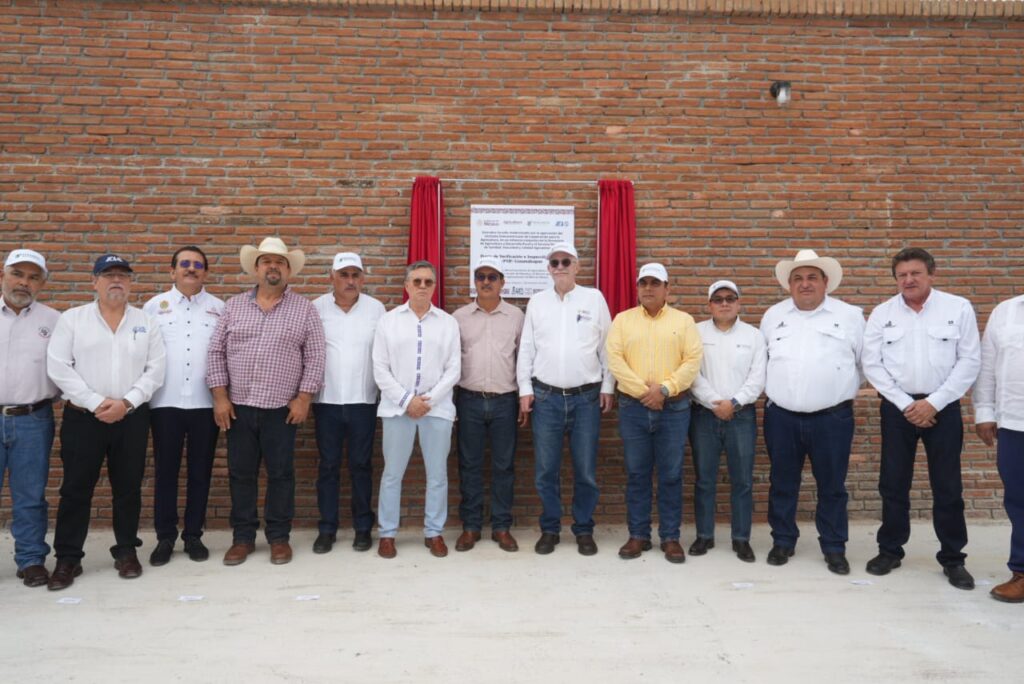
Along with officials from Cosamaloapan, Veracruz and Mexico’s central government, as well as local livestock farmers, IICA Director General Manuel Otero took part in the activities designed to halt the advance of the screwworm in cattle (NWS).
The Secretary also acknowledged and thanked IICA for its effortsin combating this pest and especially for the modernization of the PVIF in Cosamaloapan, Veracruz, since IICA provided financial resources to build this infrastructure and to complement the prevention and eradication actionscarried out by SENASICA.
The Director General of IICA, Manuel Otero, pointed out that animal health is a hemispheric public good: “Strengthening this inspection point in Mexico not only protects this country’s farmers; it also contributes to sanitary security across Mesoamerica. This is an example of regional responsibility that could be replicated”.
“The eradication of the screwworm in cattle is a goal shared by all of the Americas. The modernization of this facility in Cosamaloapan is a decisive step towards a regional sanitary belt that will protect millions of producers”, Manuel Otero underlined.
The head of the National Agrifood Health, Safety and Quality Service (SENASICA), Javier Calderón Elizalde, emphasized that: “The PVIF in Cosamaloapan is a strategic point in the national campaign to combat the screwworm in cattle, established as such in the emergency plan. Its location, on the border between the affected area, the buffer zone and the disease-free area functions as the last major sanitary filter for cattle moving from the south-southeast region to the center and north of the country”.

Julio Berdegué, Secretary of Agriculture and Rural Development of Mexico, and Manuel Otero, Director General of IICA.
IICA’s Representative in Mexico, Diego Montenegro Ernst, added that: “This initiative has a regional dimension. The idea is that this infrastructure, which we see here now as extremely solid, with unique characteristics, be replicated in other Central American countries and other states or regions of Mexico. Furthermore, with resources from APHIS and support from the Institute itself, we carried out a huge range of training events, drills and a series of activities that took place in different Mexican states and in Central America”.
Speaking on behalf of the Governor of Veracruz, Rocío Nahle García, the Secretary of Agricultural, Rural and Fisheries Development (SEDARPA), Rodrigo Calderón Salas, said that: “The state of Veracruz stands ready to support the federal government, and we know that the Governor is always willing to cooperate and is fully committed to our President. We also have complete confidence in the PVIF that we have along our border with the southern states, as we have another 27 state-run inspection points that contribute to the control of existing pests and diseases, especially the screwworm in cattle”.
The modernization took in pen areas, inspection zones, the crowding yard and operational spaces for technical personnel and the specialized canine teams. These improvements have made livestock inspections more efficient, raised animal welfare standards and strengthened the capacity to detect and contain the potential presence of NWS.
The PVIF in Cosamaloapan now has three alleys to simultaneously handle three cattle shipments, each of which generally transport between 70 and 80 animals. Therefore, operating at maximum capacity, it will be able to inspect more than 50,000 head of cattle each month.
Each handling alley includes a single loading/unloading chute for livestock, one of which is equipped to receive smaller animals; a handling chute where government veterinarians can check ear tags and healed wounds, and treat fresh wounds with larvicides and dewormers; a squeeze chute to restrain animals and allow specialist personnel to examine deep wounds, potential infestations and, when necessary, collect larvae; and a spray race through which the animals will pass, which uses hydropneumatic pumps. There are 16 pens where treated and cured animals are held before they are returned to the livestock cages.
In addition to inspections for the timely detection of NWS, at this PVIF livestock verification and inspection activities are carried out round the clock, in order to validate the Zoosanitary Export Certificate (CZM) and verify the accuracy of tuberculosis and brucellosis testsand treatment for ticks.
The PVIF receives permanent support from the National Guard, to deter any attempt to evade the controls and hostile attitudes towards the staff and the facilities.
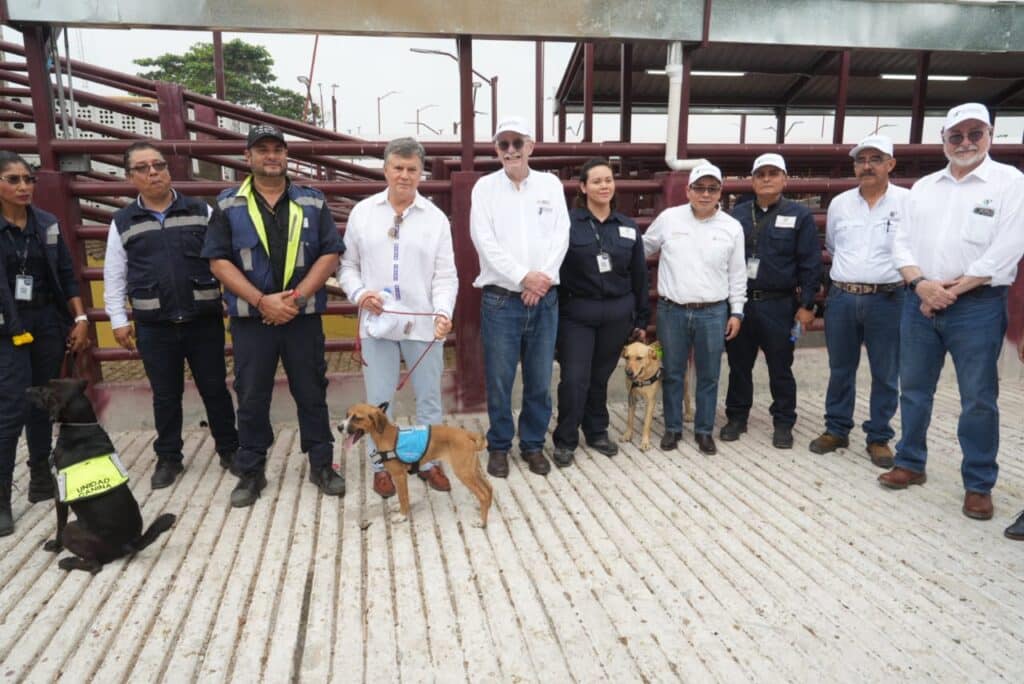
IICA Director General Manuel Otero observed that animal health is an inter-American public good: “Strengthening this inspection point in Mexico not only protects the country’s farmers; it also contributes to sanitary security across Mesoamerica”.
The work presented is part of an integrated effort including regional cooperation mechanisms that include Central American countries and the Animal and Plant Health Inspection Service of the United States Department of Agriculture (APHIS-USDA).
Due to its strategic location, the PVIF in Cosamaloapan is a key place for preventing the spread of the NWS to the central and northern parts of the country and, at the same time, an essential link in the animal health protection system of the Mesoamerican region.
More information:
Institutional Communication Division.
comunicacion.institucional@iica.int