The Special Advisory Commission on Management Issues (SACMI), which advises IICA’s General Directorate and is made up of nine countries, expressed strong support for the Institute’s strategy to overcome the challenges of the pandemic.
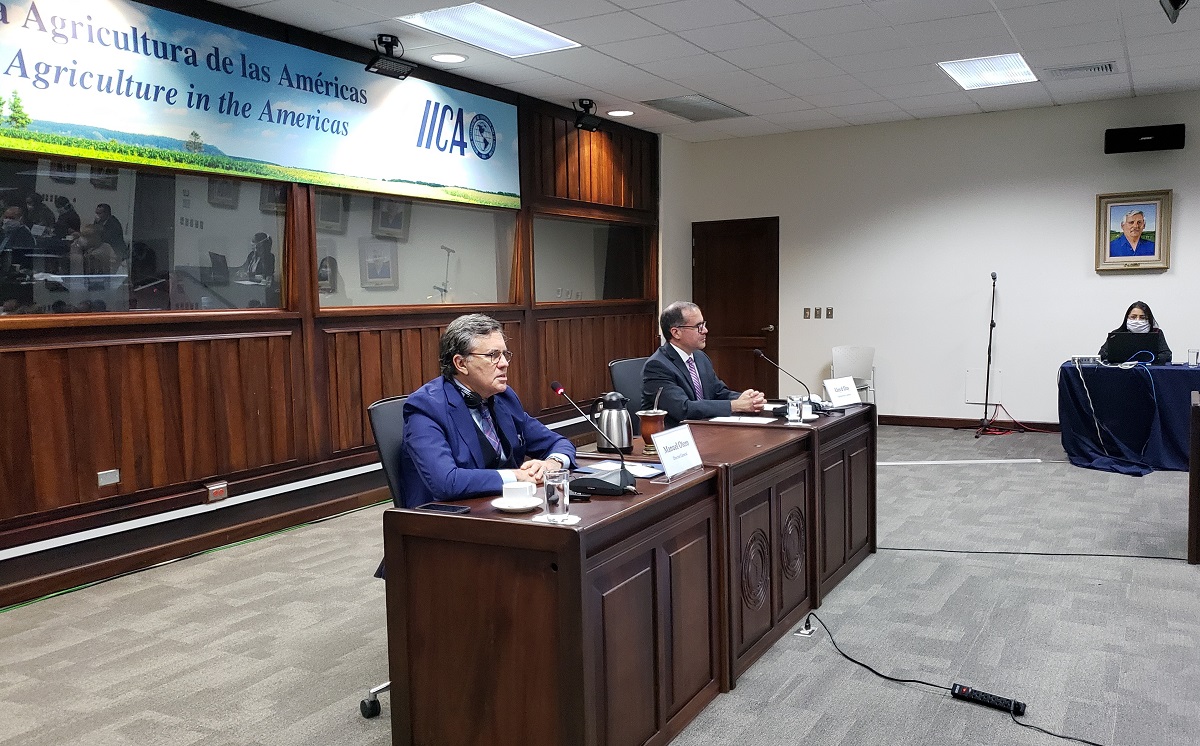
San Jose, 7 May 2020 (IICA). The Special Advisory Commission on Management Issues (SACMI), a special mechanism that advises the General Directorate of the Inter-American Institute for Cooperation on Agriculture (IICA) and is comprised of nine member countries, expressed broad, unanimous support for the hemispheric agency’s strategy to overcome the challenges of the pandemic. Among other things, the Institute is strengthening actions to support its member countries as well as implementing austerity and flexibility measures across all of its operations.
The Commission recognized the improvements that IICA has proactively implemented in a short amount of time, highlighting the quantity and quality of technical cooperation actions carried out. These efforts include meetings with the ministers and secretaries of Agriculture of the Mesoamerican, Andean, Southern, Caribbean and Northern regions of the hemisphere, as well as dialogues carried out with the private sector and stakeholders involved in the primary production chains across the hemisphere, within a context that poses challenges for the Institute’s resources.
“IICA received broad, unanimous support for its technical and managerial work during the current global health crisis. This makes it all the more necessary for us to intensify our efforts to ensure that countries in the Americas are able to guarantee food security for their populations,” stated Manuel Otero, Director General of IICA, regarding the meeting.
“I am very pleased because we also agreed to spur IICA’s growth given the increased technical cooperation needs of countries in the Americas within the current context, in which we are demonstrating our capacity to respond,” he added.
Delegations from the ministries and secretariats of Agriculture of Argentina, Bolivia, Brazil, Canada, Mexico, Nicaragua, Saint Lucia and the United States participated in the annual SACMI meeting, which, on this occasion, was held via videoconference. Of the nine member countries sitting on the Commission, six are permanent members and three are members selected on a rotating basis.
The representatives agreed to exhaust all available means for strengthening IICA to overcome the financial challenges posed by the current pandemic.
During the meeting, the Director General of IICA called on the participants to revive the spirit with which IICA was founded as a specialized agency for agriculture and rural life in the Americas in 1942, in the midst of the profound crisis caused by World War II.
“As we grapple with this new coronavirus pandemic, I urge us all to adopt a strong work ethic, and to exhaust all possible means for bolstering our technical cooperation, for the benefit of all populations throughout the Americas,” stated Otero, as he underscored IICA’s role as a facilitator and strategic “bridge” that listens, proposes innovative solutions, and takes action.
The Director General of IICA also reflected on the need to reposition agriculture as a sector that will play a key role in the recovery of the global economy as well as in guaranteeing food security both during and after the Covid-19 emergency.
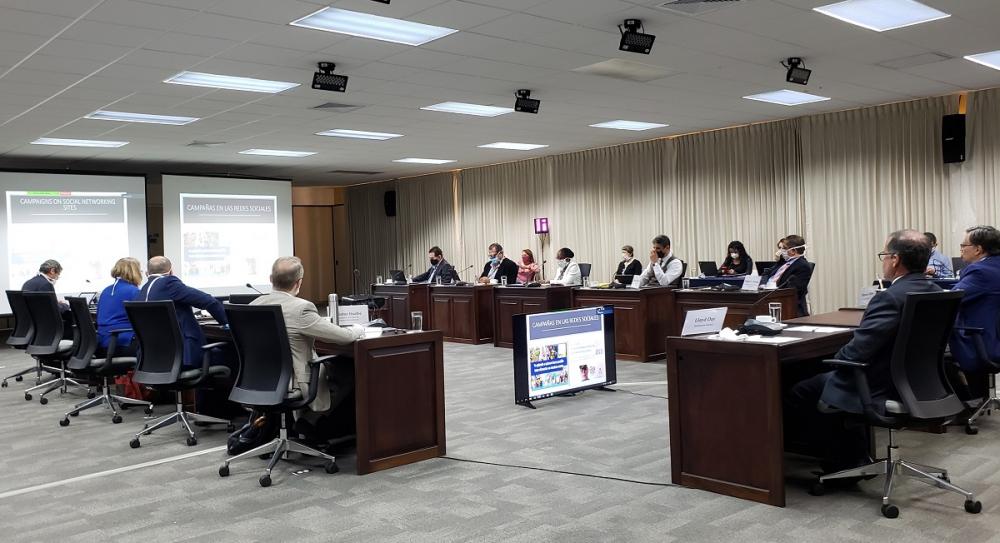
Over the past 60 days, IICA has hosted six regional meetings of ministers and secretaries of Agriculture of the hemisphere as well as numerous bilateral dialogues to improve assistance provided to the member countries. It also created advisory committees on food security and communication, a food security monitor and blog, a food vulnerability index, and technological tools to strengthen agricultural health, intraregional trade and online training in agricultural topics.
Together with renowned artists from the Americas, IICA also launched a campaign to pay tribute to agrifood chain workers, as well as channel greater political and social attention to agriculture, an activity that is crucial for human life.
More information:
Institutional Communication Division.
comunicacion.institucional@