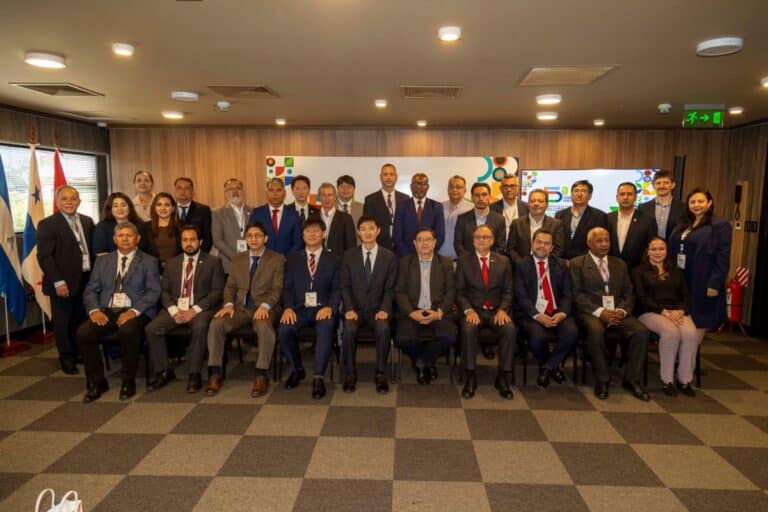

Brasília (DF), March 16 (IICA) – The headquarters of the Inter-American Institute for Cooperation on Agriculture (IICA) in Brasília hosted the launch of AgriConnect Brasil, a World Bank Group (WBG) initiative designed to expand rural connectivity, digital inclusion, and the integration of family farmers into markets.
The program aims to benefit more than one million family farmers in Brazil by 2030 by strengthening access to technologies, financing, knowledge, and digital tools. The initiative seeks to improve producers’ incomes, generate jobs throughout agrifood value chains, and enhance food security, contributing to more inclusive and sustainable rural development.
AgriConnect is part of a global strategy by the World Bank Group to drive the transformation of the agri-food sector. The initiative aims to support up to 300 million smallholder farmers worldwide by 2030, promoting the transition from subsistence models to more productive agricultural enterprises connected to markets.
To this end, the program has an estimated global funding of $9 billion per year, with the potential to mobilize an additional $5 billion in investments, strengthening innovation, financing, and agriculture-oriented service ecosystems.
In Latin America, the initiative is being implemented in collaboration with international organizations and development institutions, including the Inter-American Institute for Cooperation on Agriculture (IICA), the Inter-American Development Bank (IDB), the International Fund for Agricultural Development (IFAD), the Food and Agriculture Organization of the United Nations (FAO), and the Latin American Association for the Development of Agricultural Insurance (ALASA), as well as financial institutions, the private sector, foundations, and knowledge partners.
In Brazil, the initiative is particularly significant given the scale of family farming. The country has nearly 3.9 million family farms, which account for approximately 75% of rural properties, employ nearly 10 million people, and play a central role in food production.
The food sector plays a strategic role for economies and societies around the world. In addition to ensuring food supply for populations, agri-food chains are responsible for generating millions of jobs, boosting local economies, and sustaining the incomes of hundreds of millions of people, especially in rural areas.
In this context, digitalization and connectivity in rural areas are emerging as essential factors for expanding economic opportunities, improving productivity, and strengthening the resilience of agricultural systems against climate and market risks.
To achieve its objectives, AgriConnect proposes three main areas of intervention:
- Reducing agricultural risks by strengthening mechanisms for managing climate and market risks;
- Improving agricultural value chains and logistics, expanding producers’ access to markets and commercial opportunities;
- Digitizing agricultural services by implementing digital tools, knowledge platforms, and technological solutions focused on production management.
In addition to expanding access to markets and technologies, the program also seeks to create economic opportunities in rural areas, especially for young people, by encouraging them to remain in the countryside through more innovative, productive activities connected to global value chains.
Initiatives such as AgriConnect are expected to help accelerate the digital transformation of agriculture, strengthening productive inclusion, enhancing the sector’s competitiveness, and promoting more sustainable rural development in the Americas.
More information:
Institutional Communication Division.
comunicacion.institucional@iica.int