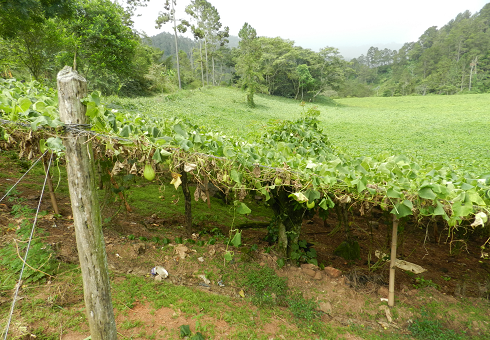
 Within the framework of the Program of Support for Improving Productivity and Competitiveness of the Agricultural Sector (PRESSAC), the work of Tayota (Sechium edule) Project and raspberry that is beginning Restructuring Plantations Tayota for the next crop cycle in September, with the participation of the Agroforestal University Fernando Arturo Meriño in Jarabacoa for monitoring work with students of Agronomy.
Within the framework of the Program of Support for Improving Productivity and Competitiveness of the Agricultural Sector (PRESSAC), the work of Tayota (Sechium edule) Project and raspberry that is beginning Restructuring Plantations Tayota for the next crop cycle in September, with the participation of the Agroforestal University Fernando Arturo Meriño in Jarabacoa for monitoring work with students of Agronomy.
Similarly, in the next cycle of planting it has scheduled producers working with 10 direct and applied soil conservation practices and application of bioinputs to prevent contamination of water bodies.
With this observatory, we accompany producers to facilitate the tayota trade in specialized markets such as the United States and possibly the European market.
Within the Silvopastoral Systems Intensive Project for the conversion of the Dominican livestock, over 70 tasks of grass and other species used have been established, in such incorporations about 15 farms have been visited to choose from, including 10 modular farms the project has proposed, more than 10 technical visits to farmers who have started converting their production units.
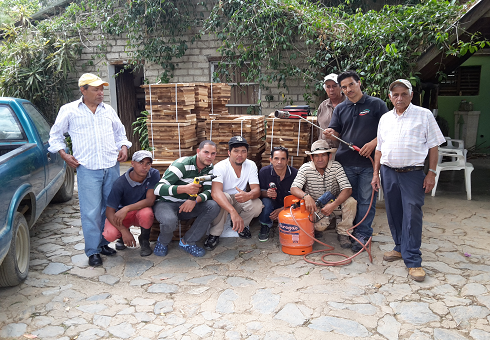 In the Beekeeping Development Project, 3 workshops have been conducted in which has delivered 330 boxes between 76 and 104 beekeepers have been trained in the new model of beekeeping.
Activities in this project have had the participation of senior officials in the sector thanks to IICA’s strategic approach to DIGEGA.
The Aquaculture Development with Natural Food project is being finalized and efforts had been made to deliver about 60,000 fry to producers in Monte Plata, at the end of the month of August, the country received food for sex reversal to deliver, thus be finishing the project with a performance of 100%.