
Instituto Interamericano de Cooperación para la Agricultura

Agronegocios Mercados agropecuarios

IICA Dominican Republic holds fourth training workshop on exports of fresh products to extension technicians

Agronegocios Mercados agropecuarios

IICA Dominican Republic holds fourth training workshop on exports of fresh products to extension technicians

Tiempo de lectura: 3 mins.

The Dominican Republic has competitive advantages to boost its exports of fresh products to the United States given the geographical location of its ports, airports and roads
 

Santo Domingo, Dominican Republic, February 2018 (IICA). Within the framework of the project “Updating the standards, processes, regulations and requirements for the export of fresh products to the United States of America”, which is being executed by the Inter-American Institute for Cooperation on Agriculture (IICA) with funds from the United States Department of Agriculture (USDA), a fourth workshop was held on exports of fresh products to the United States to extension agents who were very enthusiastic during this training. The workshop targeted technicians from the Central, Southeast and South regions of the country.

A total of 140 extension agents have received these trainings in four workshops that have been organized by IICA in Santo Domingo and Santiago provinces. Alongside the workshops, the project also seeks to identify and characterize the institutions and professionals linked to exports for the creation of a database, as well as to prioritize the information and knowledge needs of the agro-export sector. The project has also prepared and distributed a support guide for the agro-export sector.
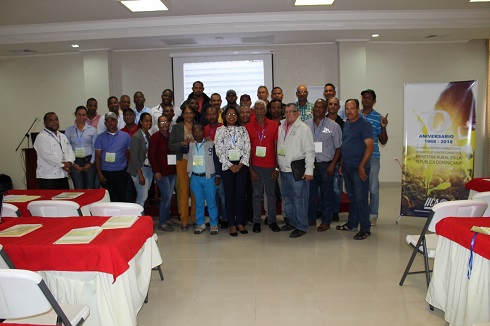
 The agenda of this workshop included topics such as: the conceptualization of agricultural businesses, opportunities of national agriculture, benefits and risks of exporting, the ABC of agricultural exports, US market, requirements of national regulations and standards, Food Safety Modernization Act (FSMA) and the requirements of the US market, among other topics. 

These trainings are intended to contribute to the institutional strengthening of, both public and private sector, and to ensure an updated flow of information, especially in those institutions that are closest to producers and exporters of fresh products.

More information: Hector Garibaldis Perez, Specialist in Agribusiness, hector.perez@iica.int

 

Compartir

Noticias relacionadas

Ciudad de México

abril 24, 2026

Destaca IICA avances de SAbERES para escalar soluciones de adaptación en territorios rurales de México

En el Foro Nacional de Adaptación Basada en Ecosistemas y Financiamiento Rural, el Instituto presentó resultados del desarrollo de capacidades y acompañamiento técnico a pequeños productores y organizaciones rurales que ya implementan prácticas sostenibles, resilientes y rentables en sus sistemas productivos.

Tiempo de lectura: 3mins

Ciudad de México, México y San José, Costa Rica

abril 23, 2026

AGRICULTURA e IICA fortalecen cooperación para impulsar la soberanía alimentaria y la sanidad agropecuaria en México

La Secretaría de Agricultura y Desarrollo Rural (AGRICULTURA) y el Instituto Interamericano de Cooperación para la Agricultura (IICA) suscribieron el Acuerdo General de Cooperación y Gestión de Proyectos, con el propósito de fortalecer la cooperación técnica en favor del sector agroalimentario, el bienestar de las comunidades rurales y la soberanía alimentaria de México.

Tiempo de lectura: 3mins

San José, Costa Rica

abril 21, 2026

IICA y Plataforma Hemisférica de Bioinsumos lanzan ciclo de diálogos internacionales sobre innovaciones que revolucionan este sector clave para la agricultura de las Américas

La primera sesión del ciclo contó con la participación de 180 personas de varios países de la región y se efectuó bajo el tema Nueva generación de biofertilizantes microbianos editados con CRISPR, una herramienta de biotecnología que permite modificar de forma precisa el ADN de microorganismos como hongos y bacterias, con el potencial de mejorar su eficiencia en la absorción de nutrientes y su interacción con los cultivos, dando lugar a tecnologías con menor impacto ambiental.

Tiempo de lectura: 3mins