The seminar is presented within the framework of the Program for Strengthening Quality for the Development of MSMEs

 Santo Domingo, Dominican Republic, February 2019 (IICA). On February 2019, various institutions that comprises the Dominican System for Quality (SIDOCAL) met, accompanied by the body of evaluators and technicians of the ODAC, in the seminar on accreditation and links with Law 166-12, a law that seeks to strengthen Quality processes in the Dominican Republic.
Vice Minister Juan Tomás Monegro, who is the Executive Secretary of the Dominican Council of Quality (CODOCA), participated in the training on behalf of the Minister of Industry, Commerce and Mipymes, Nelson Toca Simó, and thanked the European Union for the cooperation to help the country in the development of the culture of quality.
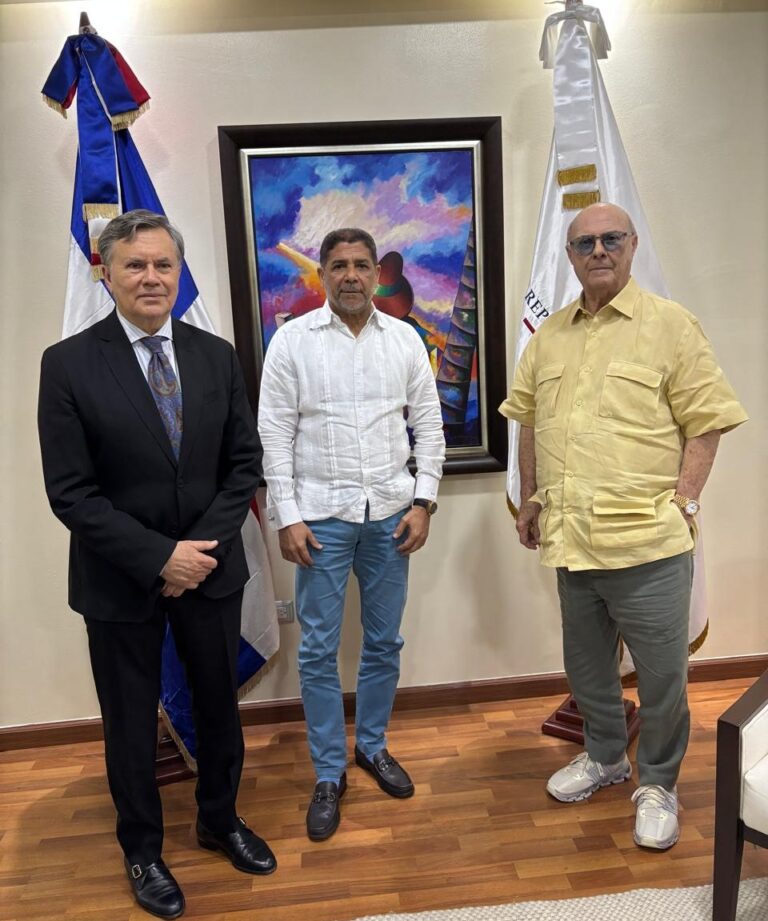
The Ambassador of the European Union in the Dominican Republic, Gianluca Grippa also participated in the event. Mr. Grippa indicated that “the processes of accreditation and its link with Law 166-12, the productive capacity of the country will have the opportunity to strengthen their skills.” He also pointed out that the Dominican Republic will strengthen its knowledge, for which it will create the necessary bases to effectively exercise its role in the evaluation processes.
The seminar is presented within the framework of the Program for Strengthening Quality for the Development of MSMEs, with the objective of training members of the Technical Committee of Experts of CODOCA in the matter of accreditation, with the purpose of complying with the mandate of Article 30 of Law 166-12.
Accreditation issues are very important for the Dominican Republic. According to the World Trade Organization (WTO), accreditation is a vehicle that makes trade more efficient and avoids technical barriers; this benefits both the industrial and producer markets and the final consumers, who require quality guarantees.
More information: Gaudy Suzaña, Specialist in Agricultural Health and Food Safety, gaudy.suzana@iica.int