Inter-American Institute for Cooperation on Agriculture

Agricultural Health Food safety

Latin America and Africa coordinate regional positions prior to the Codex Alimentarius meeting

Tiempo de lectura: 3 mins.

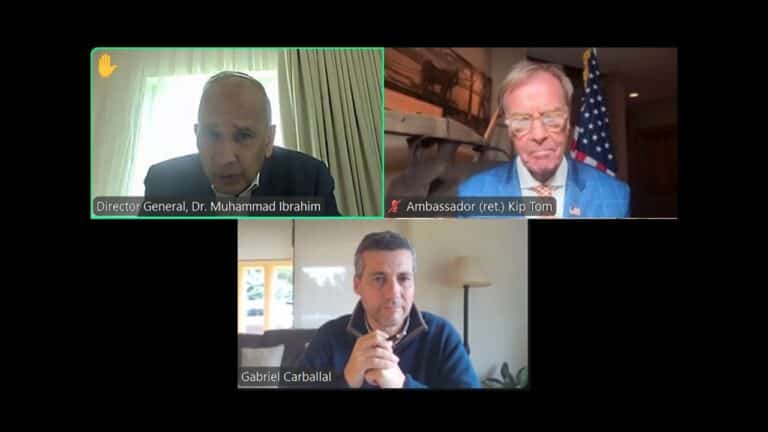
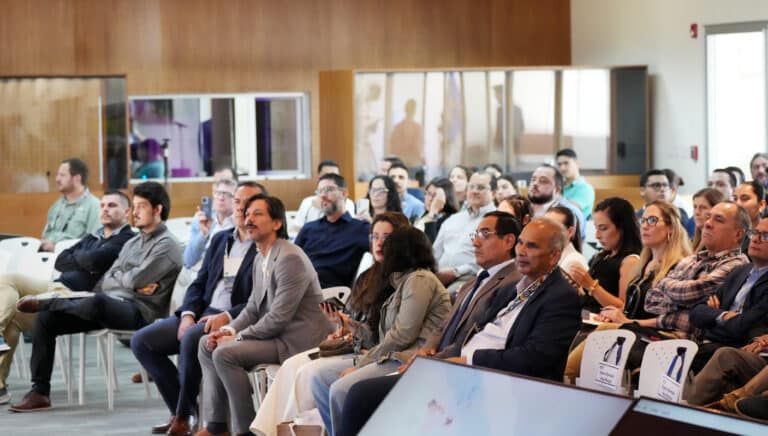
A total of 35 nations participated in the Interregional Codex Alimentarius Colloquium, held in the United States and organized by the US Department of Agriculture and IICA.

The event was organized by the United States Department of Agriculture (USDA) with the support of the Inter-American Institute for Cooperation on Agriculture (IICA).

San Jose. With the aim of taking a more active role in global discussions on food safety, representatives from Latin American, Caribbean and African nations met to define topics of common interest and to facilitate inter-regional work in preparation for the next meeting of the Codex Alimentarius, which will take place this month, in France.

More than 50 specialists from the Codex Coordinating Committees for Latin America and the Caribbean (CCLAC) and Africa (CCAFRICA) took part in a colloquium in the United States to coordinate their positions on general food safety principles, in preparation for the forthcoming negotiations at the global meeting on April 11-15 in Paris.

The event was organized by the United States Department of Agriculture (USDA) with the support of the Inter-American Institute for Cooperation on Agriculture (IICA).

According to Eric Bolaños, IICA’s Agricultural Health and Food Safety Specialist, these discussions seek to promote closer ties between the CCLAC, the CCAFRICA and North America, and to facilitate dialogue on the strategic themes covered by the Codex.

Africa was represented by delegates from Senegal, Kenya, Guinea, Cameroon, Ghana, Mali and Tanzania. The Latin American representatives included delegates from Argentina, Bolivia, Brazil, Chile, Costa Rica, the Dominican Republic, El Salvador, Ecuador, Guatemala, Honduras, Mexico, Nicaragua, Panama, Paraguay, Peru and Uruguay, while the Caribbean was represented by delegates from Antigua and Barbuda, Bahamas, Belize, Dominica, Grenada, Guyana, Haiti, Jamaica, St. Kitts and Nevis and Trinidad and Tobago, who participated along with representatives of the United States and Canada.

The colloquium was also attended by two vice-presidents of the Codex Alimentarius Commission and delegates of regional organizations.


More information:
eric.bolanos@iica.int

Share

Related news​

Bahamas

February 5, 2026

Minister of Agriculture of The Bahamas and IICA Representative continue to make progress with distribution of supplies to farmers affected by Hurricane Melissa

The Minister of Agriculture and Marine Resources of The Bahamas, Jomo Campbell, and the Representative of the Inter-American Institute for Cooperation on Agriculture (IICA) in The Bahamas, Mari Dunleavy, and her team, received agricultural inputs for distribution in the district of Exuma to support farmers affected by Hurricane Melissa.

Tiempo de lectura: 3mins

Panama City

February 2, 2026

The IICA Director General  and the CAF President and Vice President discuss the role of financing in expanding the scientific and technological revolution in agriculture of the Americas

In meeting, they analyzed new and better synergies between the development bank and the specialized agency in agricultural and rural development, specifically in issues such as health, soil health and restoration, water resources and specific crops.

Tiempo de lectura: 3mins

Ciudad de Panamá, Panamá

January 30, 2026

On his first international mission, the new Director General of IICA places agricultural development cooperation at the center of the Latin American and Caribbean agenda

The new Director General of the Inter-American Institute for Cooperation on Agriculture (IICA), Muhammad Ibrahim, took part in the International Economic Forum for Latin America and the Caribbean, organized by CAF, where he held meetings with senior authorities from Jamaica, Ecuador, Paraguay, Panama and other international organizations, seeking to scale up programs and projects aimed at underpinning agricultural development, the well-being of rural producers and food security in the region.

Tiempo de lectura: 3mins